

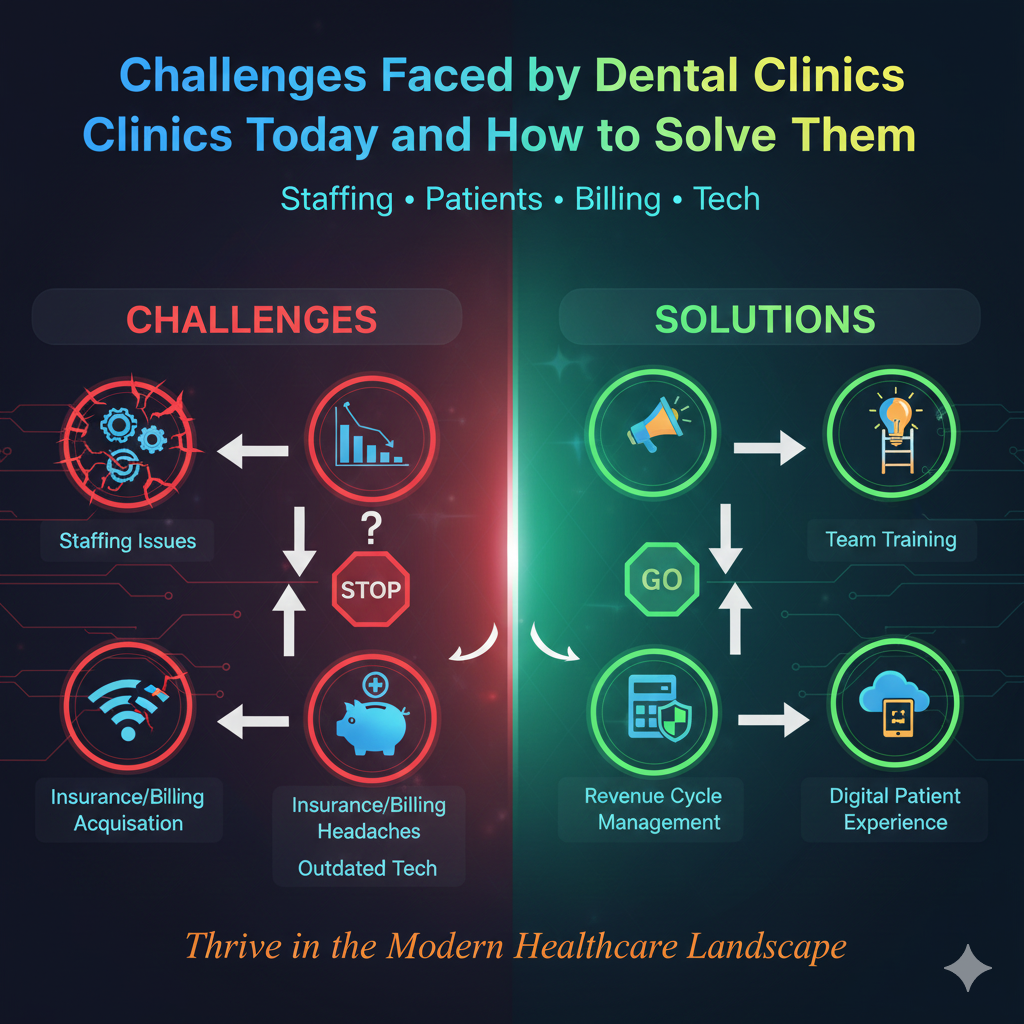
Running a dental clinic today involves much more than providing quality dental care. Clinic owners and dentists must manage appointments, staff, finances, patient expectations, and technology all at the same time. As competition grows and patient behaviour changes, even well-established clinics face challenges that can slow growth and affect patient satisfaction.
The good news is that most of these challenges are common and, more importantly, solvable. Below are the most pressing challenges dental clinics face today, along with practical ways to address them.
Modern challenges dental clinics must overcome
1. Appointment Management and No-Show Problems
Missed appointments and last-minute cancellations waste valuable chair time and disrupt the clinic’s schedule. They create gaps in the day that cannot always be filled, leading to lost revenue and inefficient use of staff time. Overbooking to compensate often results in longer wait times and frustrated patients.
How to Solve Them:
Clear communication plays a major role in reducing no-shows. Confirming appointments in advance and sending reminders helps patients plan better. Giving patients an easy way to reschedule when needed also reduces sudden cancellations.
When scheduling is organised and expectations are clear, clinics can maintain a smoother daily flow and make better use of their time.
2. Patient Record Management and Data Accuracy
Accurate patient records are essential for safe and effective treatment, yet many clinics struggle with incomplete or scattered information. Paper files or outdated systems make it harder to access patient history quickly, increasing the risk of errors and slowing down consultations.
How to Solve Them:
Keeping patient records organised in one place improves both efficiency and care quality. Updating records consistently after each visit ensures that information stays accurate and reliable. When dentists and staff can quickly review patient history, treatments become smoother and more personalised, helping build patient trust.
3. Administrative Workload and Time Pressure
Administrative tasks such as billing, insurance processing, documentation, and follow-ups often consume a large part of the workday. This workload can overwhelm staff, leading to mistakes, stress, and less time spent focusing on patients.
How to Solve Them:
Simplifying administrative processes helps reduce unnecessary pressure. Clear systems for routine tasks allow staff to work faster and with fewer errors.
When administrative responsibilities are well organised, teams can spend more time supporting patient care rather than managing paperwork.
4. Inventory and Dental Supply Management
Poor inventory control can lead to running out of essential supplies during treatment or spending too much on materials that expire unused. Both situations disrupt operations and increase costs.
How to Solve Them:
Regular inventory checks and planned reordering help clinics stay prepared. Tracking usage patterns allows clinics to maintain the right balance between availability and cost. With better oversight, clinics avoid last-minute shortages and reduce unnecessary waste.
5. Adapting to Technology and Industry Changes
Dental clinics operate in an environment where technology, treatment methods, and patient expectations change constantly. New tools promise better efficiency and care, but adopting them can feel risky and time-consuming. Clinics that delay change often find themselves working harder to achieve the same results, while patients compare them to more modern practices.
How to Solve Them:
Change works best when it is introduced gradually. Clinics should start by identifying the areas that slow them down the most, such as scheduling, record-keeping, or communication. Introducing improvements step by step allows staff to adjust comfortably.
Regular training and open discussions help the team understand why changes are being made, creating confidence instead of resistance. Over time, this steady approach keeps the clinic current without disrupting daily operations.
6. Financial Planning and Revenue Visibility
Many clinic owners find it difficult to clearly understand where their money is going. Without proper tracking, it becomes hard to measure profitability, control expenses, or plan for future growth.
How to Solve Them:
Reviewing finances regularly provides clarity and control. Tracking income, expenses, and treatment acceptance rates helps identify strengths and weak areas. With a clearer financial picture, clinics can make confident decisions and plan more effectively.
7. Patient Experience and Satisfaction
Patients today expect more than quality treatment. Long waiting times, unclear communication, or rushed appointments can leave a negative impression, even when the dental care itself is good.
How to Solve Them:
Improving patient experience starts with better communication and respect for time. Keeping patients informed, explaining procedures clearly, and following up after visits shows care and professionalism. When patients feel comfortable and valued, satisfaction naturally improves.
8. Patient Retention and Repeat Visits
Many clinics focus heavily on attracting new patients but struggle to retain existing ones. Patients may visit once and never return if they don’t feel a strong connection or understanding of their treatment plan.
How to Solve Them:
Building long-term relationships requires consistency and trust. Clear explanations, regular follow-ups, and genuine care encourage patients to continue their treatment at the same clinic. Retained patients are more likely to recommend the clinic to others, supporting steady growth.
9. Staffing and Workforce Management
Hiring and retaining skilled dental staff is increasingly challenging. High turnover disrupts workflow, increases training costs, and affects patient experience.
How to Solve Them:
A supportive work environment makes a big difference. Clear roles, fair scheduling, and opportunities for learning help staff feel valued. When teams feel respected and supported, they are more likely to stay committed and perform better.
10. Marketing and Clinic Visibility
With more dental clinics entering the market, standing out has become harder. Relying only on word-of-mouth limits growth, especially when potential patients search online before choosing a clinic.
How to Solve Them:
Consistent visibility helps clinics stay top of mind. Clear online information, local presence, and patient communication build trust even before the first visit. When clinics make it easy for patients to find and understand them, attracting new patients becomes more natural.
Exploring proven dental marketing ideas can help clinics improve visibility, connect with the right audience, and attract patients who are actively looking for dental care. When the right strategies are applied consistently, clinics can build trust before the first visit, stand out in a competitive local market, and create a steady flow of patient inquiries without relying only on discounts or referrals.
Exploring proven dental marketing ideas can help clinics improve visibility, connect with the right audience, and attract patients who are actively looking for dental care.
11. Managing Multiple Dentists or Clinic Locations
Clinics with multiple dentists or branches often struggle to maintain consistency in daily operations and patient care. Differences in treatment workflows, communication styles, and record handling can create confusion for both staff and patients. Without proper oversight, these gaps may lead to uneven service quality and operational inefficiencies across locations.
How to Solve Them:
Standardising core processes across the clinic helps create a uniform way of working. Clear communication channels and shared systems ensure that teams stay aligned, even across different locations.
When everyone follows the same guidelines and has access to the same information, coordination improves, and patients receive a consistent experience wherever they visit.
12. Regulatory Compliance and Documentation
Dental clinics are required to meet various regulatory standards related to patient safety, data privacy, and proper documentation. Managing these requirements manually can be overwhelming, especially as regulations change over time. Even small compliance gaps can lead to stress, penalties, or loss of patient trust.
How to Solve Them:
Staying organised and keeping documentation up to date makes compliance easier to manage. Regular reviews of records, clear internal policies, and basic staff awareness help clinics stay aligned with regulations.
When compliance becomes part of daily practice rather than an afterthought, clinics can operate with confidence and focus more on patient care.
Final Thoughts
The challenges faced by dental clinics today are real, but they are also manageable. Most issues arise from growing operational demands, changing patient expectations, and increased competition. By addressing these challenges with clear processes and thoughtful planning, dental clinics can improve efficiency, strengthen patient trust, and achieve sustainable growth.
At Webyking, we help dental clinics navigate these challenges by guiding modern strategies, patient engagement, and digital growth. Success in today’s dental industry is not just about treatment, it’s about running a well-organised, patient-focused practice that can adapt and thrive. Success in today’s dental industry is not just about treatment, it’s about running a well-organised, patient-focused practice that can adapt and thrive.