



India’s ambitious 'Blue Economy' policy promises to revolutionize the maritime sector, yet it overlooks a fundamental constitutional crisis: the lack of specialized vocational education. As infrastructure grows, the gap between the 'Right to Work' and the 'Right to Skill' is widening, particularly in coastal hubs like Kerala.
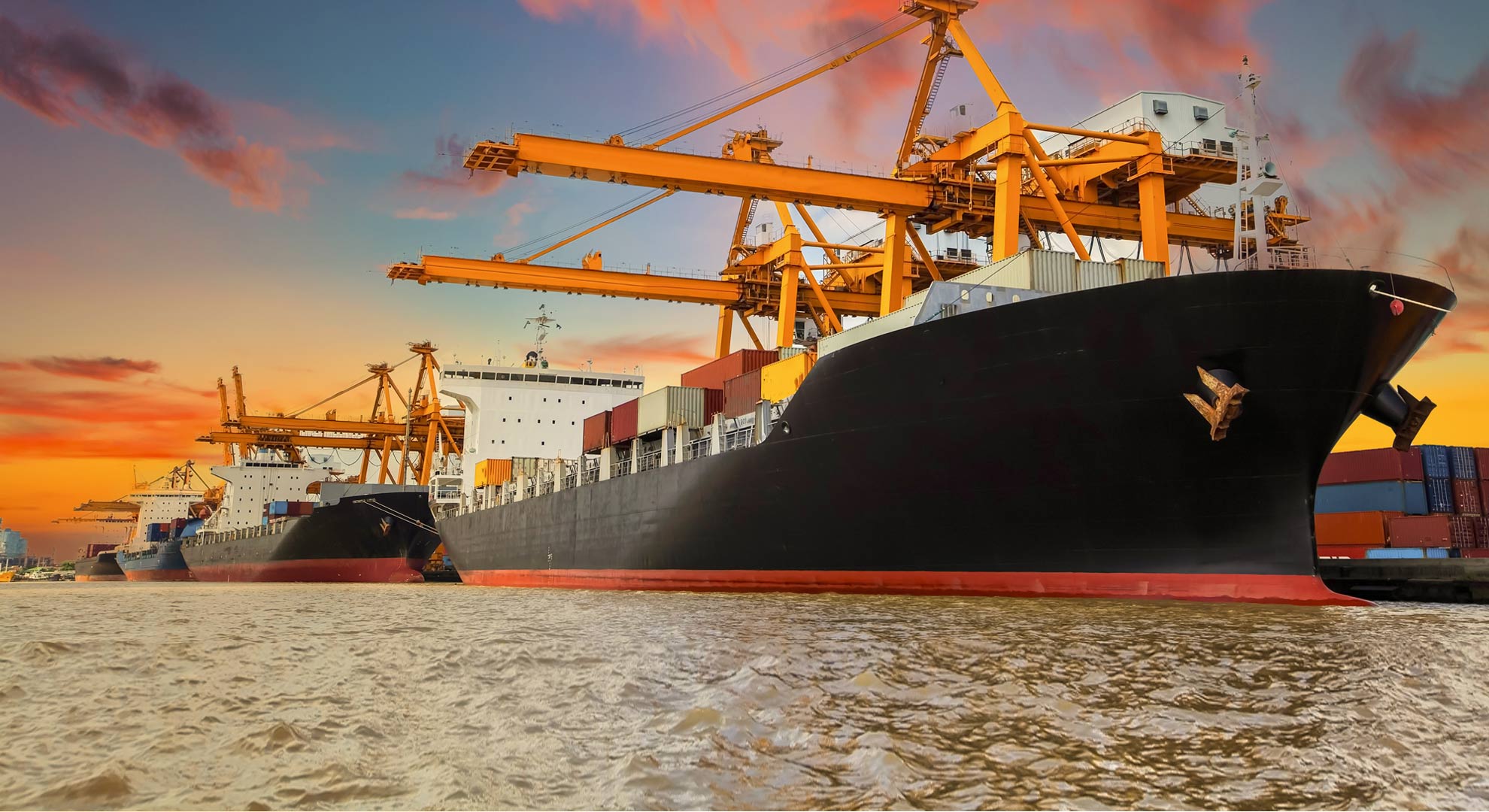
In 2021, the Ministry of Earth Sciences released the draft 'Blue Economy Policy', a visionary document aiming to significantly increase the contribution of the maritime sector to India’s GDP. The policy speaks eloquently of deep-sea mining, marine fisheries, and coastal tourism. It envisions a future where India’s 7,500-kilometre coastline becomes the engine of a 5-trillion-dollar economy.
However, a critical reading of this policy reveals a glaring omission. While it meticulously details the need for physical infrastructure—ports, jetties, and shipping corridors—it remains largely silent on the human infrastructure required to sustain it.
This silence is not merely a policy oversight; it is a legal and constitutional blind spot. By investing in ports without investing in the specific education required to operate them, the State is effectively creating an exclusionary economy. In coastal cities like Kochi, this disconnect is already palpable. We are building world-class terminals like Vallarpadam, yet our state universities continue to churn out graduates with degrees that have no currency in this new economy.
The Infrastructure-Education Mismatch
The Constitution of India guarantees the Right to Livelihood under the expansive umbrella of Article 21. However, the Supreme Court has repeatedly observed that the 'right to life' includes the right to live with human dignity. In the modern economic context, dignity is inextricably linked to employability.
When the state aggressively promotes a specific industrial sector—in this case, logistics and shipping—it arguably creates a concomitant duty to equip its citizens to participate in that sector. Currently, that duty is being neglected.
The expansion of the Cochin Port and the proposed Vizhinjam International Seaport are touted as employment generators. Yet, the jobs they create—Supply Chain Managers, Customs Brokers, Freight Forwarders—require specialized knowledge of international maritime law, Incoterms, and digital inventory systems. These are subjects absent from the curricula of most government arts and science colleges in Kerala.
This mismatch creates a paradox: The "local" population of Kerala, despite high literacy, finds itself ineligible for the high-value jobs being created in its own backyard. The "Blue Economy" thus risks becoming an economy of exclusion, where high-paying roles are outsourced to skilled migrants or those who can afford expensive private schooling, while locals are relegated to low-end manual labour.
The Privatisation of 'Employability'
In the absence of state-sponsored vocational alignment, the burden of skilling has shifted entirely to the private sector and autonomous institutes. This privatization of 'job-readiness' raises serious equity concerns.
If a student from a marginalized community in Ernakulam wants to work in the booming logistics sector, a standard B.Com degree is no longer sufficient. To bridge the gap, they are forced to seek out specialized private training. For many, enrolling in a dedicated logistics course in Kochi has become the only viable pathway to formal employment.
These private courses have effectively become the gatekeepers of the Blue Economy. They teach the practicalities that universities ignore: how to navigate the Customs Act, 1962; how to manage bonded warehouses; and how to handle the legal liabilities of international freight. While institutes like Talentfly are doing commendable work in bridging this gap with placement-focused training, the question remains: Why has the State abdicated its responsibility to integrate this curriculum into public education?
Legal Implications of the 'Skills Gap'
The lack of standardized, state-recognized certification in logistics also leads to labour exploitation. In the unorganized logistics sector, workers without formal certification are often classified as 'unskilled' or 'semi-skilled', denying them the wages and protections accorded to 'skilled' workmen under the Minimum Wages Act, 1948.
By failing to provide formal recognition and educational pathways for logistics professionals, the State allows employers to keep wages artificially low. A worker who understands complex inventory software but lacks a "degree" in it has no bargaining power. Conversely, a student with a formal PG Diploma in Supply Chain Management carries a credential that legally validates their skill set, allowing them to demand fair contracts and protection under the Industrial Disputes Act.
Therefore, the push for better logistics education is not just about economics; it is about labour rights. Formal certification is the first step towards the formalization of the workforce.
The Way Forward
If India’s Blue Economy is to be truly inclusive, the policy focus must shift from 'Hardware' (ports and ships) to 'Software' (skills and people).
Curriculum Reform: State universities in coastal states like Kerala must integrate Logistics and Supply Chain Management (LSCM) as core subjects, not just electives.
Public-Private Partnerships: The government should accredit and subsidize reputable private institutes that are currently filling the void. Recognizing a high-quality logistics course in Kochi as equivalent to a traditional vocational degree would empower thousands of students.
Legal Recognition of Logistics Professionals: The sector needs a regulatory body similar to the Institute of Chartered Accountants of India (ICAI) to standardize qualifications and protect the professional status of logisticians.
Until these structural changes happen, the promise of the Blue Economy will remain a mirage for the average youth of Kerala—visible on the horizon, but always out of reach. For now, their only bridge to this future lies in specialized, practical training that equips them to demand their rightful place in the global trade network.


School of Logistics Management and Technology (SLMT), a division of LIMRA Institutions Private Limited is a self financed Education Institute, located at Cochin, Kerala.
SLMT was started with an objective of setting high standards in logistics and supply chain education offering a wide variety of opportunities to students