


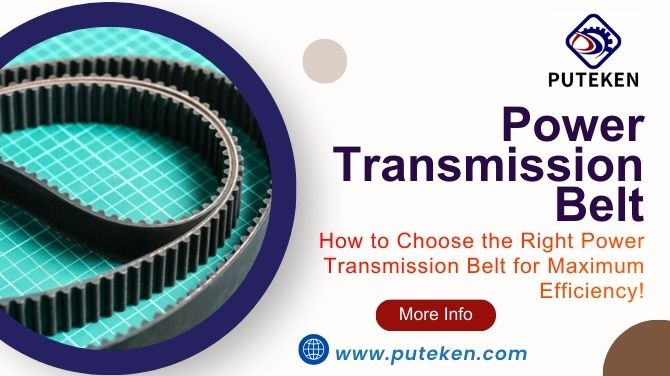
Efficiency isn't just a buzzword in modern industry—it's a necessity. Whether you're managing a high-speed production line, coordinating equipment for complex mechanical systems, or keeping a fleet of machines under budget and on schedule, you know that downtime and poor performance cost far more than money—they affect your credibility, productivity, and customer satisfaction.
That’s where the Power Transmission Belt comes into play.
As a critical component in industrial machinery, the Power Transmission Belt is responsible for transferring rotation and power between different mechanical components. However, not all belts are designed the same. Choosing the right type of power transmission belt can significantly affect the overall performance, energy efficiency, durability, and even the noise levels of your system.
At Shanghai Puteken Transmission System Co., Ltd., we specialize in supplying a wide range of power transmission products designed for precision, reliability, and energy efficiency. By selecting the right belt for your application from the onset, companies can improve output, optimize energy consumption, and reduce maintenance costs in the long term.
What is a Power Transmission Belt?
A Power Transmission Belt is a flexible loop that connects two or more rotating shafts, enabling the transfer of motion and mechanical power from one shaft to another. These belts are typically used in equipment like motors, pumps, compressors, machine tools, textile machines, and agricultural and packaging machinery.
Unlike conveyor belts, which are meant to move items from point A to B, power transmission belts transfer mechanical energy across components. How efficiently they do this depends on their material, shape, tension, and installation precision.
Common Types of Power Transmission Belts
Understanding the different types of belts available is the first step in choosing the right one. Here are the main categories to consider:
1. V-Belts (Wedge Belts)
- Commonly used in industrial applications
- High transmission efficiency due to wedging action
- Suitable for exposed drives
Industries: HVAC systems, compressors, mining, milling machines
2. Timing Belts (Synchronous Belts)
- Toothed belts that prevent slippage
- Offer precise timing between shafts
- Ideal for synchronized transmission
Industries: Robotics, printing presses, camshaft drives, food packaging
3. Flat Belts
- Simple and economical
- High-speed applications with minimal noise
- Require exact alignment
Industries: Textile, paper processing, and packaging
4. Round Belts (O-Ring Belts)
- Made from polyurethane or rubber
- Typically used in light-duty, high-speed drives
- Flexible and easy to install
Industries: Distribution systems, packaging, ceramics, light conveyors
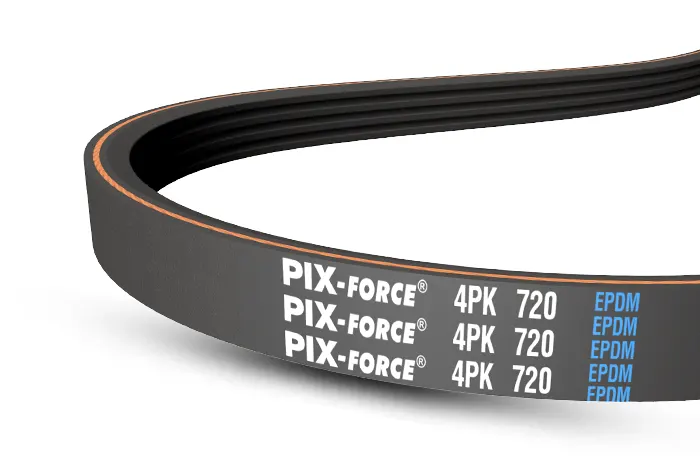
5. Multi-Ribbed Belts (Poly-V Belts)
- Combines the benefits of flat and V-belts
- Greater surface contact = higher efficiency
- Compact and flexible design
Industries: Automotive, gym equipment, and domestic appliances
Key Factors in Choosing the Right Power Transmission Belt:
Choosing an efficient Power Transmission Belt is not just about picking the strongest or longest-lasting belt. It's about finding the right match for your application, ensuring optimized energy use, minimal downtime, and long-term value.
Here are the core criteria to consider:
1. Load Requirements
First, determine the amount of torque and horsepower the belt system needs to transmit. Higher loads may require:
- Multi-ribbed or wrapped V-belts
- Double-sided or reinforced timing belts
- Kevlar or steel-tensioned round belts for elasticity control
2. Speed of Operation
Not all belts are suitable for high-RPM operations. Higher speeds can create belt flutter, slippage, or heat buildup. Timing belts and flat belts are generally suited for high-speed systems.
3. Center Distance Between Pulleys
The distance between the driving and driven shafts affects the type of belt you should choose. Flat belts can cover longer center distances efficiently, while V-belts are better for shorter setups.
4. Alignment Tolerance
Do your machines operate in perfect alignment? Slight misalignments in pulleys are better tolerated by V-belts and poly-V designs than flat belts, which require more precise geometry.
5. Environmental Conditions
Your power transmission system might be exposed to:
- Temperature extremes (hot ovens or freezers)
- Dust, oil, moisture, or chemicals
- Outdoor conditions (UV exposure)
Urethane belts, neoprene-covered timing belts, or special coatings can safeguard your equipment in tough environments.
6. Noise Requirements
If your application is in a noise-sensitive area—like hospitals, schools, or laboratories—flat belts or cogged V-belts provide quieter operations than chain drives or rope systems.
Belt Tension and Efficiency
Incorrect tensioning is a major cause of energy waste, component failure, and mechanical wear. A well-tensioned Power Transmission Belt:
- Reduces friction and energy loss
- Prevents slippage and stretching
- Prolongs the life of pulleys and bearings
- Delivers consistent performance under load
At Shanghai Puteken Transmission System Co., Ltd., we supply tools and guidelines to help you calculate the correct belt tension based on your motor specs and machinery layout.
Here are a few key tips:
- Regularly inspect for signs of wear: cracks, glazing, elongation
- Use tensioning gauges or sensors
- Align pulleys precisely
- Keep belts clean; avoid oil or chemical contamination
- Replace belts in matched sets for multi-pulley systems
Our team at Shanghai Puteken provides after-sales support with maintenance guides, training, and consultation for maximum belt life.
Applications Across Industries
More than just manufacturers or belt resellers, we partner with businesses across key industries to solve specific mechanical transmission problems.
Food and Beverage
- Non-toxic, easy-to-clean synchronous belts for packaging and bottling
Agriculture
- Heavy-duty V-belts for tractors and crop harvesters
Manufacturing
- Poly-V belts for automation systems and spindle drives that require high efficiency and precision
Automotive and Workshops
- Flat belts for lathes, compressors, and dynamos
Logistics & Material Handling
- Round and timing belts for cross-belt sorters, diverters, and picking robots
Custom Power Transmission Belt Solutions by Shanghai Puteken
At Shanghai Puteken Transmission System Co., Ltd., we offer tailored solutions—not just off-the-shelf parts. Our strengths include:
- Cut-to-length belts are ready for use
- Reinforced or coated belts for special conditions
- Wide material options: PU, neoprene, rubber, silicone
- Tensioning guides, clamps, and pulleys for one-stop solutions
- Fast global delivery and expert technical support
Every belt is backed by ISO-compliant manufacturing processes and stringent QC, ensuring performance you can trust under real industrial conditions.
Put Efficiency in Motion with the Right Power Transmission Belt
Choosing the right Power Transmission Belt isn’t just a maintenance decision—it’s a strategy for optimal performance, energy savings, and higher output. From understanding your application requirements to selecting the suitable belt profile, tension, and material composition, every detail contributes to the bigger picture of system success.

Frequently Asked Questions (FAQ)
- What’s the most efficient type of power transmission belt?
Timing belts offer the highest efficiency (up to 99%) due to the non-slip, mechanical timing feature. However, poly-V belts also provide excellent performance with more tolerance to misalignment.
- How often should I replace a power transmission belt?
Depending on the environment and usage intensity, belts should be inspected monthly and often replaced every 1-3 years, or sooner if visible degradation is present.
- Are power transmission belts better than chains?
Yes, in many cases. Belts are quieter, require less maintenance, are cheaper to replace, and don’t need lubrication. Chains are better for very high torque, but are less efficient and noisier.
- How do I know a belt needs replacement?
Common signs include cracks, fraying edges, noise, belt slippage, or a shiny/glazed appearance. Don’t wait for a complete failure—preventive replacement is key.
- Can I use one belt type for multiple applications?
Not always. It’s best to choose a belt tailored to the speed, load, and environmental demands of the specific application. Using the wrong one reduces both performance and service life.
- Do you provide custom belt designs?
Absolutely. Shanghai Puteken can design, cut, weld, or reinforce belts based on your equipment drawing or specifications.

As with all health-related products, especially during pregnancy, the key to making the right decision is knowledge.
Consulting a women’s health care professional like a Women’s Health Physiotherapist is always a good idea.
So, what are Belly Belts, Maternity Belts and Pregnancy Belts?