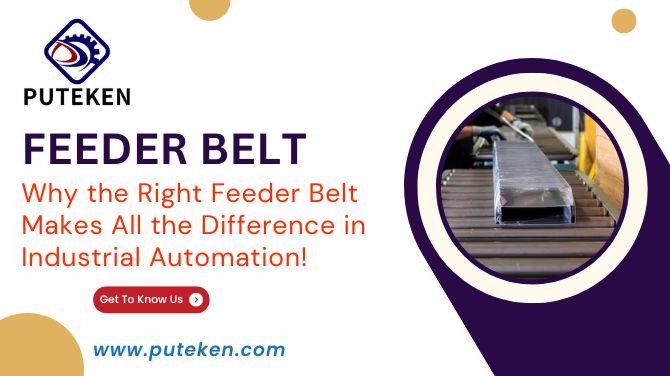
In high-speed industrial environments, consistent material handling is a necessity—especially in sectors like packaging, printing, textile, and electronics. One of the most critical, yet often underestimated components in such systems is the Feeder Belt. Serving as the workhorse behind the smooth movement of sheets, cartons, films, or substrates through automatic feeding units, the Feeder Belt plays a vital role in optimizing system performance and ensuring product quality.
At Shanghai Puteken Transmission System Co., Ltd., we understand how selecting the right Feeder Belt can drastically improve workflow productivity, reduce maintenance frequency, and extend equipment life. Poor feeder belt selection often leads to slippage, misfeeds, downtime, and excessive wear—not to mention increased operational costs.
What Is a Feeder Belt?
A Feeder Belt is a specialized conveyor or transmission belt used in automated feeding systems to precisely move sheets, films, cartons, papers, or similar materials into machines for processing. These belts are often found in:
- Feeding units of printing machines
- Packaging machines
- Labeling systems
- Folding equipment
- Paper converting machines
- Textile material feeders
- Electronics and circuit board assembly lines
Feeder belts differ from general-purpose conveyors in their design and function. They are typically made from high-friction rubber or polyurethane materials designed to grip and transport materials without slipping or damaging the surface of the product—even across high-speed or stop/start feed cycles.
Why the Right Feeder Belt Matters?
Many manufacturers underestimate the role the Feeder Belt plays in performance, not realizing that the wrong belt can lead to a number of costly issues:
- Frequent jams or misfeeds
- Product misalignment
- Excessive machine wear
- Increased product waste
- Downtime due to belt failure
By choosing the correct Feeder Belt, you gain distinct advantages such as:
- Increased Precision
Manage accurate positioning and alignment of items entering machines.
- Higher Throughput
Run at higher speeds with lower error rates.
- Extended Equipment Life
Reduce motor strain, roller abrasion, and machine component fatigue.
- Consistent Quality
Ensure clean feeds and minimize marks, tears, or surface damage on delicate substrates.
This is why Shanghai Puteken Transmission System Co., Ltd. focuses on supplying meticulously engineered Feeder Belts that exceed industry standards in grip, wear-resistance, and tensile strength based on real-world feedback from OEMs and end-users across the globe.
Key Features to Look for in a Feeder Belt
When evaluating suitable belts for your application, consider the following technical criteria:
1. Surface Texture and Grip
Materials like rubber or PU can be molded with textures (smooth, matte, rough, dimpled, grooved) that improve grip on certain substrates. High-friction surfaces reduce slippage and ensure smooth feeding.
2. Material Composition
Feeder belts can be made from:
- Rubber – Ideal for heavy-duty grip and durability.
- Polyurethane (PU) – Known for flexibility, oil and chemical resistance, and the ability to grip delicate materials.
- Fabric-Reinforced Belts – Add strength to withstand tension and extend lifespan.
3. Hardness (Shore A)
Measured on the Shore A hardness scale, feeder belts range from soft (30–40 Shore A) for delicate grip to hard (70–90 Shore A) for more rigid, high-pressure feeding systems.
4. Thickness and Width
Must match the machine’s requirements and workload. Thicker belts provide better cushioning and durability but must be compatible with roller settings.
5. Anti-Static Properties
Prevent static charge build-up, which is particularly important in the electronics, printing, and film handling industries.
6. Heat & Chemical Resistance
Some productions involve heat (e.g., hot glue rollers) or inks. In these cases, choose belts designed to resist degradation.
Industry-Specific Feeder Belt Recommendations
- Packaging Industry
Packaging lines use feeder belts to deliver boxes, labels, and cartons into folding, gluing, or sealing machines at high speeds.
Best choice: Mid-hard PU rubber, anti-slip surface, oil/ink resistant.
- Printing and Paper
In printing presses and sheet-fed offset systems, feeder belts must handle thousands of thin sheets per hour without jamming or tearing.
Best choice: Low Shore A hardness rubber with embossing or grooving for grip, anti-static coating.
- Food & Beverage
Feeding components like multilayer cartons or wrap-around labels need gentle yet firm movement.
Best choice: Food-grade rubber with low compression set.
- Textile and Garment
Feeding soft fabrics, tags, or flexible materials into heat sealers or cutters requires soft belts that avoid marking the material.
Best choice: Soft sponge-covered feeder belts, heat-resistant variants.
- Electronics Assembly
PCBs and sensitive components are fed into SMT lines or packaging units, requiring electrostatic-safe and debris-free feeding.
Best choice: Anti-static PU belts with dust-repelling surface.
At Shanghai Puteken, we offer specialized feeder belts tailored to these exact needs.
Customization Options with Shanghai Puteken
No two production environments are identical, which is why Shanghai Puteken Transmission System Co., Ltd. offers a wide range of customizable Feeder Belts, including:
- Custom lengths, widths, and profiles
- Variable hardness ratings
- Material layering and coatings
- Punching, slotting, and surface treatment
- Endless or jointed belts
Our belts are compatible with major feeding machines such as Heidelberg, Bobst, Komori, Gallus, and label printing equipment.
How to Maintain a Feeder Belt for Longevity?
Even the highest quality Feeder Belt needs proper care to maintain performance and longevity. Here are strategies to help you extend belt life:
- Regular Cleaning
Dust, glue, and material debris degrade grip and cause belt wear. Clean the belt surface regularly with an appropriate solvent-free cleaner.
- Correct Tensioning
Avoid overstretching the belt. Use a tension gauge or manufacturer settings to maintain ideal operating tension.
- Scheduled Inspections
Check for wear, cracks, layer delamination, or contour deformation. Monitor for any belt drift or uneven feeding behavior.
- Avoid Sharp Edges or Contaminants
Ensure that only clean materials enter the feed line. Sharp or dirty items can cut or stain the belt over time.
- Store Properly
When not in use, store belts rolled (not folded), in cool, dry environments away from UV or moisture exposure.
Choosing the right Feeder Belt is much more than a purchasing decision—it’s a strategic step toward maximizing efficiency, reducing downtime, and extending the life of your machinery. Improper belt selection can affect alignment, speed, product quality, and even the safety of your automated systems. On the other hand, the right belt enhances feeding precision, product security, and overall equipment performance.
Frequently Asked Questions (FAQ)
Q1. What is the average lifespan of a Feeder Belt?
A: Belt life varies by workload, speed, and maintenance practices. Our premium Feeder Belts typically last anywhere from 6 months to over 2 years with proper handling.
Q2. How do I know which surface texture is best?
A: Generally, smooth surfaces are for cleanroom or low-dust environments, while textured or grooved surfaces are better for high-friction applications. We provide samples for testing.
Q3. Can a Feeder Belt be repaired or must it always be replaced?
A: Minor surface damage can sometimes be patched, but most damage—especially internal tears—requires full replacement. Always consult our experts before repair.
Q4. Do you offer belts for narrow-format or label feed systems?
A: Yes, we offer micro-width feeder belts suited to label printers, ticket feeders, and narrow web machinery.
Q5. Do your Feeder Belts come in endless and open-ended forms?
A: We supply both; endless belts are seamless and used for high-speed feeding systems, while open-ended options allow easier on-site installation and tensioning.