


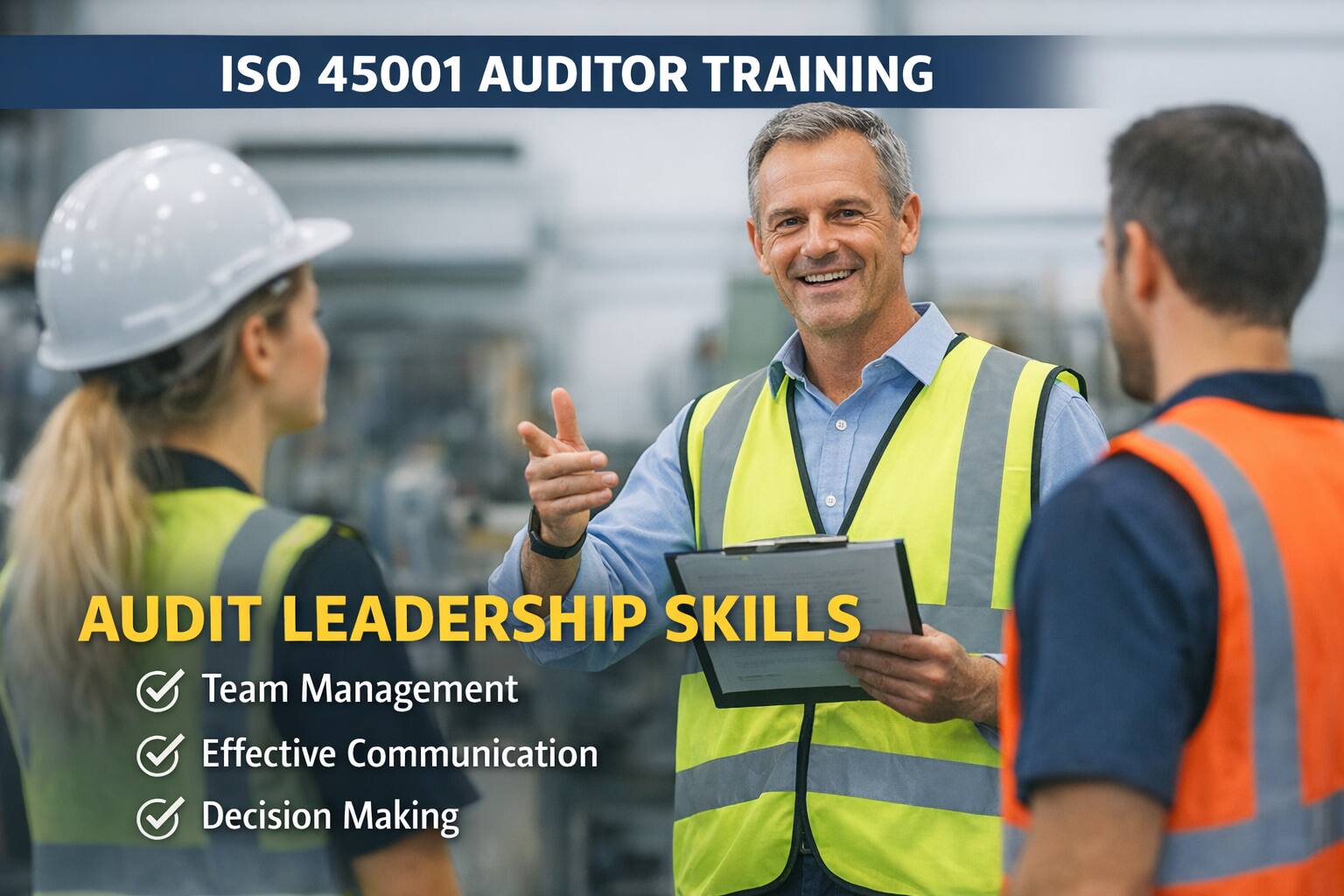
ISO 45001 is an international standard for Occupational Health & Safety Management System (OHSMS). It is designed to reduce workplace risk and improve employee well-being. Audits play a critical role in ensuring the effective implementation and continual improvement in ISO 45001. However, successful audits require more than technical knowledge of clauses, they demand strong leadership. ISO 45001 auditor training focuses on developing audit leadership skills that enable auditors to plan, manage, and conduct audits effectively while influencing positive safety outcomes.
Audit Leadership in ISO 45001
Audit Leadership is a skill that refers to the ability of an auditor to control an audit with confidence and professionalism. While technical auditing skills focus on compliance verification, leadership skills help auditors manage people, make sound judgments, and ensure audit objectives are achieved. Effective leadership ensures audits add value rather than being seen as a compliance burden.
Role of an ISO 45001 Auditor as a Leader
An ISO 45001 auditor acts as a leader throughout the audit lifecycle—from planning to reporting. Auditor training emphasizes leading audit teams, coordinating activities, and maintaining effective communication with management and workers. Auditors also play a key role in promoting worker participation and ensuring that safety concerns are fairly evaluated.
Planning and Organizational Leadership Skills
ISO 45001 Auditor Training is essential for strong planning and organisation skill of an auditor, in this auditor learn how to plan a risk-based audit, allocate resources efficiently, and manage time during audits. These leadership skills help auditors focus on high-risk processes and critical OH&S issues, ensuring audits are structured and effective.
Communication and Interpersonal Skills
Clear communication is a core leadership skill taught in ISO 45001 auditor training. Auditors are trained to conduct professional opening and closing meetings, ask effective interview questions, and communicate audit findings clearly. Strong interpersonal skills help auditors build trust with auditees and encourage open discussion about safety risks and improvements.
Decision-Making and Problem-Solving Skills
An ISO 45001 auditor training strengthens decision-making and analytical skills. Auditors learn to evaluate evidence objectively, identify nonconformities, and assess the significance of safety risks. These skills enable auditors to make balanced judgments and provide meaningful audit conclusions that support continual improvement.
Team Management and Motivation
For auditors, team management is an essential leadership skill. ISO 45001 Training covers how to guide audit team members, manage differing opinions, and resolve conflicts during audits. Motivating the audit team and maintaining collaboration ensures consistent and high-quality audit outcomes.
Ethical Leadership and Professional Conduct
Ethical behaviour is a cornerstone of ISO 45001 auditor training. Auditors are trained to maintain integrity, impartiality, and confidentiality. Ethical leadership builds credibility and trust, which is essential for successful audits and long-term safety improvements.
Conclusion
ISO 45001 auditor training goes beyond compliance by developing strong audit leadership skills. These skills empower auditors to lead audits effectively, engage people positively, and contribute to safer, healthier workplaces. Investing in auditor training ultimately strengthens both audit effectiveness and organizational safety performance.
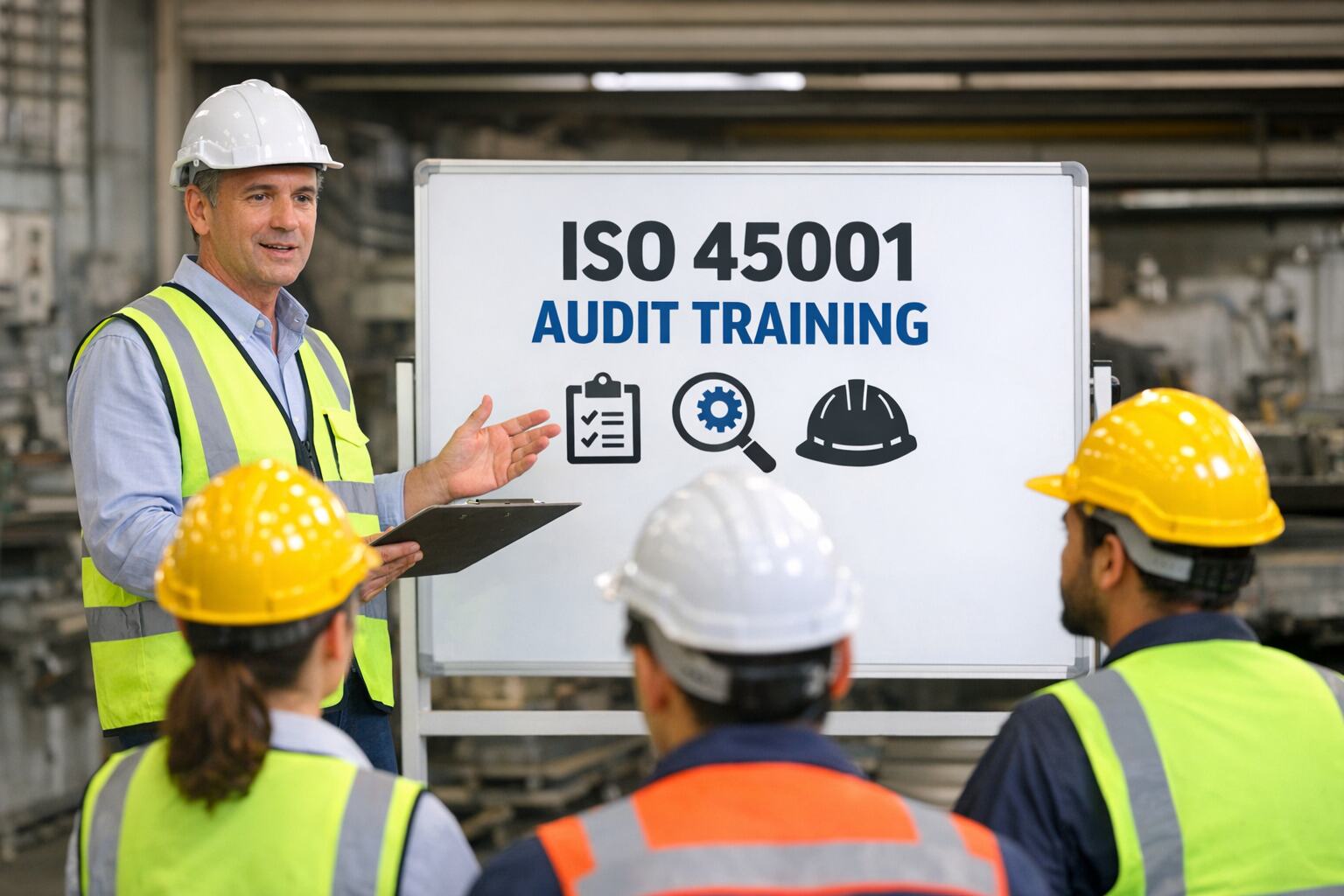

ISO 45001 internal auditor course onlineThe main objective of the ISO 45001 Internal Auditor Training Course enables the participants to understand the key concepts of ISO 45001 requirements to plan, conduct, and manage an internal audit of the Occupational Health and Safety Management System.
Also, this ISO 45001 Internal Auditor course enhances the auditing knowledge and skills of the delegates in accordance with the guidelines of ISO 19011.IAS offers ISO 45001 Internal Auditor Training in Saudi Arabia and also in other Gulf countries such as Oman, Qatar, Kuwait, etc.
We are one of the leading ISO Training Bodies in Saudi Arabia and we offer Internal auditor training courses on ISO 45001 and also on other management system standards.