




The way we learn and work has changed more in the past decade than in the fifty years before it. Classrooms no longer rely solely on chalkboards, and meeting rooms have moved far beyond paper notes and static projectors. Today, digital collaboration tools and interactive displays are becoming central to how people share ideas, teach lessons, solve problems, and make decisions together. This shift isn’t just about adopting new technology — it’s about reshaping communication itself.
From Passive Viewing to Active Participation
Traditional presentation tools were designed for one-way communication. A teacher spoke while students listened. A presenter talked while an audience watched slides. Interaction was limited, and engagement depended heavily on attention span and teaching style.
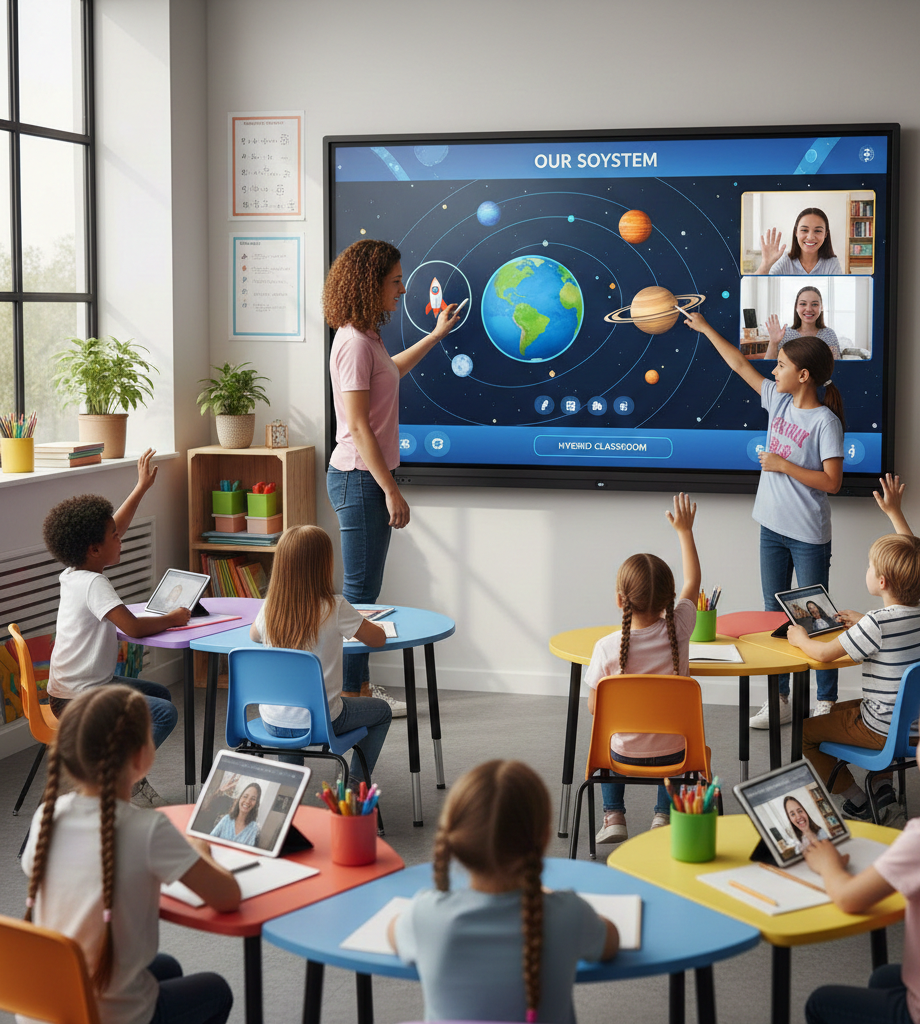
Interactive displays changed that dynamic. Instead of being passive viewers, participants can now touch, write, draw, move objects, and edit content directly on large digital screens. Lessons become collaborative experiences. Meetings become working sessions rather than one-direction briefings. This simple shift — from watching to doing — has a powerful impact on understanding and retention.
Another advantage is simplicity. Older setups often involved tangled cables, projector alignment issues, and time wasted connecting devices. Modern interactive systems are designed to turn on and work instantly. That reliability reduces frustration and lets people focus on content rather than troubleshooting technology.
Making Learning More Engaging and Memorable
Education has been one of the biggest beneficiaries of interactive display technology. Students today grow up surrounded by smartphones, tablets, and touchscreens. When classroom tools feel outdated compared to personal devices, attention drops quickly. Interactive screens bridge that gap by bringing familiar digital experiences into structured learning environments.
Teachers can display high-resolution visuals, zoom into diagrams, annotate in real time, and invite students to participate directly at the screen. Group activities become more natural when multiple students can interact with content together. Complex topics — whether in science, mathematics, or language learning — become easier to grasp when students can manipulate visual elements instead of only reading about them.
Multimedia integration adds another layer of engagement. Videos, simulations, images, and online resources can all be accessed seamlessly. This creates a richer learning experience and accommodates different learning styles, from visual to auditory to hands-on learners.
Connecting In-Person and Remote Participants
The rise of remote work and distance learning has made flexible collaboration tools more important than ever. Hybrid environments — where some participants are physically present while others join remotely — require technology that keeps everyone equally involved.
Modern interactive systems act as central collaboration hubs. They allow screen sharing, video conferencing, digital whiteboarding, and real-time annotation. A student joining from home or a team member calling in from another city can still interact with the same content as those in the room. This creates a sense of inclusion rather than separation.
For educators, trainers, and business leaders, this flexibility means sessions can continue smoothly regardless of location. The experience feels unified instead of fragmented, which is essential in a world where physical presence is no longer guaranteed.
Beyond Classrooms: Professional and Healthcare Applications
Interactive display technology isn’t limited to education. Corporate environments use these tools to improve brainstorming, planning, and presentations. Teams can share documents, make edits in real time, highlight key points, and save meeting notes instantly. Wireless screen sharing allows multiple participants to present without switching cables or devices, keeping discussions fluid and efficient.
In healthcare and training environments, high-definition visuals and collaborative interfaces help professionals examine detailed images, explain procedures, and conduct training sessions more effectively. Digital tools also support remote consultations and group decision-making, improving communication in time-sensitive situations.
Across industries, the common thread is clarity. When people can see, interact with, and modify information together, misunderstandings decrease and productivity improves.
The Growing Role of Intelligent Software
As hardware advances, software intelligence is adding another layer of value. Many modern collaboration systems now include features that assist with note-taking, session recording, content organization, and even engagement tracking. Instead of manually writing meeting summaries or lesson recaps, facilitators can rely on smart tools to capture key points automatically.
This reduces administrative workload and lets teachers and team leaders focus more on meaningful interaction. As artificial intelligence continues to evolve, we can expect even more personalized and adaptive experiences — from learning environments that adjust to student progress to meeting tools that suggest next steps based on discussion topics.
Looking Toward a More Connected Future
Interactive displays and digital collaboration platforms are no longer luxury additions — they are becoming essential infrastructure for modern communication. Whether in a classroom, boardroom, training center, or healthcare facility, the goal remains the same: making ideas easier to share and understand.
The future will likely bring faster responsiveness, clearer visuals, more intuitive interfaces, and deeper integration with everyday digital tools. As these technologies become more accessible, the barrier between people and information continues to shrink.



Best B2B Wholesale Marketplace in India is Global trade Plaza, We are Leading B2B Global Platform, B2B portal for import export, Global B2B platform, Worldwide b2b marketplace, b2b wholesale marketplace india, b2b export portal, top b2b sites, b2b portal for export, b2b portal for manufacturers, b to b portal in india, top b2b portal in india, top b2b sites in india, best b2b trade websites, leading global b2b platform, top 10 b2b portals in india, b2b clothing suppliers india, b2b global marketplace, b2b trade sites, leading b2b marketplace, largest b2b portal, b2b website for export, top b2b websites, best b2b portal for export business, best b2b websites for agriculture, best online b2b marketplace, top 10 b2b portal india, top 10 b2b sites in india, wholesale business ideas in india, world b2b marketplace, b2b trade marketplace, best b2b sites in india, best b2b websites in india, best b2b websites in india , best b2b portal for export business in india, best wholesale business ideas, b2b trade platform india, best b2b website in india, best wholesale business, india's b2b trading platform, largest b2b marketplace, b2b trading websites, best b2b marketplace in india, b2b platforms in india, best b2b portal in india, b2b business sites india, b2b trade portals, b2b trading platform in india