


In the fast-paced world of industrial manufacturing, the demand for lightweight, durable, and cost-effective components continues to grow. Whether it’s automotive panels, luggage shells, air ducts, pallets, water tanks, or medical enclosures, manufacturers are continuously seeking efficient ways to produce hollow parts that are not only strong and functional but also affordable and scalable. That’s where Twin Sheet Thermoforming Machines step in—offering a cutting-edge solution that perfectly balances performance, durability, and precision.
At Shanghai Zhanshi Mechanical Equipment Co., Ltd., we pride ourselves on being at the forefront of thermoforming innovation. Recognizing the versatile needs of modern manufacturers, we offer high-quality, industrial-grade Twin Sheet Thermoforming Machines that are engineered to produce hollow parts with superior stiffness, strength, and design flexibility.

What Is a Twin Sheet Thermoforming Machine?
To understand why this machine is such a game-changer, let’s first look at what it does.
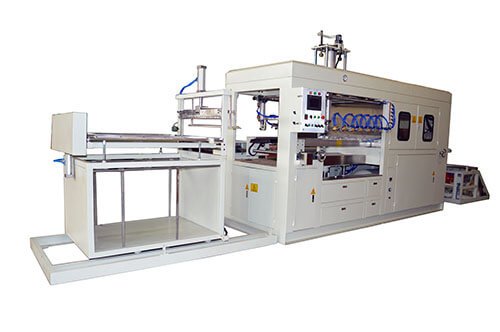
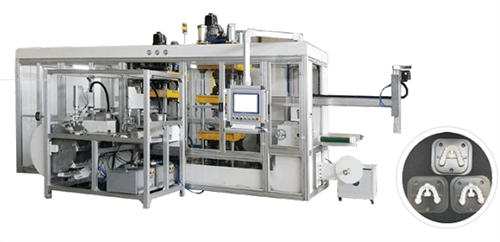
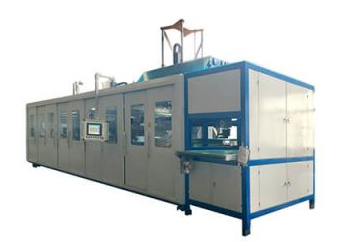
A Twin Sheet Thermoforming Machine is an advanced form of thermoforming technology that uses two separate plastic sheets, heated and formed simultaneously over two opposing molds, and then fused together while the material is still hot. This results in the formation of a sealed, hollow, and lightweight part that mimics the complexity and structure of a blow-molded item—but with much greater design flexibility and reduced tooling costs.
Unlike traditional single-sheet thermoforming, the twin sheet process allows for internal cavities, integrated fasteners, multi-wall geometry, under-cuts, and even multiple wall thicknesses within the same component. These design features make it ideal for applications where structural integrity and advanced functionality are non-negotiable.
Key Benefits of a Twin Sheet Thermoforming Machine
Let’s now delve into what makes this machine so appealing, especially for manufacturers that require durable, functional, and affordably produced hollow parts.
1. Exceptionally Strong, Lightweight Structures
Twin sheet formed products are hollow, which means low weight—yet the twin-wall design and precise molding deliver high stiffness and load-bearing capacity. This is crucial in many industrial applications, especially in the automotive, medical, logistics, and aerospace sectors.
For example:
- Automotive air ducts: Require lightweight but rigid structures.
- Reusable packaging containers: Need toughness with reduced material weight for efficient shipping.
The result is a product that meets demanding performance specifications without excessive bulk or cost.
Also Read: Twin Sheet Thermoforming Machines: Benefits, Applications, and Working Process

2. Design Freedom and Complex Geometries
Compared to blow molding and other conventional forming methods, twin sheet forming offers unparalleled design flexibility. You can integrate:
- Internal passages or cavities
- Custom reinforcements or ribs
- Blind holes or built-in handles
- Different colors or materials per side
- Inserts, mounts, or bosses
Such creative versatility would be cost-prohibitive in traditional molding or assembly-based manufacturing.
3. Reduced Tooling Costs vs. Blow Molding
When compared to injection or blow molding technologies, a Twin Sheet Thermoforming Machine offers lower tooling investments, making it an ideal choice for small to medium production volumes.
- Faster prototyping stage
- Lower tooling and mold build costs
- Easier iterations for design improvement
- Shorter lead times to production
This affordability allows small or growing manufacturers to experiment with and adopt advanced hollow part designs without being limited by initial capital expenses.
4. Multi-Material and Multi-Color Capabilities
Twin sheet thermoforming lets you combine two different materials or colors into a single part. This is useful for:
- Creating products with aesthetic outer shells and functional inner linings
- Enhancing thermal insulation
- Differentiating brand components with custom color schemes
This adds tremendous value in consumer-facing applications like luggage, helmets, protective gear, and home appliances.
5. Integrated Fastening and Assembly Features
Twin sheet thermoforming allows for the integration of hardware elements such as:
- Metal inserts
- Threaded bosses
- Electrical conduit guides
- Foam or vibration dampeners
This results in reduced secondary assembly operations and minimizes production time and labor costs.
6. Recyclability and Material Savings
As sustainability becomes increasingly important, the ability to use recyclable thermoplastics and reclaimed materials is a major advantage. Many cubic or hollow parts formed with twin sheet thermoforming utilize:
- HDPE (High-Density Polyethylene)
- PP (Polypropylene)
- ABS (Acrylonitrile Butadiene Styrene)
- PVC
- Recycled materials (regrind or post-consumer content)
Also, since parts are hollow and formed from two sheets, you use only the material needed, with little to no waste. This makes operations cleaner and more cost-effective over time.
Applications of Twin Sheet Thermoforming Machines
There’s a growing number of industries realizing the value of twin sheet technology. Here’s where the Twin Sheet Thermoforming Machine truly excels:
Automotive Industry
- HVAC air ducts
- Trunk panels
- Interior panels
- Battery covers
- Engine insulators
Medical Equipment
- Lightweight portable device enclosures
- Caps and product housing for diagnostic devices
- Mobile cart shrouds and guards

Also Read: Applications of Twin Sheet Thermoforming Machines
Industrial and Logistics
- Durable shipping pallets
- Nestable containers
- Storage bins
- Protective covers
Consumer Products
- Luggage shells
- Kayak and canoe hulls
- Protective helmets
- Multi-use beverage coolers
Aerospace and Rail
- Lightweight cargo containers
- Luggage compartments
- Interior lining panels
The growth in EV manufacturing, sustainable packaging, and composite material use is only driving more R&D around twin sheet forming.
How Shanghai Zhanshi Twin Sheet Thermoforming Machines Stand Out
At Shanghai Zhanshi Mechanical Equipment Co., Ltd., quality and innovation are deeply embedded in our machine design philosophy. Here is what you can expect from our Twin Sheet Thermoforming Machines:

Precision Engineering
- CNC-milled mold cavities for optimal accuracy
- Advanced servo-driven systems for heating, press control, and trimming
- Multi-zone heating technology for perfect forming
Modular Flexibility
- Machines that can be reconfigured for single-sheet or twin-sheet processes
- Easily adapted to different mold sizes and product types
- Open architecture for software and controls
Real-Time Monitoring and Automation
- User-friendly touch-screen HMI
- PLC-driven process control
- Internet-enabled remote monitoring
- Energy consumption tracking
- Maintenance alerts and system diagnostics
Full Technical Support and Installation
- On-site technician training
- Lifelong technical support
- Global spare parts availability
- Full machine calibration and performance check
Upgrade to Twin Sheet Thermoforming for Superior Hollow Parts
As product requirements grow more complex and markets more competitive, manufacturing methods need to evolve. For businesses seeking to produce strong, light, and highly customized hollow parts without incurring the high costs or rigidity of blow molding and injection molding, the Twin Sheet Thermoforming Machine presents an ideal path forward.
From automotive ducts to medical equipment housings, this technology supports rapid design iteration, material efficiency, and exceptional durability at scale—all of which are essential in today’s high-performance industries.
Frequently Asked Questions (FAQ)
Q1: What materials are best suited for twin sheet thermoforming?
Plastic types such as HDPE, ABS, PP, PVC, and polycarbonate are commonly used. These materials form well when heated and provide the strength needed for durable hollow structures.
Q2: Can I switch between single and twin sheet forming on the same machine?
Yes. Our twin sheet thermoforming machines at Shanghai Zhanshi can be easily adapted to work in single-sheet or twin-sheet mode, giving you incredible versatility in production.
Q3: Is twin sheet thermoforming environmentally friendly?
Absolutely. Many parts can be made using recyclable or post-consumer plastic sheets, and the process minimizes excess material by forming only what is needed. Waste trimmings can also be reground for reuse.
Q4: How do I know if twin sheet forming is better than blow molding for my application?
If your part requires complex geometry, built-in fasteners, or material aesthetics, twin sheet is likely a better choice. Blow molding is usually more suited for uniform-wall containers like bottles and tanks.
Q5: What’s the cycle time for producing parts?
Cycle time varies depending on size and material, but high-efficiency twin sheet machines can form parts in as little as 30–90 seconds per cycle.
Q6: Is operator training required?
Yes, but Shanghai Zhanshi offers comprehensive training for your staff during installation, ensuring quick scalability and machine uptime.
Q7: What kind of production volume is ideal for twin sheet thermoforming?
Twin sheet forming is most economical for medium-to-high production volumes, though the reduced tooling cost also makes it viable for prototype or short-run production.
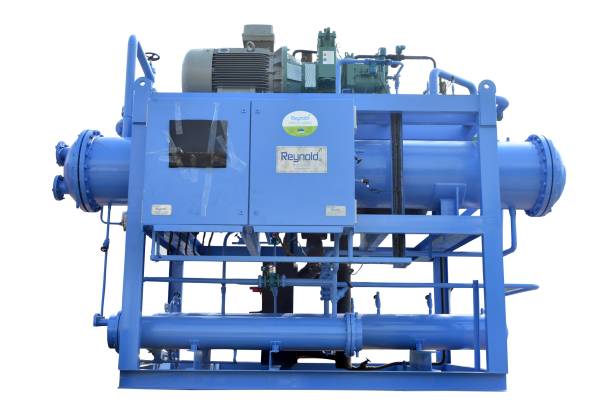
Advanced and modernized Heavy Duty 10W Industrial Water Chiller with Multi-Layer Circuit Control manufactured by Reynold India is available for industrial and commercial use.
The Function of Industrial Chiller for Multi-LayerThe water chiller for multilayer utilizes a steam solidity mechanical coolant system that attaches to the water system through an evaporator machine.Coolant flows via an evaporator, compressor, and extension equipment of a chiller.
Thermodynamic procedures take place in all parts of a chiller.
The evaporator operates as heat replacement, so that heat squeezed by process refrigerant circulates to the coolant.
When heat transmission occurs, coolant evaporates, converting low-temperature fluid into steam, whereas the temperature of the procedure refrigerant is eliminated.
Take a look at the different features of industrial chiller for multi-layer circuit control:- The multilateral circuit control framework Top efficiency green shade wooden box packing water chiller Single slice accuracy communication framework Save high raising power bills As far as thermoforming is concerned, it is a manufacturing procedure in which a polymer sheet is warmed up to adjustable temperature to a particular figure in a mold and cropped down to make working goods.
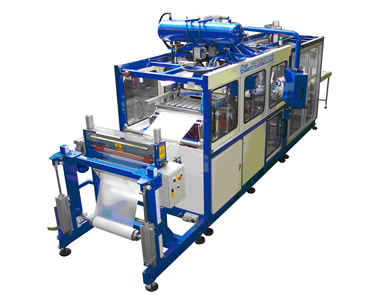
Thermoformed plastic packaging technique that involves heating a plastic sheet until it becomes malleable, shaping it into a particular shape, and trimming it to make a finished product.
Many types of packaging, such as plastic clamshell trays, blisters, and lidding film, are made using thin-gauge thermoforming.