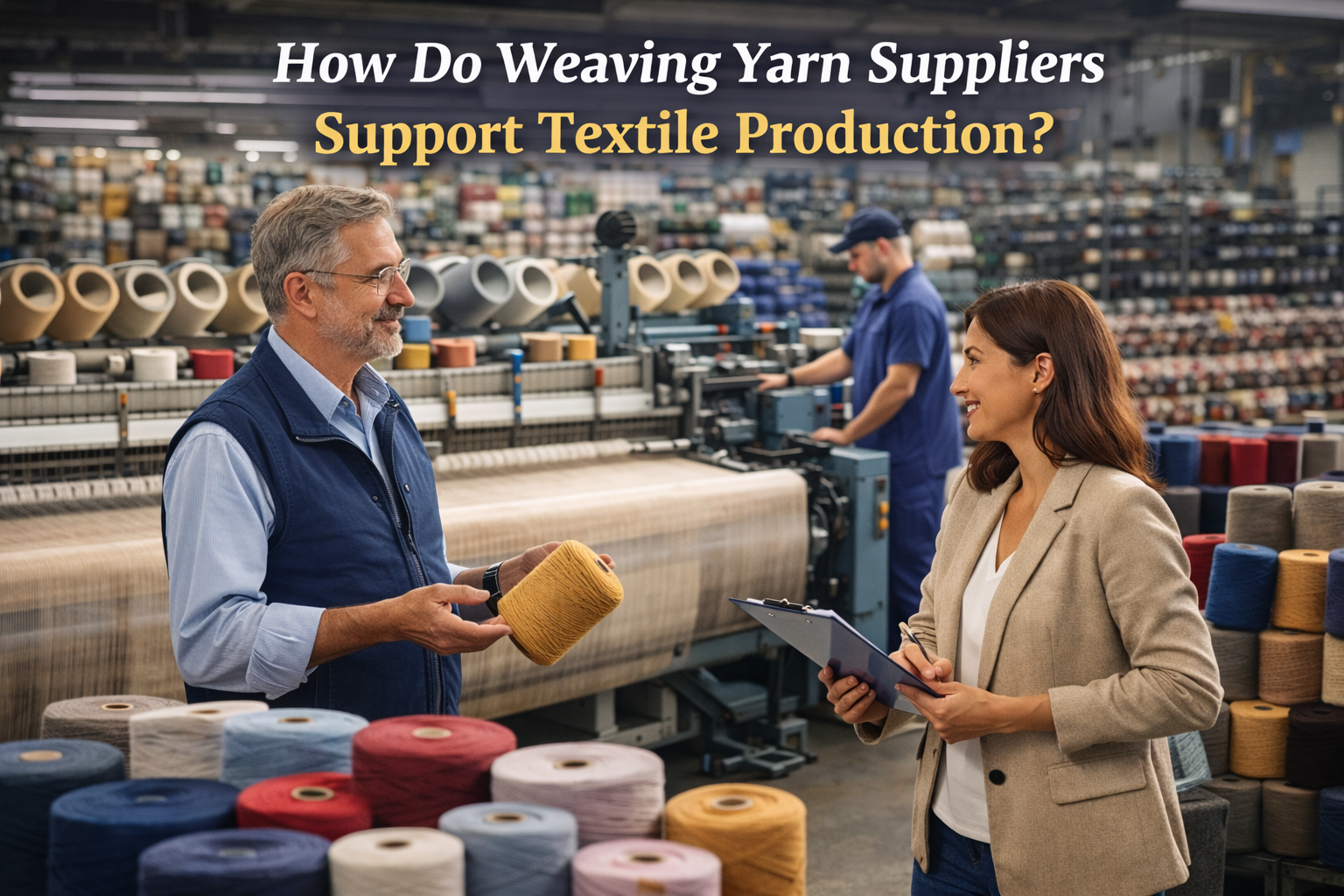
Textile production runs on precision. Every fabric roll, every delivery timeline, and every quality check depends on one critical input: yarn. When yarn quality or supply fails, production slows, costs rise, and customer commitments suffer.
This is why reliable weaving yarn suppliers are not just vendors, but long-term partners in textile manufacturing. They play a hands-on role in keeping looms running, waste low, and output consistent. Below is a closer look at how the right suppliers actively support textile production at every stage.
1. Delivering Consistent Yarn Quality
For textile mills, inconsistency is costly. Even small variations in yarn thickness or strength can lead to:
- Loom stoppages
- Uneven fabric texture
- Higher rejection rates
- Increased machine wear
Professional suppliers focus on uniformity across batches, ensuring the yarn performs the same way every time it reaches the loom. This consistency allows mills to maintain stable production without frequent machine adjustments.
Why buyers value this:
- Predictable output quality
- Reduced wastage
- Fewer production interruptions
2. Matching Yarn to Fabric Requirements
Not all yarns are created equal, and experienced suppliers know this. Different fabrics demand specific yarn characteristics depending on usage, climate, and end market.
Suppliers assist mills by recommending yarns based on:
- Yarn count and twist
- Fiber composition
- Strength and elasticity
- Surface smoothness
This technical guidance helps mills avoid trial-and-error sourcing and move directly into efficient production.
3. Supporting Production Planning
Textile manufacturing depends heavily on timing. Delayed yarn deliveries can halt entire production lines.
Reliable suppliers help mills plan better by offering:
- Advance production scheduling
- Consistent lead times
- Flexible dispatch planning
With dependable yarn availability, mills can confidently plan shifts, labor, and order commitments, especially during peak seasons.
4. Reducing Loom Downtime
Downtime is one of the highest hidden costs in textile production. Poor-quality yarn can cause frequent breakage and slow weaving speeds.
Professional suppliers reduce this risk through:
- Proper winding and tension control
- Clean, contamination-free packaging
- Moisture-protected storage and transport
The result is smoother loom performance and higher daily output.
5. Helping Mills Scale with Confidence
As textile businesses grow, their yarn requirements increase. Scaling production is risky without a supplier who can keep pace.
Strong suppliers support growth by:
- Managing large-volume orders
- Maintaining quality at scale
- Offering long-term supply stability
This allows mills to expand operations or enter new markets without worrying about raw material bottlenecks.
6. Providing Stability in Uncertain Markets
Raw material prices fluctuate. Fiber availability changes. Logistics costs rise unexpectedly.
Experienced suppliers act as a stabilizing force by:
- Offering transparent pricing
- Maintaining buffer stocks
- Communicating early about market changes
This helps mills manage costs and avoid sudden production disruptions.
7. Supporting Product Development and Innovation
Markets evolve, and fabric requirements change with them. Suppliers often play a role in helping mills develop new products by introducing:
- New yarn blends
- Improved performance characteristics
- Better dye absorption or durability
This collaboration shortens development cycles and helps textile producers stay competitive.
8. Strengthening Export Readiness
Export-oriented textile production demands consistency and compliance. Yarn quality must meet international standards for strength, colorfastness, and fiber composition.
Suppliers experienced in export markets assist with:
- Batch consistency
- Documentation accuracy
- Quality traceability
This reduces the risk of shipment rejections and buyer complaints.
9. Building Long-Term Working Relationships
Successful textile production is rarely transactional. Mills prefer suppliers who understand their machinery, fabric range, and long-term goals.
Companies like Jindaltex have earned buyer trust by focusing on dependable sourcing, clear communication, and production-aligned support rather than short-term pricing tactics.
These relationships lead to:
- Faster issue resolution
- Better forecasting
- Shared growth over time
10. Supporting Sustainability Goals
Sustainability is no longer optional. Efficient yarn sourcing directly impacts waste reduction and energy use.
Suppliers contribute by offering:
- Optimized yarn constructions
- Reduced breakage rates
- Efficient weaving performance
This helps mills lower material waste while meeting modern buyer expectations.
11. Offering Practical Technical Support
Beyond supply, experienced partners provide insights that help mills improve performance, such as:
- Yarn handling best practices
- Tension recommendations
- Storage and humidity control tips
This hands-on support can prevent costly production mistakes.
12. Bridging Spinning and Weaving Seamlessly
The textile supply chain relies on coordination. Yarn manufacturers play a key role by ensuring spinning output aligns with weaving requirements.
This alignment reduces:
- Quality mismatches
- Processing delays
- Rejected fabric batches
By understanding both ends of production, suppliers keep the system balanced.
13. Adding Value Through Experience
Experience matters. Suppliers with industry knowledge anticipate challenges before they become problems.
They understand:
- Seasonal demand cycles
- Machinery limitations
- Market-specific quality expectations
This foresight makes them reliable partners, not just raw material providers.
14. Strengthening the Textile Ecosystem
A reliable supply chain benefits everyone from weaving mills to garment producers and retailers. By supporting mills with consistent supply and expertise, yarn manufacturers help strengthen the entire textile ecosystem.
Conclusion: Why the Right Supplier Matters
Textile production is only as strong as its weakest link. Reliable yarn sourcing ensures smooth operations, consistent quality, and the ability to grow with confidence.
When suppliers deliver more than just yarn, when they provide stability, insight, and long-term support, they become an essential part of a mill’s success story.
FAQs
What role do weaving yarn suppliers play in textile production?
They provide consistent-quality yarn, timely supply, and technical support that helps textile mills maintain smooth weaving operations and reliable fabric output.
How do weaving yarn suppliers ensure yarn quality?
Jindaltex, as a weaving yarn suppliers follow strict quality checks during spinning, winding, and packaging to ensure uniform strength, twist, and performance across batches.
Why is a consistent yarn supply important for textile mills?
Inconsistent supply can stop looms, delay production schedules, and increase costs, making reliable sourcing essential for efficiency.
How do yarn suppliers help reduce weaving downtime?
By supplying properly wound, uniform yarn that reduces breakage and improves loom efficiency during production.
Do weaving yarn suppliers support bulk production needs?
Yes, professional suppliers manage large-volume orders and adjust capacity to meet growing production demands.
How do yarn manufacturers support fabric quality?
They produce yarn that matches fabric requirements, helping maintain consistent texture, strength, and finish in woven textiles.
Can yarn suppliers help with custom fabric requirements?
Experienced suppliers assist with selecting yarn counts, blends, and specifications suited to specific fabric applications.
How do weaving yarn suppliers support export-focused textile units?
They ensure consistent batch quality, proper documentation, and yarn standards that meet international market requirements.
Why do textile mills prefer long-term yarn suppliers?
Long-term partnerships provide stable pricing, reliable supply, and a better understanding of production needs.
How does the right yarn supplier improve production efficiency?
By delivering consistent quality on time, reducing waste, minimizing loom issues, and supporting smooth production planning.