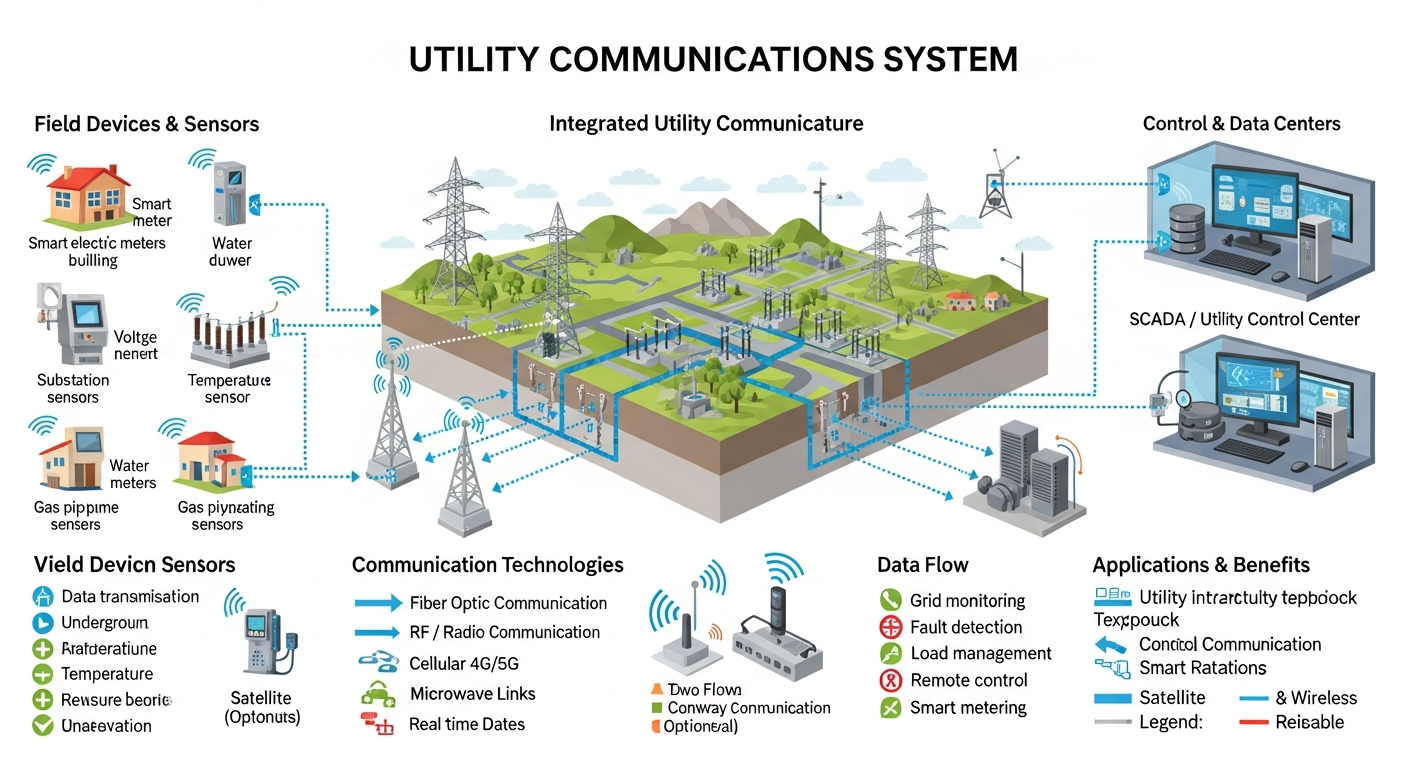
According to a new report published by Allied Market Research, the utility communications market size was valued at $27.7 billion in 2023 and is projected to reach $47.3 billion by 2033, growing at a CAGR of 5.5% from 2024 to 2033. The market growth is driven by rising adoption of renewable energy, rapid deployment of smart grid infrastructure, and increasing demand for reliable and resilient utility services.
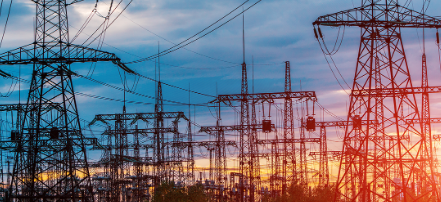
Utility communications refer to the communication networks, systems, and technologies that enable seamless interaction between utilities, infrastructure assets, field personnel, and end users. These systems play a critical role in monitoring, controlling, and managing utility operations across power generation, transmission, distribution, and customer service functions.
Download PDF Brochure: https://www.alliedmarketresearch.com/request-sample/A15561
Role of Utility Communications in Modern Utilities
Utility communications provide multiple channels for customer engagement and operational coordination. Customers can report outages, request services, and receive real-time updates through phone calls, emails, mobile applications, and online portals. These communication platforms significantly improve customer satisfaction by enabling faster responses and transparent information sharing.
In addition, utility communications enhance the reliability and resilience of utility services. By maintaining robust communication networks, utilities can monitor infrastructure performance in real time, detect anomalies, and take proactive measures to prevent service disruptions. During outages, effective communication between customers, call centers, dispatchers, and field technicians allows for rapid fault identification, quicker crew deployment, and faster service restoration.
Market Dynamics: Renewable Energy Integration
The increasing adoption of renewable energy sources is a major factor driving the utility communications market growth. Renewable energy installations such as solar farms and wind parks are often spread across large geographic areas, making remote monitoring and control essential. Utility communications enable utilities to track system performance, identify faults, and carry out predictive maintenance, minimizing downtime and maximizing energy generation.
Furthermore, utility communications are crucial for integrating renewable energy projects into existing grid infrastructure. Communication networks support coordination between utilities, grid operators, regulators, and project developers during planning, approval, and commissioning stages. This ensures smooth grid integration and regulatory compliance.
Smart Grid Deployment Boosting Market Demand
The expansion of smart grid infrastructure is another key driver for the utility communications market. Smart grids rely on continuous data exchange between smart meters, sensors, control systems, and analytics platforms. Utility communications provide the connectivity and data management capabilities required for real-time communication across the grid ecosystem.
Smart grids allow utilities to remotely monitor and control assets such as substations, transformers, and distribution lines. Reliable communication links help detect equipment failures, respond quickly to operational issues, and improve grid efficiency. In addition, smart grid infrastructure supports demand response programs, enabling utilities to manage electricity demand during peak periods.
Utility communications facilitate real-time interaction between utilities and consumers, allowing the exchange of information related to energy usage, pricing, and load control signals. This helps utilities balance supply and demand, optimize power distribution, and reduce operational costs.
Distributed Energy Resources and Grid Resilience
The integration of distributed energy resources (DERs), including rooftop solar panels, battery storage systems, and microgrids, requires effective coordination and control. Utility communications enable the bidirectional flow of energy and data between DERs and central grid systems. Real-time monitoring and communication ensure grid stability, efficient power flow, and seamless coordination among multiple energy sources.
Moreover, utility communications enhance grid resiliency by enabling rapid fault detection, isolation, and restoration. Communication networks transmit alarms, fault data, and outage notifications to control centers, allowing utilities to respond quickly to disruptions and minimize service downtime.
Market Restraints: Cybersecurity Concerns
Despite strong growth prospects, cybersecurity threats pose a major restraint to the utility communications market. As utilities increasingly rely on digital communication networks and cloud-based platforms, the risk of cyberattacks on critical infrastructure rises. Data breaches, network intrusions, and system vulnerabilities can disrupt operations and compromise grid security.
However, ongoing advancements in cybersecurity technologies, encryption methods, and secure communication protocols are expected to mitigate these risks. Investments in secure network architecture and regulatory compliance are likely to support long-term market growth.
Segmentation Analysis
The utility communications market forecast is segmented by technology, utility type, component, application, end-use, and region.
By technology, the market is divided into wired and wireless communication systems. The wireless segment accounted for more than half of global revenue in 2023 and is expected to maintain its dominance due to flexibility, scalability, and cost-effectiveness.
Based on utility type, the market is classified into public and private utilities. The public segment held the largest share in 2023, supported by government investments in grid modernization and smart infrastructure projects.
By component, the market is segmented into hardware and software. The software segment dominated the market in 2023, driven by growing demand for data analytics, monitoring platforms, and network management solutions.
By application, the market includes oil & gas, power generation, and others, with power generation emerging as the leading segment due to increasing electricity demand and renewable energy integration.
By end-use, the market is categorized into residential, commercial, and industrial, with the industrial segment holding the largest share in 2023.
Regional Outlook
Region-wise, the utility communications market is analyzed across North America, Europe, Asia-Pacific, and LAMEA. Asia-Pacific dominated the market in 2023, accounting for more than half of global revenue. Rapid urbanization, expanding power infrastructure, and strong investments in renewable energy and smart grids are driving growth in the region.
North America and Europe also represent significant markets due to advanced grid infrastructure and ongoing modernization initiatives.
Get a Customized Research Report: https://www.alliedmarketresearch.com/request-for-customization/A15561
Competitive Landscape
Key players operating in the utility communications industry include General Electric, Omicron, Hitachi Ltd., RAD, Schneider Electric SE, Cisco Systems Inc., ABB, Milsoft Utility Solutions, Motorola Solutions Inc., and Itron Inc. These companies focus on product innovation, partnerships, expansions, and strategic collaborations to strengthen their market position.
Conclusion
The utility communications market is witnessing steady and sustainable growth, driven by the global transition toward renewable energy, rapid deployment of smart grid infrastructure, and rising demand for reliable utility services. As utilities increasingly rely on digital communication networks to monitor assets, manage distributed energy resources, and enhance customer engagement, the importance of secure and efficient utility communications continues to grow.
While cybersecurity concerns and infrastructure costs remain key challenges, ongoing technological advancements in wireless communication, software platforms, and data analytics are helping utilities overcome these barriers. Strong investments in grid modernization, especially across Asia-Pacific, along with increasing adoption in industrial and power generation sectors, are expected to further strengthen market expansion. Overall, utility communications will remain a critical enabler for resilient, efficient, and future-ready energy and utility systems throughout the forecast period.
About Us
Allied Market Research (AMR) is a full-service market research and business-consulting wing of Allied Analytics LLP based in Portland, Oregon. Allied Market Research provides global enterprises as well as medium and small businesses with unmatched quality of "Market Research Reports" and "Business Intelligence Solutions." AMR has a targeted view to provide business insights and consulting to assist its clients to make strategic business decisions and achieve sustainable growth in their respective market domain.
Pawan Kumar, the CEO of Allied Market Research, is leading the organization toward providing high-quality data and insights. We are in professional corporate relations with various companies and this helps us in digging out market data that helps us generate accurate research data tables and confirms utmost accuracy in our market forecasting. Each and every data presented in the reports published by us is extracted through primary interviews with top officials from leading companies of domain concerned. Our secondary data procurement methodology includes deep online and offline research and discussion with knowledgeable professionals and analysts in the industry.