

Introduction: Why Polymer Nanoparticles Matter in Drug Delivery
Polymer nanoparticles have emerged as one of the most effective platforms for modern drug delivery. Their ability to encapsulate active pharmaceutical ingredients (APIs), protect sensitive molecules, and enable controlled release makes them highly attractive for applications ranging from mRNA therapeutics to small-molecule drugs and diagnostic agents.
For these systems, particle size uniformity is not optional. It directly affects biodistribution, cellular uptake, stability, filtration performance, and overall therapeutic safety. Achieving consistent nanoscale particles remains a critical requirement throughout research, development, and commercial manufacturing.
Challenges in Producing Uniform Polymer Nanoparticles
Despite their potential, polymer nanoparticles are not easy to manufacture with consistent quality. Traditional emulsification and mixing techniques often struggle to deliver:
Broad particle size distributions
Batch-to-batch variability
Limited reproducibility
Difficulties when scaling from lab to production
These limitations can negatively impact formulation performance and pose challenges for regulatory approval, especially when transitioning from early-stage research to clinical or commercial manufacturing.
High-Pressure Microfluidization: Enabling Consistency and Control
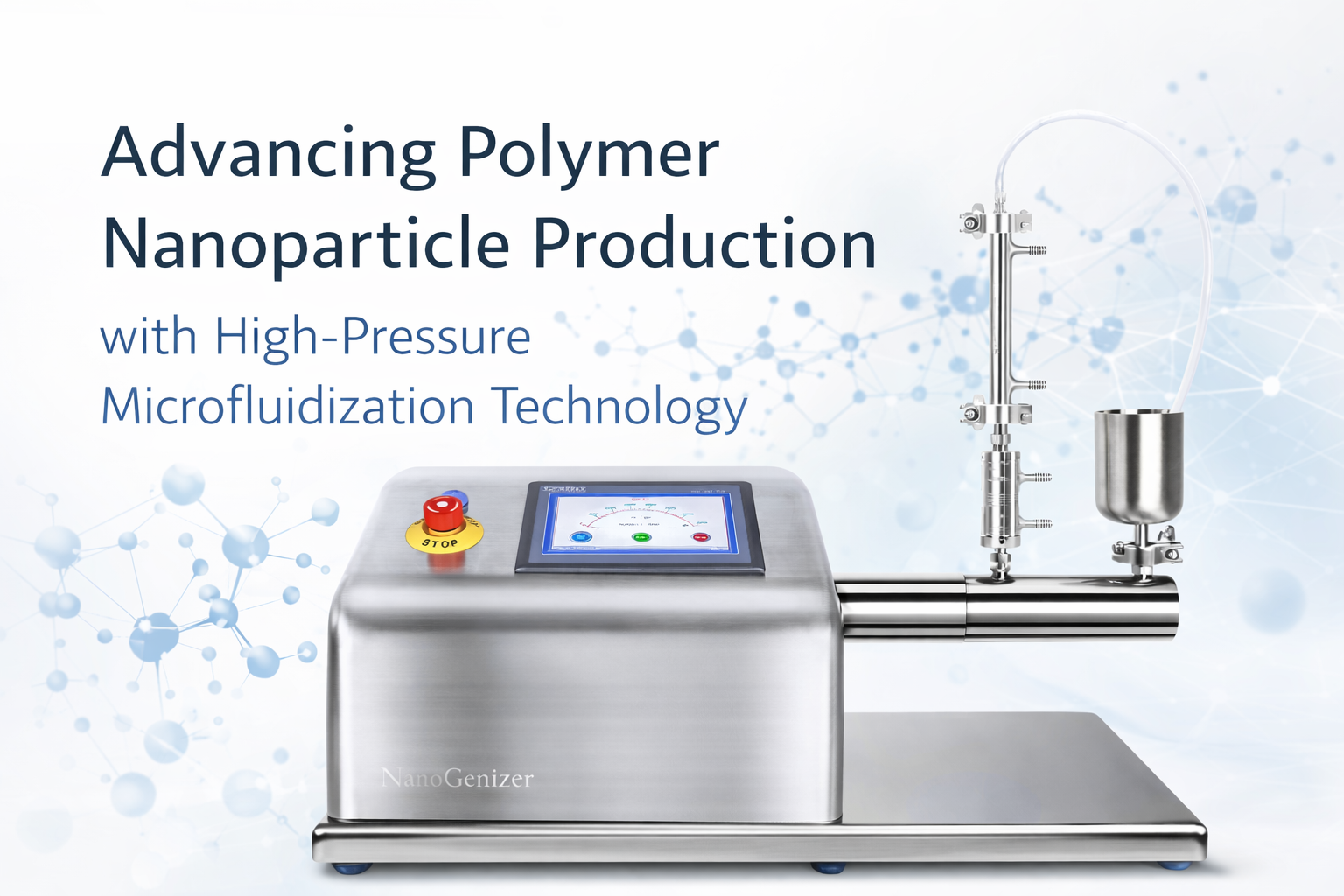
High-pressure microfluidization provides a reliable and scalable solution to these challenges. By forcing formulations through precisely engineered microchannels at extremely high pressures, the process generates uniform and controlled shear forces.
This mechanism efficiently breaks droplets down to the nanoscale, producing polymer nanoparticles with:
Narrow particle size distribution
Consistent morphology
Improved physical stability
As a result, formulations benefit from better filtration performance, enhanced shelf stability, and suitability for advanced therapeutic applications.
Scalability and Versatility Across Nanoparticle Systems
One of the key advantages of high-pressure microfluidization is its true scalability. Processing parameters established at the laboratory scale can be reliably translated to pilot and industrial production without compromising particle uniformity or quality.
In addition to polymer nanoparticles, the technology is widely used for lipid-based nanoparticles and liposomes. This versatility supports optimized formulations, controlled release profiles, and extended shelf life. High-pressure microfluidization also enables terminal sterilization through filtration, helping manufacturers meet stringent pharmaceutical and regulatory standards.
A Streamlined Workflow for Research and Development
For researchers and formulation scientists, high-pressure microfluidization simplifies the development process. Different polymer or lipid compositions can be evaluated efficiently, processing conditions can be fine-tuned with precision, and results remain reproducible across batches.
By combining accuracy, repeatability, and scalability, high-pressure microfluidization serves as a powerful bridge between laboratory innovation and commercial manufacturing readiness.
Explore High-Pressure Microfluidization with Genizer
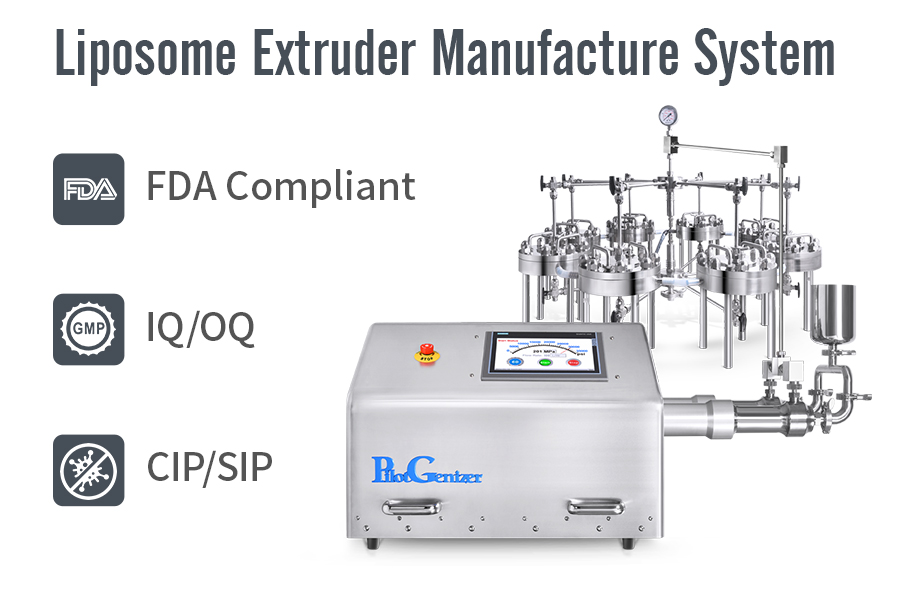
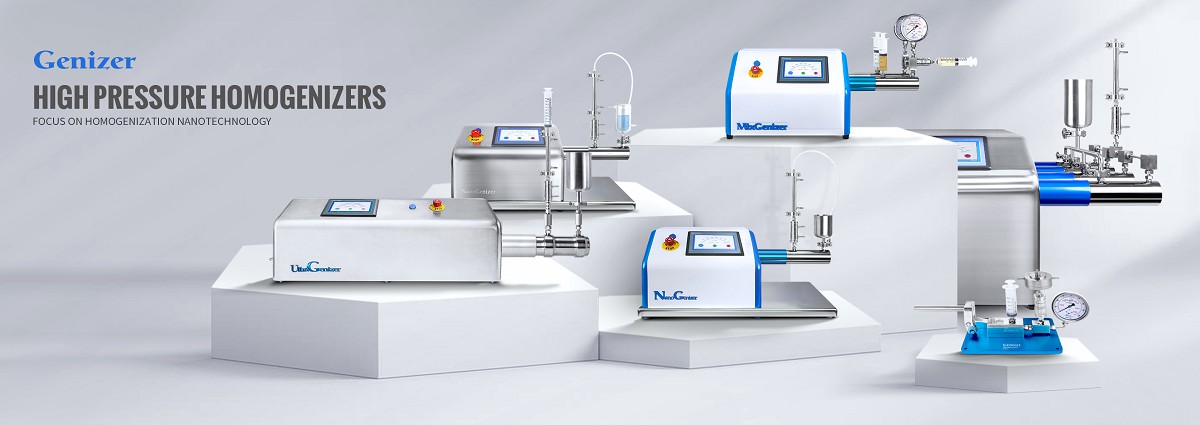
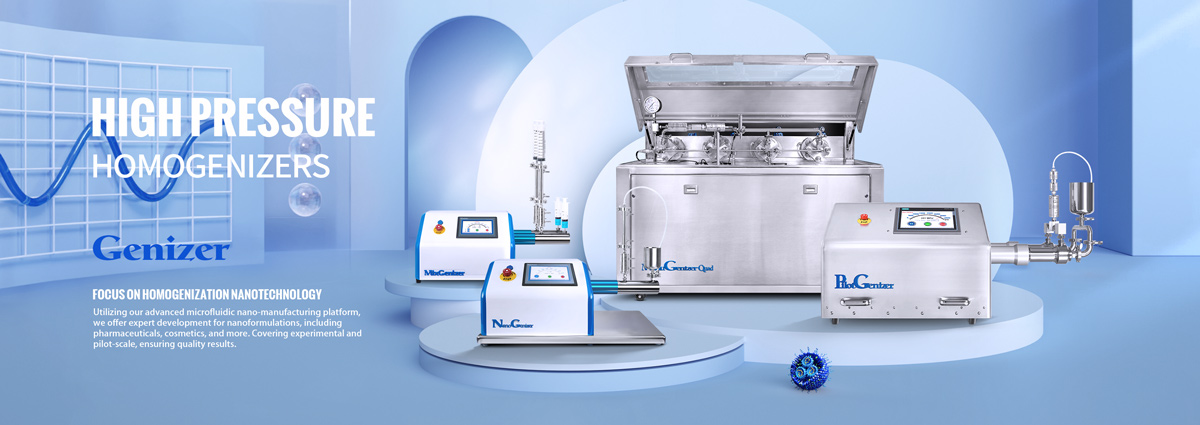
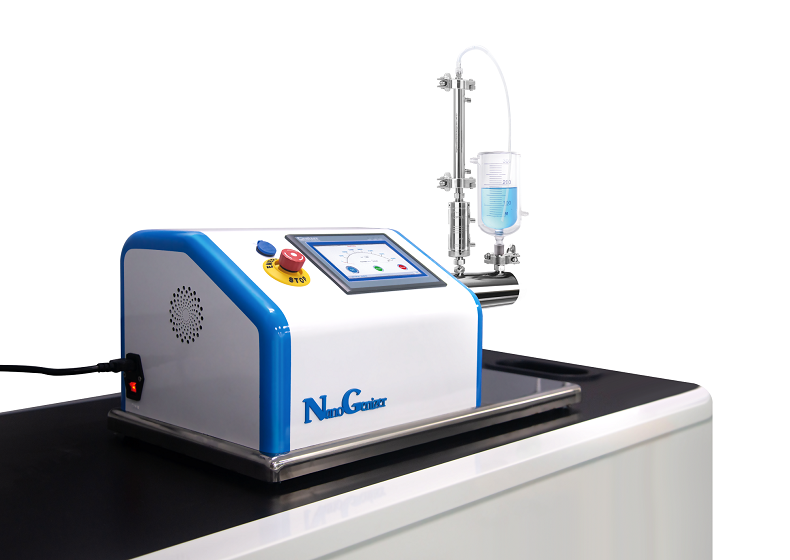
Genizer high-pressure homogenizers are designed to deliver precise and scalable microfluidization for both research laboratories and industrial production environments. With consistent particle size control, excellent reproducibility, and seamless scale-up capability, Genizer systems help transform promising nanoparticle formulations into commercially viable drug delivery solutions.
Learn more about Genizer high-pressure homogenizers and how they support advanced nanoparticle development.