

What are Liposomes?
Liposomes are widely used nano-carriers in drug delivery, gene therapy, and vaccine development. Their ability to encapsulate both hydrophilic and hydrophobic compounds makes them valuable in modern pharmaceutical research. To ensure formulation performance and reproducibility, precise control of particle size and distribution is essential. As a result, liposome production equipment plays a critical role in achieving consistent and reliable nanoformulations.
Liposomes typically range from 50 to 200 nanometers in size. At this scale, small variations in processing conditions can significantly affect stability, bioavailability, and in vivo behavior. Advances in lipid nanoparticle (LNP) technology have further increased the need for controlled and scalable production methods.
What Is Liposome Production Equipment?
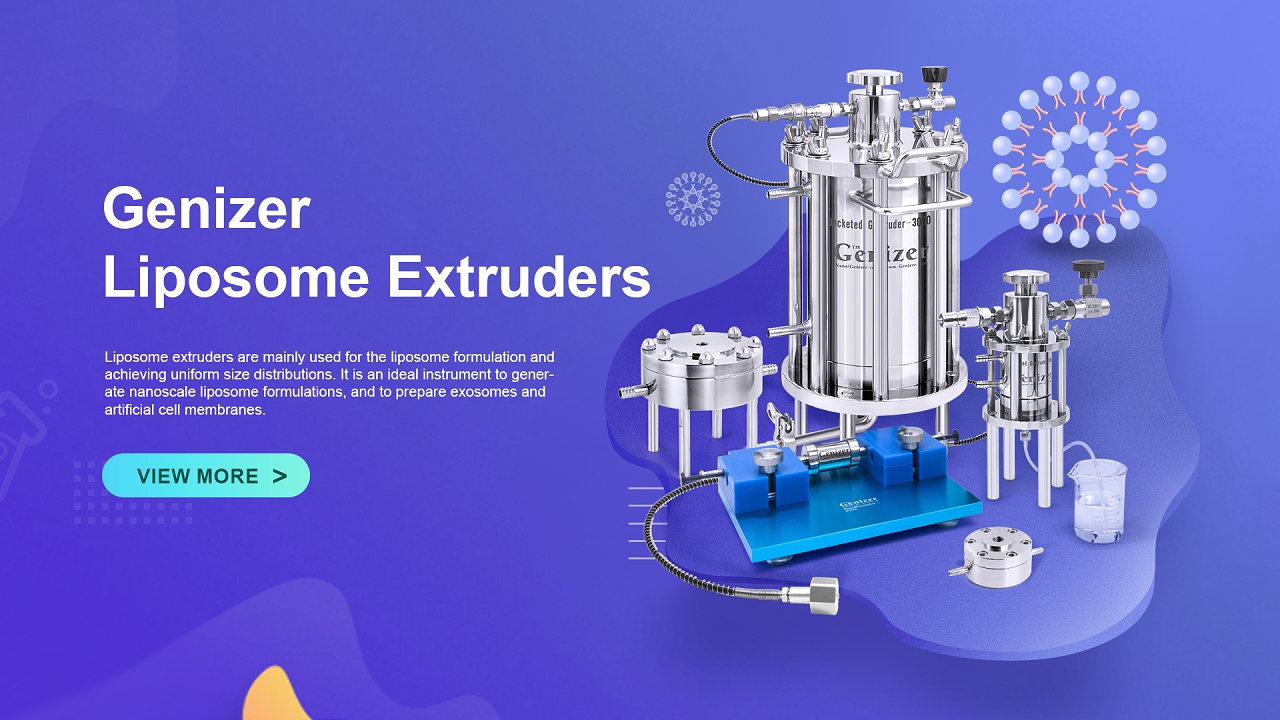
Liposome production equipment refers to specialized systems used to control particle size, uniformity, and formulation stability during liposome preparation. These systems apply mechanical or pressure-based forces to lipid suspensions, enabling reproducible nano-scale formulations suitable for research and pharmaceutical development.
Well-designed equipment allows researchers to adjust key parameters such as pressure, temperature, and flow conditions, which are critical for maintaining formulation integrity.
Common Techniques Used in Liposome Production
High-Pressure Homogenization (HPH)
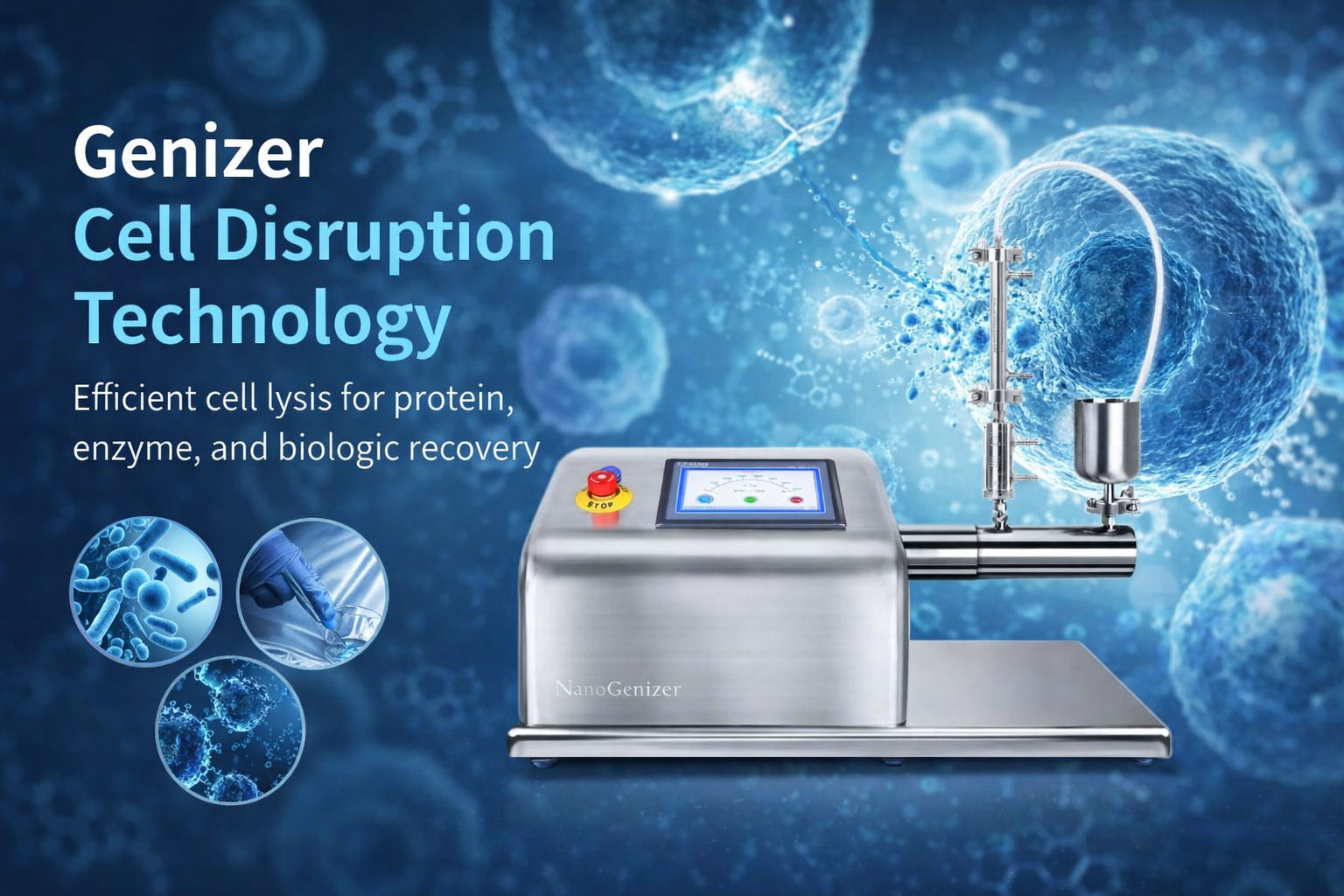
High-pressure homogenization is a widely used technique in liposome production. Lipid suspensions are forced through interaction chambers under controlled high pressure, where shear forces, turbulence, and cavitation contribute to particle size reduction and uniform dispersion.
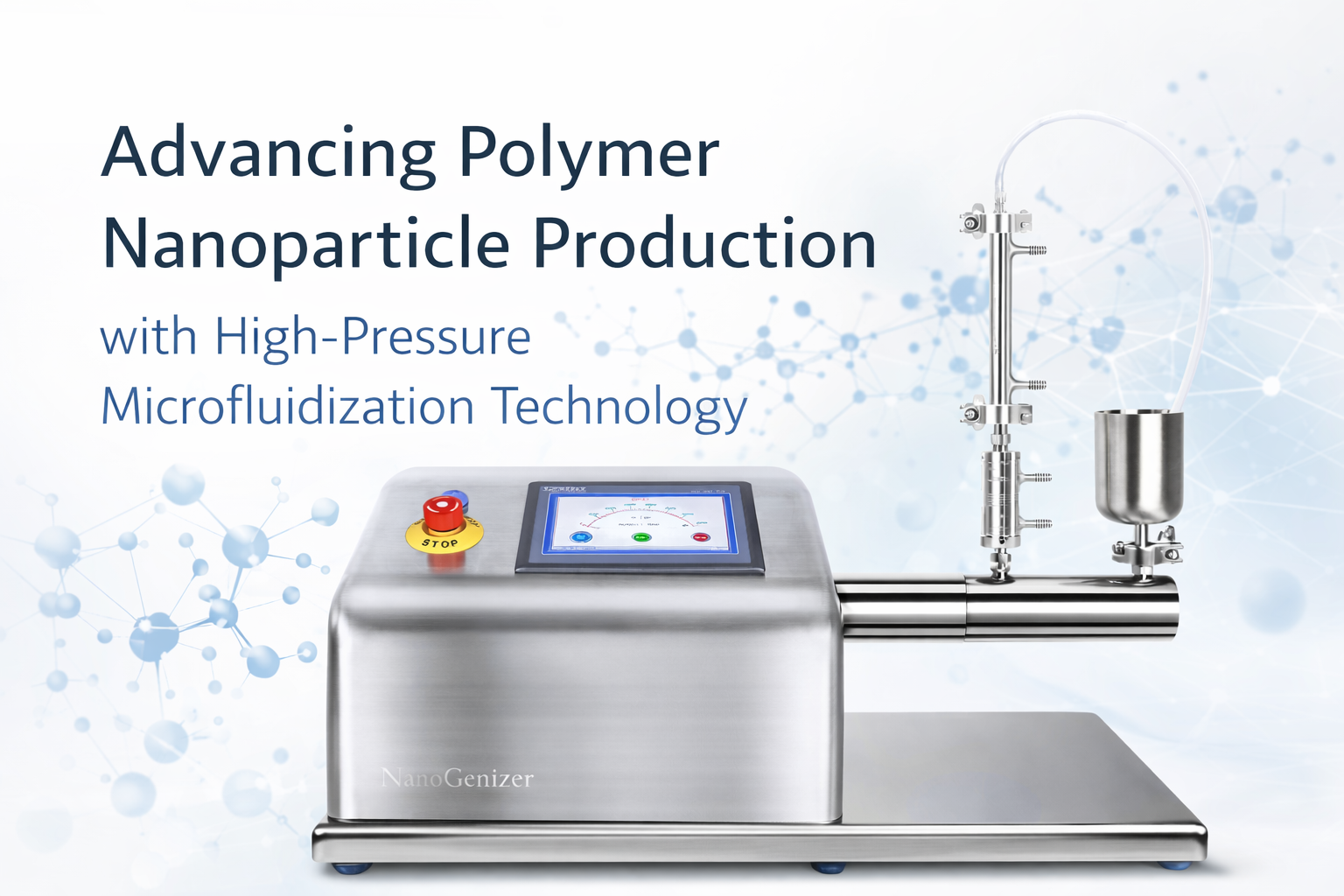
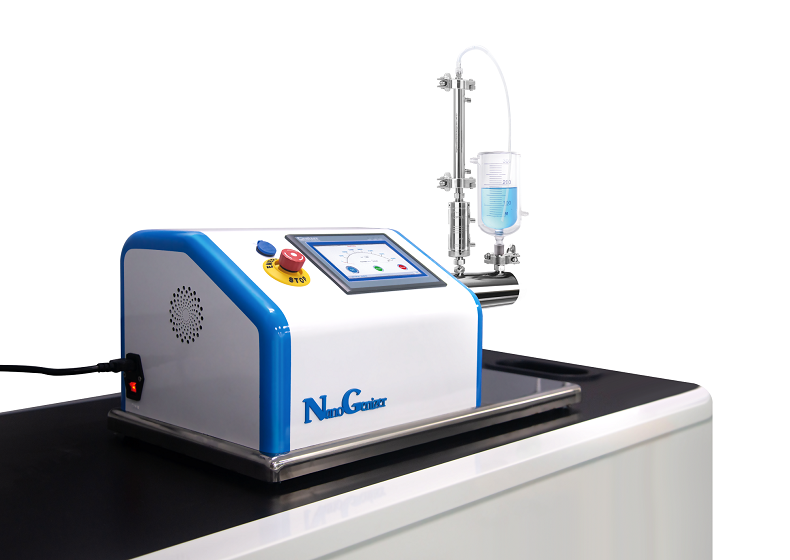
High-pressure homogenizers enable consistent processing and are suitable for a wide range of liposome formulations. In research environments, systems such as the NanoGenizer high-pressure homogenizer are often used to achieve controlled and reproducible nano-scale liposome dispersions.
Membrane Extrusion
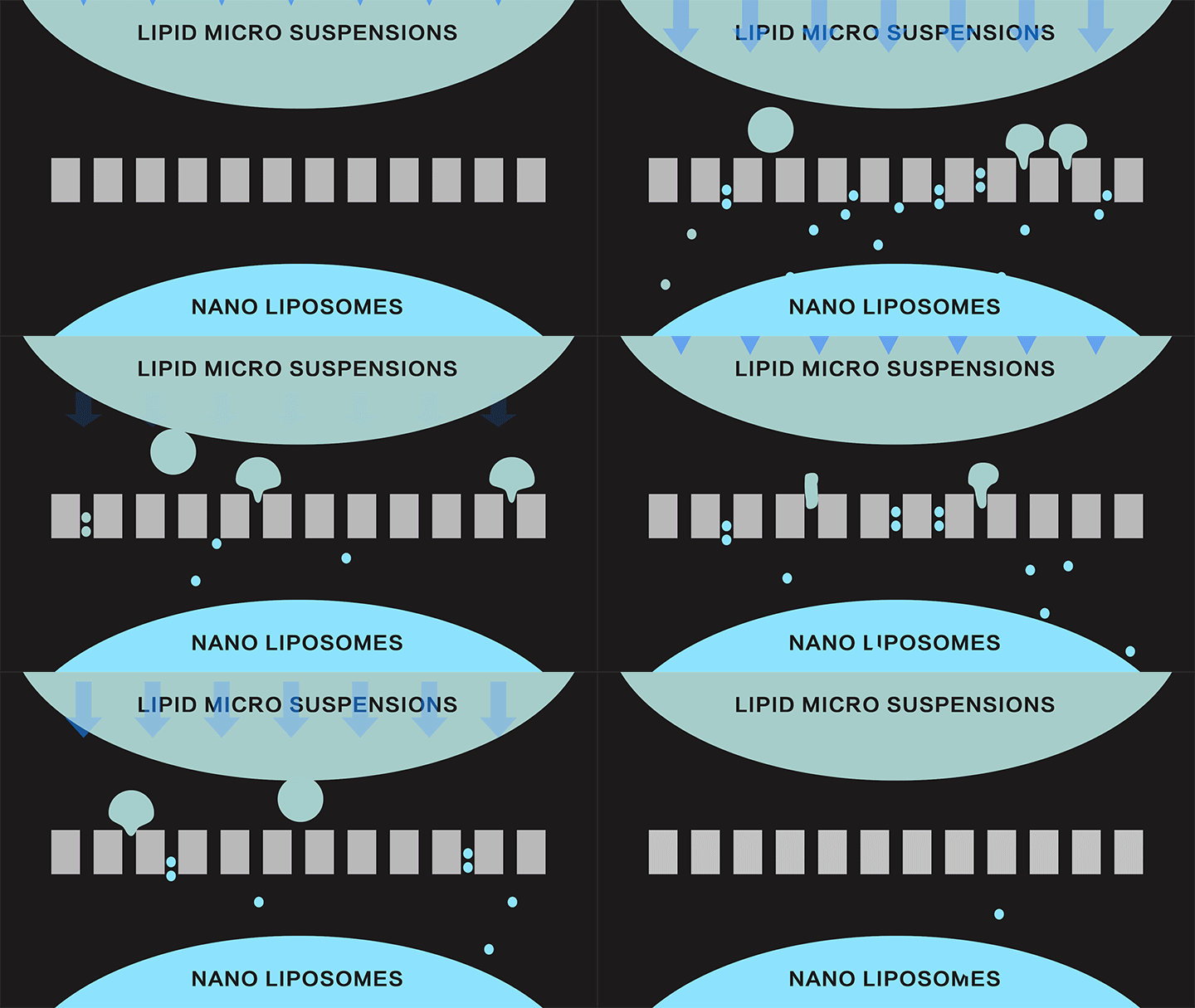
Membrane extrusion involves forcing lipid vesicles through membranes with defined pore sizes. This liposome extrusion method allows precise control over final particle size and produces narrow size distributions. Temperature-controlled liposome extruders are particularly important for thermally sensitive formulations, helping maintain lipid phase behavior during processing.
Shearing and Sonication
Shearing and ultrasonic methods apply mechanical energy to reduce particle size and are commonly used as pretreatment steps or for specific formulation types. While effective for certain applications, these methods are often combined with other techniques to improve uniformity.
Applications of Liposomes in Pharmaceutical Research
Liposomes produced using advanced liposome production equipment are widely applied in:
- Targeted drug delivery, improving circulation time and therapeutic efficacy
- Vaccine formulations, enhancing antigen stability and immune response
- Gene therapy, enabling safe and efficient nucleic acid delivery
- Biotechnology and cosmetic formulations, protecting sensitive active ingredients
By optimizing processing parameters, liposome formulations can be tailored to specific application requirements.
Key Considerations in Liposome Production
Successful liposome production depends on several factors, including particle size control, temperature management, and process reproducibility. Selecting appropriate liposome production equipment and processing techniques helps ensure stable nanoformulations and consistent product quality.
Methods such as high-pressure homogenization and controlled extrusion provide flexibility for different formulation needs, supporting both research-focused development and scalable production workflows.

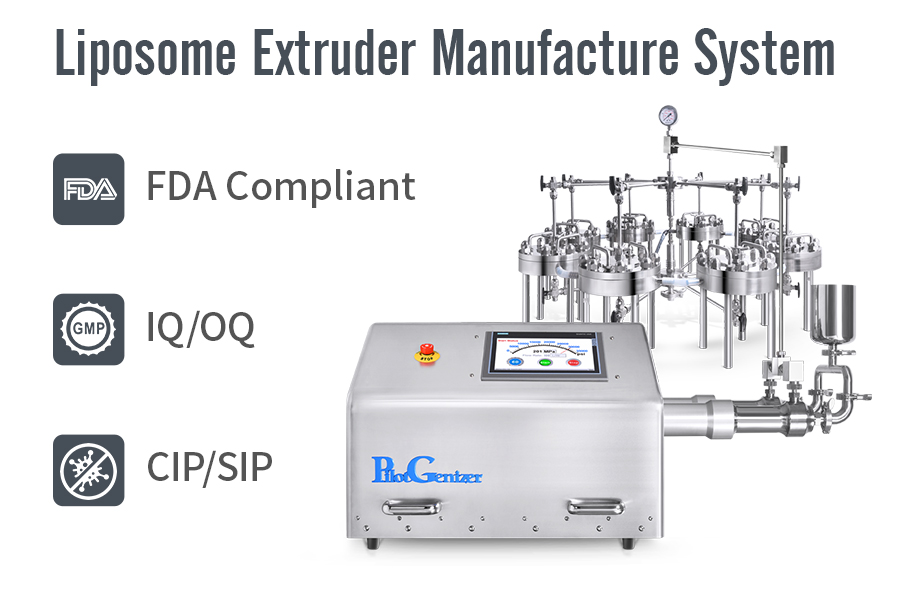
Liposome Manufacturing System: High Pressure Pump+ Online Liposome Extruders
Final Thoughts on Liposome Production
Understanding liposome production equipment and preparation techniques is essential for developing high-quality nanoformulations. By applying controlled processing methods, researchers can produce liposomes with improved consistency, stability, and performance across pharmaceutical and biomedical applications.