

The British Journal of Anaesthesia published findings showing that over 234 million major surgical procedures are performed worldwide each year. Behind every successful surgery lies an often-overlooked hero, the skilled anaesthesia technologist who ensures patient safety through precise monitoring and equipment management. As surgical procedures grow increasingly complex and patient populations become more diverse, the demand for highly trained anaesthesia professionals has surged dramatically.
Modern operating rooms now utilise sophisticated technology, from advanced ventilators to computerised drug delivery systems, requiring expertise that goes far beyond basic technical knowledge. Healthcare facilities worldwide are seeking specialists who can seamlessly blend clinical understanding with technical proficiency.
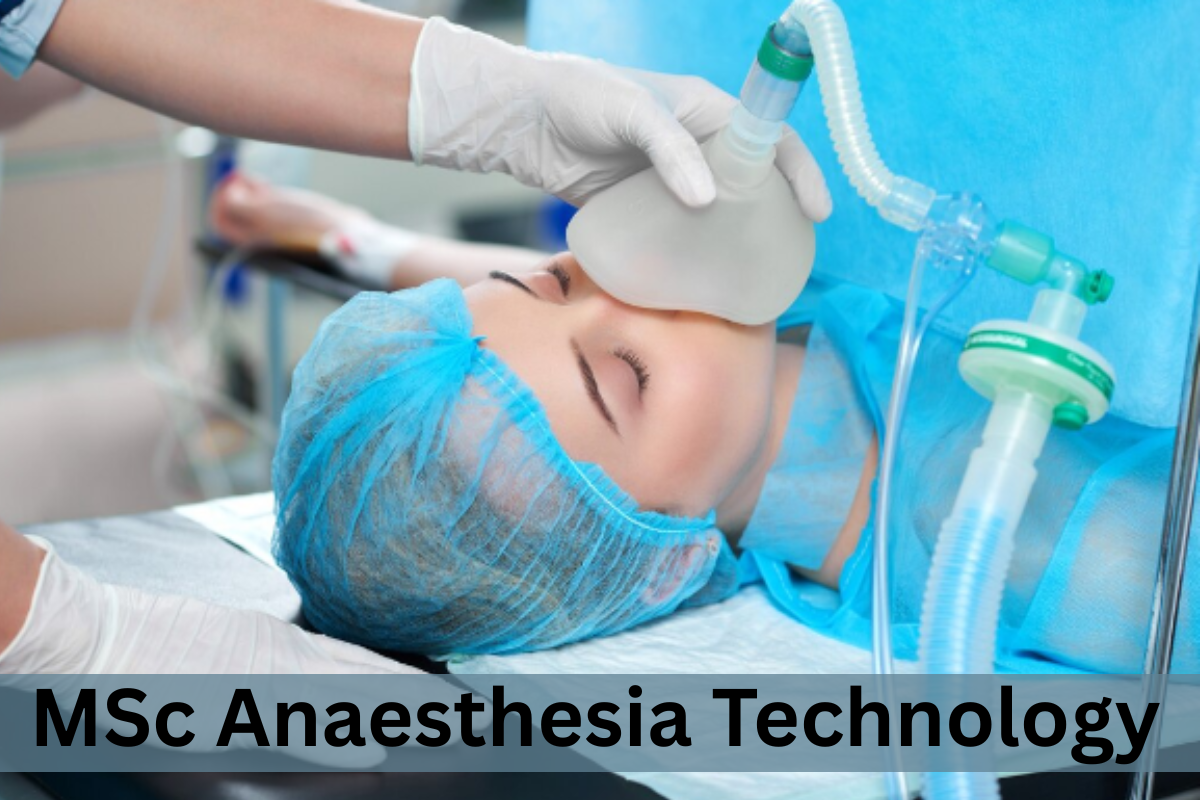
This is where MSc in Anaesthesia Technology comes in to transform it. This graduate degree is designed to transform healthcare technicians into advanced specialists in perioperative care. It offers superior education in anaesthetic equipment, patient monitoring and emergency and critical care management, equipping graduates to take crucial roles on life-saving surgical teams.
What is MSc Anaesthesia Technology?
The MSc Anesthesia Technology is a 2-year postgraduate programme focused on anesthesia and operating theatre practices. It trains students in anesthesia techniques, patient monitoring and perioperative care. The course blends classroom teaching with supervised clinical training.
Over the two years, students learn to handle anesthesia equipment and support surgical procedures. They also develop skills related to safety standards and operation theatre management. This structured approach prepares graduates to work effectively within surgical and critical care teams.
MSc Anesthesia Eligibility - Academic Requirements
Admission into an MSc Anesthesia course requires a relevant academic background in allied health sciences. The eligibility requires candidates to have foundational knowledge before they can proceed to advanced clinical practice training.
To clarify the requirements, eligibility generally includes-
- A bachelor’s degree in Anaesthesia and operating theatre technology or a closely related allied health science discipline
- A minimum of 50% aggregate marks in the qualifying undergraduate programme
- Selection through an institutional admission test, while CUET-PG scores may also be accepted and can exempt candidates from the internal entrance test
These conditions ensure that the applicants are academically ready to undertake postgraduate-level education. They also ensure that students joining the programme can adjust to the programme's clinical and technical requirements.
Meeting the MSc Anesthesia eligibility requirements will foster an effective learning environment where students are advanced to the same academic standing and professional orientation.
MSc Anesthesia Course - Structure and Curriculum
The MSc anesthesia course spans two academic years, usually divided into four semesters. The curriculum is progressive, starting with basic knowledge and progressing to higher-level clinical interventions. Every stage involves combining theoretical learning and on-the-job exposure.
The academic structure can be understood through the following stages-
- Initial semesters focus on pre-operative assessment, cardiovascular and non-cardiovascular monitoring and introductory clinical education. These subjects strengthen understanding of patient physiology and anesthesia fundamentals.
- Intermediate semesters introduce anesthesia practices related to general and vascular surgery. Topics such as infection control, hospital planning and extended clinical training also form part of this phase.
- Final semesters emphasise specialised anesthesia care, including orthopaedic, cardiac, neurological and trauma-related procedures. Students also complete a dissertation and advanced clinical rotations.
This is a step-by-step process that enables the students to gain competence. Clinical exposure is enhanced each semester, making it well-suited for real-world applications. The dissertation work and research methodology stimulate academic maturity and critical thinking. In general, the curriculum equips students with clinical and professional flexibility.
Career Scope After MSc Anaesthesia Technology
MSc Anaesthesia graduates are allowed to work in hospitals, surgical centres and critical care units. Their education enables them to assist anesthesiologists during operations and to control systems in operating theatres.
Popular professional jobs include anesthesia technologist, operating theatre technologist, perioperative care specialist and theatre coordinator. Other graduates enter the fields of clinical education, research assistance or healthcare technology support. There are also opportunities in the medical equipment companies and healthcare training organisations.
The growing healthcare industry is also driving greater demand for specialised anesthesia practitioners. High-level academic training enhances employment prospects and provides opportunities to lead and supervise.
Conclusion
The MSc Anesthesia course offers a structured and academically rigorous pathway for students interested in anesthesia and operating theatre services. By studying a well-designed curriculum, learners gain both technical expertise and clinical confidence. The programme supports skill development that aligns with modern surgical care standards.
For individuals seeking a focused postgraduate role in allied health sciences, MSc Anesthesia Technology provides strong academic grounding and practical exposure. It prepares graduates to contribute meaningfully to patient safety, clinical efficiency and the evolving healthcare ecosystem.