In the era of Industry 4.0, where precision, speed, and cost-efficiency are the cornerstones of modern production systems, every part of the automation process matters. While high-tech machinery, data-driven software, and smart robotics often take center stage, it's the foundational components—like belts and rollers—that keep the system running smoothly behind the scenes. Among these unsung heroes, the Feeder Belt plays one of the most critical roles.
At Shanghai Puteken Transmission System Co., Ltd., we understand industrial automation from the ground up. With years of experience designing and manufacturing high-performance conveyor and transmission belts, we’ve seen how small upgrades in equipment—such as selecting the right feeder belt—can yield big dividends across productivity, product quality, and machine uptime.
A feeder belt is not just a conveyor component; it is the point of controlled product entry into automated systems such as printing and packaging lines, food inspection machines, labeling units, and pharmaceutical production devices. It ensures accurate feeding, positioning, gripping, and spacing—key factors in enabling precision at every subsequent stage. Choosing the wrong or substandard feeder belt can lead to misfeeds, jams, operational delays, and even expensive product waste.
What Is a Feeder Belt?
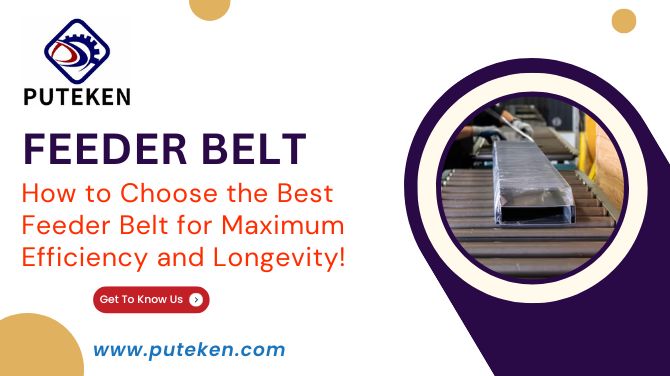
A feeder belt, sometimes called a friction feeder belt or pick-up belt, is a flat or profiled conveyor belt designed for precisely feeding components or items into subsequent processing stations in an industrial automation setup. The feeder belt's main function is to grip, transport, and release parts with high accuracy, especially when dealing with high-speed or tightly engineered systems.
Applications Include:
- Feeding paper sheets into printing presses
- Moving packaging material into the gluing or cutting machines
- Transporting tablets into blister packaging systems
- Feeding cartons into labeling stations
- Carrying baked goods for automated slicing or sorting
The effectiveness of these systems often hinges on the quality and design of the belt responsible for initiating the handling process.
Core Benefits of a High-Performance Feeder Belt
Choosing a well-engineered feeder belt offers immediate and long-term advantages:
- Precision
A high-friction surface ensures exact pickup and placement of objects every cycle, minimizing errors in downstream equipment.
- Reliability
Durable materials prevent slippage, peeling, and stretching, enabling consistent performance across long production runs.
- Speed Optimization
With the right in-feed belt tolerances and grip profile, manufacturers can increase line speeds without sacrificing control or accuracy.
- Product Integrity
Soft or specialized coatings reduce the risk of surface damage, critical for handling fragile or sensitive items such as food, cosmetics, or pharmaceuticals.
Industrial Applications That Rely on Feeder Belts
Feeder belts are used across a variety of industries. Let's take a closer look:
- Printing & Paper Industry
Feeding individual sheets into printers, folders, and packaging lines at high speeds requires grippy, wear-resistant belts that resist paper dust buildup.
- Packaging & Labeling
In folding and gluing machines, feeder belts position boxes, sleeves, or bags with precise alignment for downstream processes.
- Food Production
Buns, cookies, or ready-to-eat meals are conveyed via food-safe feeder belts during weighing, sorting, or inspection.
- Pharmaceutical Industry
Automatic feeding of blister pills or medicine packs into labeling and boxing equipment requires belts that are FDA-approved and particle-free.
- Electronics Manufacturing
Delicate components such as circuit boards or phone parts are carefully fed via anti-static or low-friction belts to avoid electrostatic damage.
Common Issues with Low-Quality Belts
The wrong choice of feeder belt often leads to:
- Misalignment or misfeeding of products
- Slippage at high speed or with smooth-surfaced items
- Premature belt wear, needing frequent replacements
- Residue buildup and cleaning problems
- Machine downtime due to jams
Choosing a low-cost belt may save money short-term but could end up costing more in efficiency loss and maintenance.
How the Right Feeder Belt Enhances Efficiency?
When engineered correctly, the right feeder belt:
- Reduces jams and misfeeds, increasing production continuity
- Improves throughput, allowing higher transfers per minute
- Decreases scrap rate, as product placement errors are minimized
- Simplifies cleaning and changeover, especially with modular or quick-release designs
- Boosts equipment lifespan by minimizing premature wear and vibrations
In other words, investing in the proper belt quality and configuration delivers excellence across multiple KPIs in the production line.
Key Material & Design Considerations:
When choosing a feeder belt, several variables can affect performance.
- Base Material
- Rubber/NBR: Excellent grip, moderate oil resistance
- PU or TPU: Food-grade, non-stick, abrasion-resistant
- Silicone: High-temperature resistance, good for delicate items
- Surface Finish
- Smooth for precise gliding
- Rough/textured for enhanced grip
- Cross-grooved or cleated designs to guide product flow
- Ply Structure
Single or multi-layer belts, depending on flexibility and strength needs
- Size & Geometry
Custom widths, thicknesses, and edge treatments (sealed, reinforced) to fit unique feeder modules and roller configurations.
Custom Feeder Belts by Shanghai Puteken
At Shanghai Puteken Transmission System Co., Ltd., we make high-performance custom feeder belts designed for OEM compatibility and long-term use across global automation systems.
- Highlights of Our Feeder Belts:
- Durable tensile reinforcements to reduce elongation
- Precision coatings for high-tolerance applications
- Food-grade and FDA-approved materials available
- Custom notches, grooves, holes, or profiles
- Compatible with top brands: Bobst®, Heidelberg®, Hunkeler®, etc.
Whether you need belts for new systems or spares for legacy machines, Puteken customizes and ships quickly—globally.
Maintenance Tips for Maximum Belt Longevity
Regular care ensures your feeder belt runs smoothly:
Maintenance Checklist:
- Clean belts using soft brushes or approved cleaners
- Check tension periodically—avoid overtightening
- Inspect grip surface for wear or peeling
- Rotate or flip belts (when possible) for an even lifespan
- Avoid exposure to overly acidic/alkaline environments unless the belt is rated for it
Following these steps can extend belt life by 30–50% and prevent unplanned downtime.
Why Choose Shanghai Puteken Feeder Belts?
- Expertise
15+ years designing belts for automation systems worldwide.
- Engineering Precision
Exact tolerance manufacturing and advanced surface finishing.
- Quality Materials
All belts are made using top-tier raw materials sourced for durability and specific use-cases.
- Global Support
Fast export services and technical consultations for clients in packaging, printing, food, and pharma.
- Total Customization
From sketches to tailored belts, we design exactly what you need.

Frequently Asked Questions (FAQ)
In the world of industrial automation, where split-second coordination, minimal waste, and uninterrupted motion define success, the role of the feeder belt cannot be overstated. It is the first point of contact in most automated systems and often determines how smoothly the rest of the process runs.
Using a high-quality, purpose-built feeder belt improves feed precision, reduces maintenance issues, and ultimately boosts the performance and profitability of your entire line. Whether you're part of the printing, packaging, pharmaceutical, or food processing sector, investing in the right feeder belt is a decision that yields measurable long-term value.
1. What is the typical lifespan of a feeder belt?
Answer: It depends on usage intensity and the product being handled. In general, high-quality feeder belts from Shanghai Puteken last 3–12 months, or longer with proper maintenance.
2. Can you match OEM belt specifications?
Answer: Yes. We offer OEM equivalents and can produce custom dimensions and textures based on your original specifications or samples.
3. Are your feeder belts suitable for food contact?
Answer: Absolutely. We offer FDA-compliant belts and food-safe materials like PU and silicone for the bakery, meat, and fresh produce industries.
4. What causes feeder belts to slip?
Answer: Common causes include worn surface texture, low belt tension, or a mismatch between belt and roller properties. We analyze your system to supply belts that prevent slippage.
5. Can I order small quantities for testing?
Answer: Yes. We support sample orders and offer fast prototyping services for R&D or pilot lines.