Introduction
When Arjun first told his business partners in Pune that he wanted to establish a UAE-registered company, they reacted with cautious optimism. They had heard that international company structures could unlock tax planning opportunities and global banking access, but they also knew from peers that these setups can become tangled in paperwork and hidden requirements.
Arjun’s story is a familiar one for many Indian founders in 2026. The idea of RAK ICC Company Setup from India sounds straightforward at first glance, but as soon as you look deeper, you realise success depends on preparation, compliance, and a sound banking strategy. Many entrepreneurs don’t just need an offshore registration, they need a bank account, a commercial purpose narrative, and a long view of governance, compliance,e and cost. That is what this detailed guide delivers, blending practical steps with real-world context.
Understanding What a RAK ICC Company Is
In simple terms, a RAK ICC Company Setup from India means creating an offshore entity in the Ras Al Khaimah International Corporate Centre (RAK ICC), one of the UAE’s premier offshore jurisdictions. RAK ICC entities are often known as international business companies because they offer features attractive to global investors. These include:
- 100 percent foreign ownership with no requirement for UAE residency or local partners
- No mandatory physical office space to retain legal status
- Flexibility to hold intellectual property, investments, shares, and other global assets
- A legal framework aligned with modern corporate governance standards common in reputable offshore centres worldwide
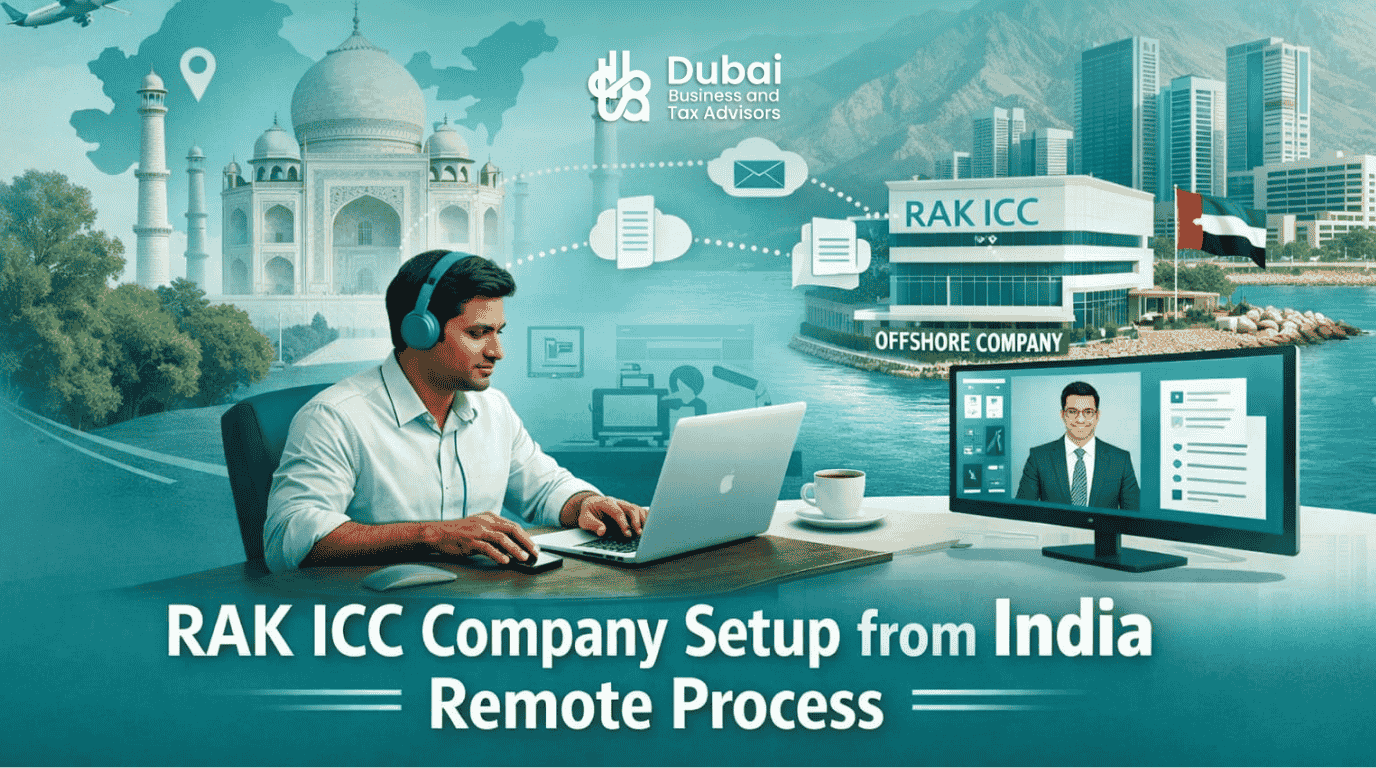
For Indian entrepreneurs, a RAK ICC Company Setup from India is particularly appealing because it can be done remotely, and it provides a credible platform for international holding structures, investment vehicles, and strategic asset allocations without requiring day-to-day operations in the UAE.
Yet, before the registration process begins, it is important to grasp the essential truth: a RAK ICC company is not a license to operate locally within the UAE or to hire staff. Its legal purpose is to serve as a strategic corporate structure for inward or outward investments, holding intellectual property, or as part of a wider corporate group or trust arrangement.
Why Indian Founders Are Choosing RAK ICC
It helps to frame this choice through the lens of strategic goals. For many Indian founders, the attraction of a RAK ICC Company Setup from India lies in its ability to act as a structural backbone for multinational planning.
Imagine a founder in Bengaluru who wants to consolidate equity holdings from Europe, Asia, and the Gulf in a single legal entity that is recognized internationally. A RAK ICC company can become that consolidation point. Alternatively, a Mumbai-based tech services provider seeking international contracts might hold intellectual property in an RAK ICC entity and contract through subsidiaries in relevant free zones where operational presence is required.
The underlying motive is not solely “tax avoidance.” It is the pursuit of:
- Global corporate identity
- A credible home for intellectual property
- An efficient holding structure to facilitate cross-jurisdictional capital movement
- A gateway to international corporate banking facilities
In every case, the foundation for success is strategic clarity and meticulous documentation.
The Remote Process: What Remote Really Means
The term “remote incorporation” is often misunderstood. A RAK ICC Company Setup from India can indeed be initiated and executed without travelling physically to the UAE. RAK ICC accepts digital signatures and scanned KYC documentation for the initial registration process. This means that your Certificate of Incorporation and Memorandum of Association can be processed without setting foot in the UAE.
But a critical distinction emerges when you consider banking. Remote incorporation does not guarantee remote banking. Many UAE banks, particularly in 2026, maintain rigorous risk protocols for corporate accounts. Some banks still require a physical meeting, authentication of original documents, or verified video calls that meet specific security requirements. This distinction between incorporation and banking means that Indian founders must plan both aspects deliberately if they want full operational capability.
It is not uncommon to see a founder complete the offshore registration and then face delays in opening a bank account because their compliance narrative was incomplete. That narrative is typically centred on the source of funds, the source of wealth, and cothe mmercial rationale, which we explore in more depth later in this guide.
Step by Step: How to Complete a RAK ICC Company Setup from India
Here is a realistic breakdown of the process, merging practical steps with strategic context.
Step 1. Decide the Right Entity for Your Purpose
The first key decision point is selecting the appropriate legal structure. For most Indian entrepreneurs, the preferred entity is an International Business Company (IBC). This structure is highly flexible and suits the vast majority of holding, IP, and investment purposes.
A Foundation, which is another structure available within RAK ICC, is more specialized and usually reserved for family governance, succession planning, or complex estate structures. Unless you have those specific advanced requirements, the IBC is often the most pragmatic choice.
Step 2. Pre-Check Your Compliance Narrative
This is not a formal filing step, but a professional evaluation that can save weeks of delays. The compliance pre-check reviews your reason for choosing a RAK ICC Company Setup from India, your business model, your transaction expectations, and your intended relationship with banks. Experienced advisors ask strategic questions such as:
- Who will be your counterparts and clients internationally?
- Why is UAE jurisdiction essential for your business structure?
- What jurisdictions will your company transact with and why?
Lacking a credible answer to these questions is one of the main reasons bank accounts face rejection.
Step 3. Prepare the India-Specific KYC Pack
This one step differentiates many successful setups from those that languish in review. Indian documentation, such as Aadhaar or generic utility bills, often does not meet UAE compliance expectations unless properly formatted and certified. In most cases, your KYC (know your customer) folder should include, at a minimum:
- Valid passport with at least six months remaining
- Recent proof of address relevant to your public record
- Indian tax identification details, such as a PAN card
- Professionally formatted business profile or curriculum vitae
- Bank statements and financial history summarising your financial journey
Without these in a bank-ready format, your registration may proceed, but your banking opportunity may be delayed or denied.
Step 4. Submit for Incorporation
Once your documentation is ready, the actual incorporation process begins. This includes registering your company name, filing your Memorandum and Articles of Association, issuing share certificates, and completing ultimate beneficial owner (UBO) declarations. The UAE’s regulatory system now enables this entire process to be digitised, which significantly shortens timelines.
A well-prepared compliance pack and authoritative documentation often translate to a smooth incorporation experience.
Step 5. Develop Your Banking Strategy Before Submitting Applications
This step often determines whether your business remains dormant or becomes fully operational. A successful RAK ICC Company Setup from India is only complete when you have access to a corporate bank account that supports your financial needs. To reach that stage, you must present a banking narrative that clearly explains:
- Purpose of the corporate account
- Future transaction flow projections
- Source of funds and wealth
- Client/supplier relationships and expected banking activities
Without this narrative, banks typically reject applications because offshore entities are inherently risk-evaluated differently from mainstream operating companies.
Step 6. Maintain Ongoing Compliance
A common mistake is perceiving the process as complete once incorporation documents arrive. The reality is that RAK ICC companies must adhere to annual renewals, record-keeping obligations, and, where relevant, economic substance filings. Planning these renewals and compliance obligations proactively ensures that your company and its banking relationships stay healthy.
Typical Costs and Timelines You Should Expect
Accurate budgeting and timeline forecasting are integral to managing expectations.
Incorporation Timeline
With a complete compliance pack, most registrations are finalised in around 5 to 10 working days.
Banking Timeline
Bank account applications typically take from 8 to 12 weeks to complete thorough due diligence and obtain IBAN activation. In some cases, this can extend further if additional documentation is requested.
Cost Drivers
RAK ICC setup costs vary based on the services you engage, but core fees generally include:
- Government incorporation fees
- Registered agent fees
- Document certification or apostille where needed
- Banking compliance preparation
- Annual renewal and corporate maintenance expenditures
What many founders do not account for upfront is the cost of preparing a bank roster, which can include professional audits, narrative memos, and specialised compliance documents. Poor planning here often leads to rework and added costs.
Common Reasons for Banking Rejection and How to Avoid Them
Banks in the UAE do not view incorporation alone as a sufficient reason to open an account. The key factors that often lead to rejection include:
Weak Source of Funds/Wealth narrative
If the bank cannot trace the origin of your capital or your long-term financial history is not explicable, it will usually result in a refusal.
Unclear business rationale
Banks want a coherent narrative that links your offshore structure to real business activities.
Lack of UAE nexus
A RAK ICC company without some meaningful connection to UAE markets or counterparties is seen as higher risk.
Generic activity listings
Broad or unrelated business activities without documentation supporting them raise red flags.
The exact fix in each case is to revise documentation with detailed evidence, professional narratives, and a strategy that anticipates the bank’s risk evaluation criteria.
Real-World Use Cases and Lessons
Consider the founder from Hyderabad who envisioned their software platform capturing clients in Europe and Asia. They chose to base intellectual property in an RAK ICC entity. However, their initial banking application was rejected because their narrative did not show how this IP would translate to measurable international revenue. After revising their documentation to include client letters of intent and three-year revenue projections, they succeeded with a corporate account.
This real example highlights the importance of narrative over routine paperwork.
Conclusion
By now, it should be clear that RAK ICC Company Setup from India is not merely a checkbox exercise. It is a sophisticated journey that blends legal incorporation, compliance discipline, and strategic banking preparation. Whether you are holding assets, guarding intellectual property, or structuring cross-border capital flows, this offshore company model can unlock opportunities if built correctly.
The founders who succeed in 2026 are those who plan beyond registration, anticipate banking requirements, and treat compliance as a long-term accountability. With the right preparation, an RAK ICC Company Setup from India can become a cornerstone of your global business architecture, creating pathways for growth, credibility, and structural resilience.



A Associate LLC is a business setup consultancy firm in the United Arab Emirates that specializes in UAE free zone company formation.
We have years of experience with free zone company setup in UAE, and can be counted on for all matters of business setup in UAE free zones, including free zone company registration Dubai.We are one the best free zone company setup consultants in the UAE and our friendly experts can inform you of all the advantages of free zone business, such as 100% ownership of your business, zero corporate and income taxes, as well as 100% repatriation of your capital and profits.
We can advise you on the best UAE free zone locations for company formation.There are a number of options for Dubai freezone company setup.
Business setup in Dubai freezone involves identifying the right free zone for your business – there are about 30 of them, and each one of them caters to a specific industry sector.
For instance, there is the Dubai Multi Commodities Centre or DMCC, which specializes in commodities trading.
There is even a commodities exchange in the DMCC.

RAK offshore company formation Dubai is best characterised as a lawful business entity that operates outside of its registration jurisdiction.
Despite being an expatriate, you may have complete ownership of your firm with a RAK Offshore business arrangement.