Most people think game development gets easier as you gain experience.
In reality, it gets harder—just in different ways.
Beginner-level game development is about learning engines, writing scripts, and making things work. Advanced game development is about making complex systems work together under pressure, constraints, and real-world expectations.
That shift catches many developers off guard.
What “advanced” actually means in game development
Advanced game development is not about flashy features or bigger projects. It’s about decision-making depth.
At this level, you’re no longer asking:
- “How do I implement this?”
You’re asking:
- “Should this be implemented at all?”
- “What does this cost in performance, time, and stability?”
- “How does this scale across platforms?”
- “What breaks if this system changes later?”
These questions define professional-grade development.
A real-world example that explains the difference
Think about a combat system in a modern game.
A beginner might focus on:
- Animations
- Hit effects
- Damage numbers
An advanced developer looks deeper:
- How input buffering affects responsiveness
- How animation blending impacts feel
- How AI, physics, and VFX interact under stress
- How does performance hold up when multiple enemies engage simultaneously
Games like Hades or Monster Hunter feel tight, not because of one feature, but because dozens of systems are balanced and tested together. That level of polish comes from advanced development thinking, not surface-level implementation.
Where many developers hit a ceiling
A common problem among mid-level developers is stagnation.
They can:
- Build mechanics
- Implement features
- Fix bugs
But they struggle when asked to:
- Optimise systems holistically
- Refactor code without breaking pipelines
- Design scalable architectures
- Collaborate across large teams
This is the invisible gap between “can build” and “can ship reliably.
What advanced game development actually trains you to do
At an advanced level, developers are expected to:
- Design systems with future changes in mind
- Balance performance, memory, and visual quality
- Debug issues that span code, art, and engine behaviour
- Work with producers, designers, and artists effectively
- Make trade-offs without compromising player experience
This is why studios value developers who can think beyond their own feature.
Why structured learning matters at this stage
Self-learning works well early on. At advanced levels, it often becomes inefficient.
Without feedback, developers:
- Over-engineer solutions
- Miss optimisation opportunities
- Reinforce bad architectural habits
Structured programs expose developers to production-level problems—the kind that don’t show up in tutorials.
How MAGES approaches advanced game development
At MAGES Institute, advanced game development is taught with production reality in mind.
Learners are pushed to:
- Build systems, not isolated features
- Profile and optimise under constraints
- Collaborate across disciplines
- Debug complex interactions
- Think like developers who ship, not just prototype
The focus is not “more features.”
It’s better judgment.
Who does advanced game development really for
This path is ideal if you:
- Already know the basics and feel stuck
- Want to work on larger, more complex projects
- Care about polish, stability, and scalability
- Aim for professional or studio-level roles
Advanced game development rewards patience, curiosity, and responsibility.
The real takeaway
At higher levels, game development stops being about showing what you can build and starts being about proving what you can handle.
If you want to move beyond working features and start building systems that survive real production, explore how MAGES Institute supports developers at the advanced stage.
This is where skill turns into reliability—and reliability turns into career growth.

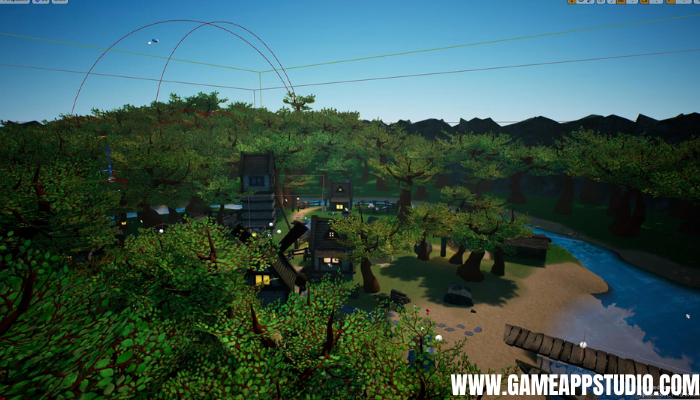
When it comes to game development Unreal is considered to be the most advanced Game Development Engine among all the others.
Its inbuilt tools and features make it the ideal platform to develop games of all genres.
At Game App Studio, our developers are very well versed with the languages and the possibilities that come along with this powerful engine.
As the best Unreal Game Development Company, We make sure that the outcome is worthy of all the efforts put in.