In the bustling era of hybrid work, the "office" is no longer a fixed coordinate.
On any given Tuesday, your organisation’s laptops, tablets, and smartphones are scattered across suburban dining tables, coastal cafes, and transit hubs.
While this flexibility is a win for morale, it has created a massive blind spot for Australian business leaders: the rise of "invisible" assets.
The pain-point is simple but high-stakes. When staff move between home and the office, physical hardware often slips through the cracks of manual tracking.
If you can’t see an asset, you can’t secure it.
A device that isn't logged in a formal Digital Asset Register is a device that might be running outdated security patches, or worse, one that could vanish without anyone noticing until a major data breach occurs.
In this article, we’ll explore why a robust Digital Asset Register is the cornerstone of a safe hybrid workplace and how moving to an automated Asset Management System can protect your bottom line and your reputation.
The Risk of "Invisible" Assets in a Dispersed Workforce
The Australian hybrid work landscape has matured, with roughly 45% of the workforce now following a hybrid model.
However, our internal governance hasn't always kept pace. Many organisations are still relying on "the honour system" or dusty Excel sheets to track equipment.
1. The Notifiable Data Breach (NDB) Trap
According to the OAIC's 2025 statistics, data breaches caused by human error - including the loss of storage devices - have surged by 37%.
For an Australian firm, the average cost of a breach has hit a staggering AUD $4.26 million.
Without a Digital Asset Management strategy, a lost laptop isn't just a hardware replacement cost; it’s a potential multi-million-dollar legal nightmare.
2. The "Ghost Asset" Hazard
When an employee leaves or changes roles in a hybrid environment, the recovery of hardware is notoriously difficult.
"Invisible" assets are those that remain "active" on your network but aren't physically accounted for.
These devices become prime targets for cybercriminals who use them as entry points for ransomware, which now costs medium-sized Australian businesses an average of $97,200 per incident in self-reported costs.
3. Compliance and the "Right to Disconnect"
New Australian workplace laws, such as the Right to Disconnect, add another layer of complexity.
To manage work-life boundaries and ensure staff aren't using unapproved personal devices ("Shadow IT") for work, employers must have a clear record of company-issued tools.
A Digital Asset Register provides the transparency needed to meet these evolving Fair Work standards.
Moving Beyond Spreadsheets: The Power of an Asset Management System
Relying on manual logs in a hybrid world is like trying to use a paper map to navigate a smart city. It’s slow, inaccurate, and quickly out of date.
A modern Asset Management System transforms your approach from reactive to proactive.
Centralised Visibility
A cloud-based Digital Asset Register serves as a single source of truth.
Whether a MacBook is in a locker in Sydney or a home office in Perth, its status, user, and security compliance are visible in real-time.
This eliminates the "I thought Steve had that" conversations that plague HR and IT departments.
Automated Lifecycle Tracking
Effective Asset Management Software doesn't just list items; it manages their journey.
- Onboarding: Automatically assign assets as part of the new-hire workflow.
- Maintenance: Schedule regular "wellbeing checks" for hardware to ensure security software is active.
- Offboarding: Generate instant "Asset-by-staff" reports to ensure every piece of kit is returned on an employee's final day.
Audit Readiness
With the Australian Government tightening the Privacy Act, being "audit-ready" is essential.
An automated register provides an instant, timestamped trail of asset movement, showing regulators that you have taken "reasonable steps" to protect sensitive information.
How Sentrient Protects Your Hybrid Workforce
Sentrient knows that for Australian SMEs, the goal is to be compliant without being overwhelmed by complexity.
Our Digital Asset Management Software solutions are built specifically to bridge the gap between office and home.
1. Real-Time Interactive Dashboards
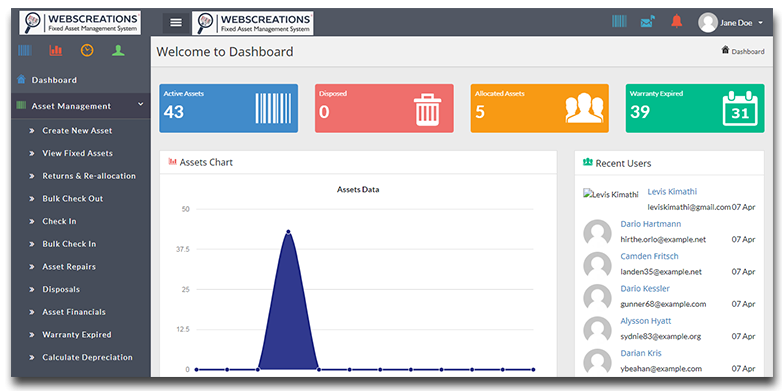
Sentrient’s Asset Management System gives you a bird’s-eye view of your entire inventory.
Our powerful dashboards allow managers to track assets by type, usage, and location, providing instant visibility that manual systems simply can’t match.
2. Seamless Integration with HR Workflows
Unlike standalone tools, Sentrient links your Digital Asset Register directly to your employee management framework.
When a staff member moves to a hybrid contract, their assigned assets move with them in the system, complete with image uploads of the device condition and signed user agreements.
3. Proactive Risk Management
Sentrient allows you to set review dates and expiry alerts. This ensures that no device becomes a legacy security risk.
If a laptop hasn't been "seen" or updated in the system for a set period, the system flags it, allowing you to intervene before a vulnerability is exploited.
Sentrient's Hybrid-Friendly USPs:
- 24/7 Access: Manage your register from anywhere, perfectly suited for remote HR teams.
- Asset Tagging & Image Support: Visualise your assets to ensure the right kit is in the right hands.
- Compliance Reporting: Generate graphical insights for board meetings or regulatory audits at the touch of a button.
Conclusion: Don't Let Your Assets Fade Away
In the hybrid workplace, what you don't know can hurt you. "Invisible" assets represent a massive gap in your organisation's security and financial health.
By implementing a Digital Asset Register, you turn a chaotic dispersed inventory into a streamlined, secure, and compliant business advantage.
Is your hardware currently a hidden risk? Stop guessing and start tracking.
Book a free demo with Sentrient today to see how our Australian-made Asset Management Software can bring your invisible assets back into the light.
FAQs: Digital Asset Registers in the Hybrid Era
1. What is the difference between an "asset list" and a "Digital Asset Register"?
An asset list is a static document (like a spreadsheet) that is often outdated. A Digital Asset Register is a dynamic, cloud-based system that updates in real-time, links assets to specific employees, and tracks the entire lifecycle of the device.
2. How does a register help reduce the cost of a data breach?
If a device is lost, a register tells you exactly what data was on it and who had it. This allows for an immediate response (like a remote wipe), which the OAIC considers a critical factor in reducing the "serious harm" threshold of a breach.
3: Can we track non-IT assets in a Digital Asset Management system?
Absolutely. Sentrient’s Asset Management System is designed to track everything from laptops and phones to office furniture, company vehicles, and even keys. This ensures a total view of all company investments.
4: Is it hard to move from a spreadsheet to Sentrient’s system?
Not at all. Sentrient is built for ease of use. You can bulk-upload your existing data, and our user-friendly interface makes it simple to start tagging and tracking assets immediately without needing a PhD in IT.
5: How does this help with staff offboarding for remote workers?
It’s a game-changer. Sentrient generates a "Clearance Report" for departing staff. It lists every item assigned to them, ensuring HR knows exactly what needs to be couriered back, preventing thousands of dollars in "lost" equipment every year.



Sentrient's asset management system allows you to keep track of all computer hardware assigned to staff members for work.
It will provide you with a clear structure, consistent approach, and transparency of the status of all company assets across the whole organisation.Watch this video for more details.