Introduction: How Large Organizations Keep Work Organized
Behind every large organization is a complex network of processes. Employees submit service requests, IT teams resolve incidents, managers approve changes, and systems track assets and access. When these activities are managed through emails or informal tools, operations quickly become inefficient and difficult to control.
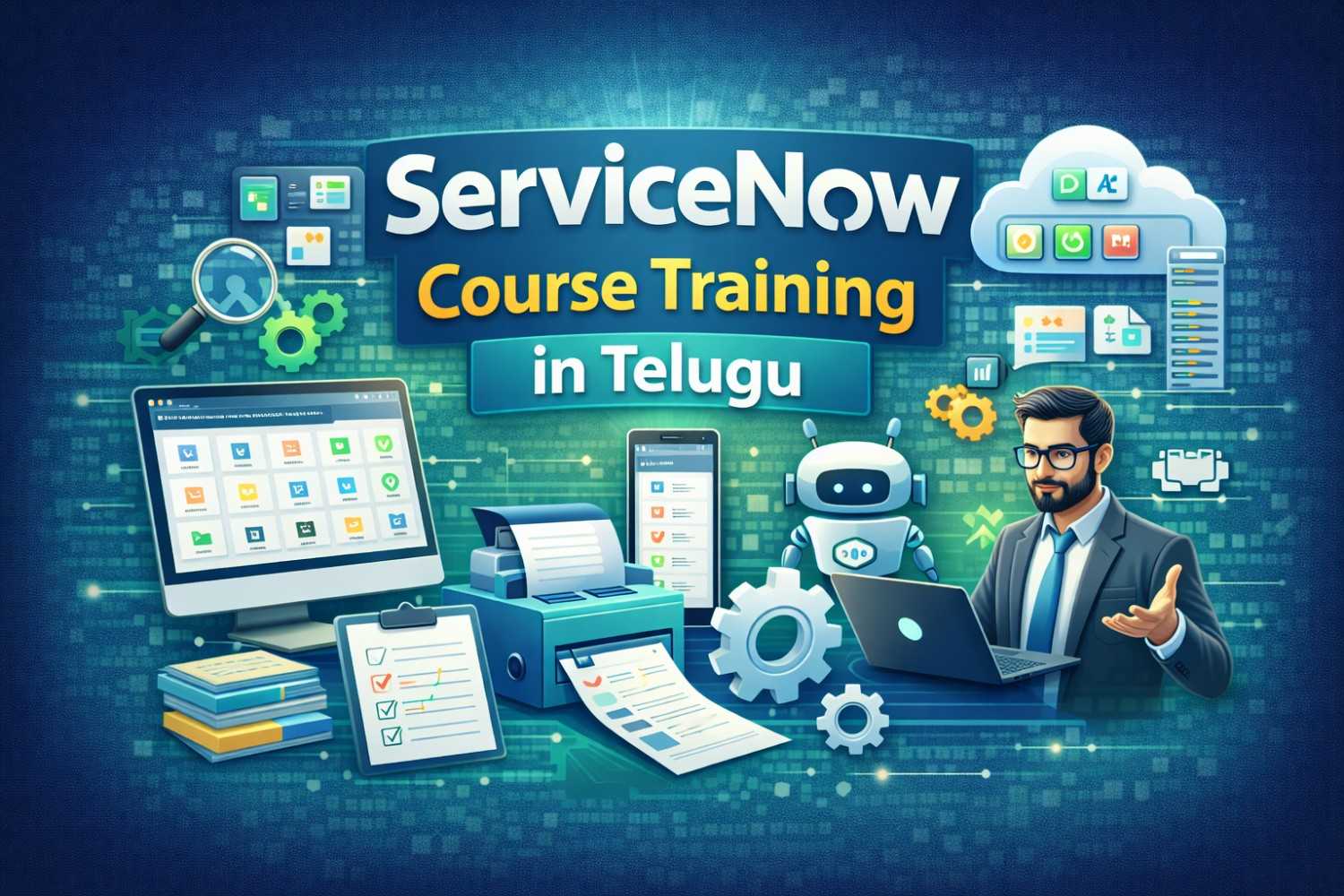
To understand how enterprises bring order to this complexity, many learners explore ServiceNow Course Training in Telugu. Platforms like ServiceNow are built specifically to manage, automate, and monitor enterprise workflows. Learning ServiceNow helps individuals understand how modern organizations structure their internal operations in a scalable and reliable way.
What ServiceNow Actually Does
ServiceNow is a cloud-based workflow automation platform. Its main function is to control how work moves from one stage to another within an organization. This includes tasks such as approvals, assignments, notifications, and service fulfillment.
Instead of manual follow-ups, ServiceNow enables organizations to:
- Capture requests in a standardized format
- Apply predefined business rules
- Automatically assign tasks to the right teams
- Track progress until completion
This ensures consistency and accountability across departments.
Why Enterprises Need Workflow Platforms
As organizations grow, their internal operations become more complex. Different departments often use separate tools, which leads to fragmented workflows and limited visibility.
ServiceNow addresses these challenges by:
- Acting as a centralized platform for multiple departments
- Using a shared data structure
- Enforcing consistent process logic
- Providing real-time operational insights
This approach allows enterprises to scale operations without losing control.
Understanding the Structure of the ServiceNow Platform
A structured ServiceNow learning path usually begins with understanding how the platform is organized.
Tables and Records
All data in ServiceNow is stored in tables, similar to a database. Each row in a table is known as a record and represents a task, incident, request, or approval.
Understanding tables and records helps learners:
- Navigate the platform confidently
- Understand how information is related
- Configure workflows correctly
Forms and Lists
Forms display detailed information about individual records, while lists show multiple records together.
These interfaces allow users to:
- Monitor request status
- Update task details
- Filter and organize workloads
Forms and lists are central to everyday ServiceNow usage.
Users, Roles, and Security
ServiceNow uses role-based access control to manage permissions.
This ensures:
- Users only see information relevant to their role
- Sensitive data is protected
- Organizational governance is maintained
Security and access control are essential in enterprise environments.
Workflow Automation and Process Enforcement
Workflow automation is one of ServiceNow’s strongest capabilities. Workflows define the exact sequence of steps a task must follow.
Automation allows organizations to:
- Eliminate repetitive manual work
- Enforce standardized processes
- Speed up approvals
- Reduce operational errors
Visual workflow designers make automation accessible even to non-technical users.
IT Service Management (ITSM)
IT Service Management is one of the most widely used areas of ServiceNow. It focuses on delivering IT services efficiently and reliably.
ITSM includes:
- Incident management to restore services
- Problem management to identify root causes
- Change management to control updates
- Request fulfillment for user needs
These processes help maintain system stability and service quality.
Service Catalog and Self-Service Requests
The service catalog provides a self-service interface where users can request services in a structured way.
Common requests include:
- Software access
- Hardware provisioning
- Account creation or updates
The service catalog reduces confusion and ensures consistent service delivery.
Low-Code and No-Code Capabilities
ServiceNow supports low-code and no-code development, allowing workflows and applications to be created with minimal programming knowledge.
These capabilities:
- Speed up implementation
- Simplify customization
- Reduce dependency on developers
- Enable collaboration between business and IT teams
This makes the platform accessible to professionals from various backgrounds.
Who Can Learn ServiceNow
ServiceNow is not limited to developers. It is suitable for learners from many professional backgrounds.
It is useful for:
- Fresh graduates
- IT support professionals
- System administrators
- Business analysts
- Process improvement specialists
Basic computer knowledge and logical thinking are sufficient to begin.
Skills Developed Through ServiceNow Learning
Learning ServiceNow builds both technical and organizational skills.
These include:
- Understanding enterprise workflows
- Platform configuration and administration
- Automation and process design
- Analytical problem-solving
- Cross-functional collaboration
These skills are valuable across industries.
Why Learning ServiceNow in Telugu Helps
Learning ServiceNow in Telugu helps learners understand enterprise workflows, approvals, and automation logic without language barriers. When complex ideas are explained in a familiar language, learners gain clarity, confidence, and practical understanding, making it easier to apply knowledge effectively in real organizational environments.
- Real-World Applications of ServiceNow
- ServiceNow is used across multiple departments, not just IT.
- Common applications include:
- IT support and ticketing systems
- Employee onboarding workflows
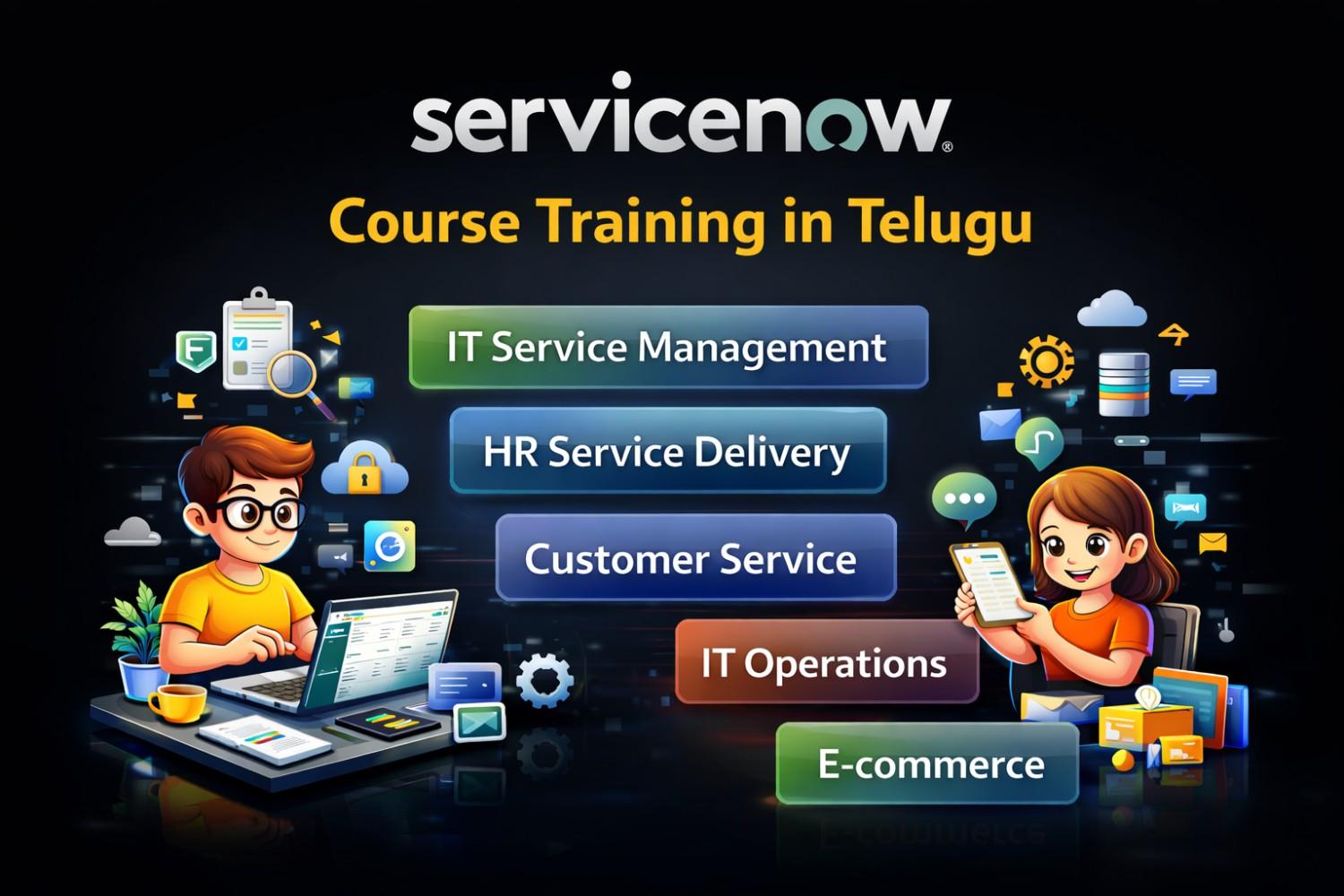
- HR service delivery
- Asset and configuration management
- Customer service operations
This broad adoption makes ServiceNow a core enterprise platform.
ServiceNow and Digital Transformation
Digital transformation focuses on improving how organizations operate using technology. ServiceNow supports this by digitizing and automating workflows.
It helps organizations:
- Remove manual bottlenecks
- Improve transparency
- Standardize operations
- Enhance service delivery
These improvements support long-term scalability and efficiency.
Career Relevance of ServiceNow Skills
ServiceNow skills remain relevant because enterprises rely on the platform for daily operations. As workflow automation becomes more important, professionals with ServiceNow expertise are needed across industries.
Common roles include:
- Platform administrator
- Workflow configurator
- Service management specialist
- Process analyst
These roles focus on improving organizational efficiency.
Common Challenges While Learning ServiceNow
ServiceNow has a learning curve, especially for beginners.
Common challenges include:
- Understanding platform terminology
- Learning workflow logic
- Navigating the interface
- Applying best practices
A structured and consistent learning approach helps overcome these challenges.
The Future of ServiceNow as an Enterprise Platform
ServiceNow continues to expand beyond IT into HR services, customer workflows, and business operations. Its focus on automation, integration, and user experience aligns well with modern enterprise needs.
As organizations adopt more digital workflows, ServiceNow’s role in managing and optimizing processes will continue to grow.
Conclusion: A Reliable Skill for Modern Enterprise Careers
ServiceNow has become a foundational platform for managing enterprise workflows and services. By centralizing processes and enabling automation, it helps organizations operate with greater efficiency, consistency, and transparency.
Learning through structured ServiceNow Course Training in Telugu allows learners to understand enterprise workflow concepts clearly and confidently. With its strong emphasis on automation, service management, and process optimization, ServiceNow provides practical, future-ready skills that align well with modern organizational and digital transformation requirements.