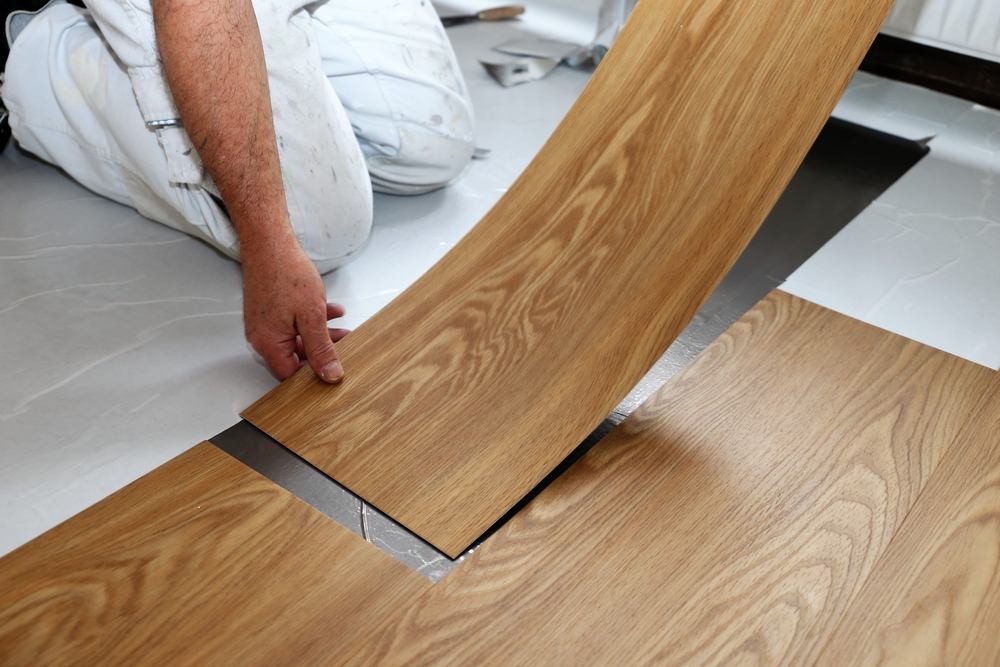


Vinyl flooring, a green alternative to hardwood and ceramic tiles, has recently emerged as a "green underdog". Earlier versions of vinyl flooring tended to be made from plastic types, while new types are designed to be long-lasting, use less energy and chemicals to maintain, and reduce landfill waste through manufacturing processes. Today’s high-quality vinyl flooring is expected to last for many years, require minimal maintenance using water and chemicals, and not to need frequent replacement; thus, reducing its overall environmental footprint during its life. Increasingly, manufacturers are producing products made from post-consumer recycled materials (PCRM), creating wear surfaces with lower VOCs, and developing take-back/recycling programs for their products, and enhancing the energy efficiency of their production methods. For these reasons, modern vinyl flooring is important for UK homes that are smaller and for the fast-paced rental housing market, where less frequent replacement, less waste, and a lower real cost of ownership are all crucial. Modern vinyl flooring also has realistic visuals of wood and stone that will reduce the demand for new timber and quarried stone, allowing the consumer to choose vinyl flooring as their surface option with a smaller environmental footprint in many different situations. Although it is not a perfect solution, the durability of today’s modern vinyl and its improved materials and end-of-the-life options provide strong competition for sustainable flooring options.
The Broad Picture: Why Circularity & Durability Are More Important Than Label Arguments
The evaluation of environmental performance should incorporate assessing two pragmatic questions.
1. How long will my flooring last? A flooring that will last longer will require fewer replacements and thus have fewer embodied GHG emissions.
2. What will happen when my flooring has reached its end of life? Will it be recycled, down-cycled to make another product, land-filled, or recovered chemically?
Most new vinyl floors score very well on both of these questions. Due to their resistance to moisture and wear, today’s vinyl flooring can last in the home an average of 25 years. Furthermore, there are now industry-wide recycling initiatives that collect all unused scraps of flooring and uplifted pieces, which reduces landfill and allows for the recycling of vinyl floors. Therefore, by having access to circular programs, the per year environmental impact of vinyl flooring is greatly diminished when compared to vinyl flooring alternatives that require replacement often. Through recycling initiatives/ closed-loop programs, the majority of vinyl flooring can now be recycled into new products or repurposed as material feedstock.
Pro-Tip: If you are comparing flooring options, you should consider not the cost of each floor per square metre, but rather how many years of service will you receive from that flooring before needing to be replaced. For example, a durable vinyl flooring that lasts 25 years may be a far more environmentally friendly option than a less expensive flooring that requires replacement twice within the same timeframe.
Indoor Air Quality: Low-VOC Formulations are Increasingly Widely Used
A big win for vinyl these days, something customers can really appreciate, is that it hardly gives off any of those strong-smelling VOC chemicals anymore. Good manufacturers out there are now making sure their wear layers and glues either hit or beat the low-emission standards we all know about (like FloorScore®, A+, and M1 certifications). This means families and renters can expect clean air inside their homes. Prominent flooring companies release VOC test results and frequently receive "A+" or comparable ratings for extremely low emissions. For sensitive people, families with young children, and general indoor air comfort, low-VOC chemistry is important.
Pro-Tip: Check product datasheets for independent certifications such as FloorScore, AgBB, and A+. Ask for the certificate or the test standard mentioned in the technical specification instead of relying solely on "low VOC" claims.
Industry Pledges & Recycled Content: VinylPlus's Narrative
The PVC and vinyl folks in Europe stay on top of sustainability with VinylPlus. It's a volunteer program, kinda like a watchdog, that keeps tabs on how they collect and recycle stuff, and how they improve things all through their supply chain. VinylPlus puts out a report every year to show how they’re doing, and they also work on projects to get more PVC stuff, like flooring, collected and recycled. The amount of material we're talking about really matters here. VinylPlus is reporting that they're recycling huge quantities every year through their programs. It’s pretty clear this whole industry is shifting from just throwing away "single-use plastic" and moving towards a more circular and managed system for these materials. We're also looking into something called chemical recycling with projects like RecoChlor. The idea here is to get chlorine-containing stuff back from complicated PVC waste, which could really help us reuse more materials.
Pro-Tip: If using recycled stuff matters to you, just ask the company how much recycled PVC is in their product. Also, see if they're involved in things like VinylPlus or other similar programs. Some of our products actually have recycled stuff from things we get back from customers.
Recycling & Take-back Programs in the UK:
It's really important for anyone in the UK, whether you own a home or you're a contractor, to recycle stuff right there on the ground. There are programs already set up, like Recofloor and ones from manufacturers such as Polyflor's Recofloor partnership and Forbo's "Back to the Floor." These programs lessen the amount of waste that ends up in landfills and turn it into new flooring components or other beneficial products. Ask your installer if they take part in a take-back program if you're having a refit; many contractors already do.
Pro-Tip: When you're getting quotes from installers, make sure they specifically list "vinyl take-back" in their pricing. Sending offcuts for recycling through a special program is usually not only kinder to your wallet than just tossing them in a skip, but it's also the right thing to do.
The Lifespan Nuance: LCA Outcomes Differ, but Longevity is Key
LCA (Life-cycle assessment) studies tend to indicate that there is no single floor type that will do well in all environmental metrics. Rather, LCA outcomes are based on assumptions regarding service life, transport, maintenance and end of life. Many of the older LCA studies identified wood and linoleum as the prevailing products for certain impact categories; however, more recent LCA studies are/will demonstrate the effect that replacement rates and maintenance have on the overall impact of flooring products. For example, if the vinyl floors last substantially longer than a lower-priced product or do not require an excessive amount of time and energy to maintain (e.g., no sanding, no toxic chemicals), the impacts of the vinyl flooring will ultimately be lower than that of the other product on a per-year basis. Therefore, a product's durability and end-of-life management have a more pronounced impact on its total impact than the raw material label on the product.
Pro-Tip: When a vendor provides you with an LCA and/or “low impact” claim, request to know the functional unit on which it is based (e.g., m² over a 50-year period). This will provide you with the ability to accurately compare similar products.
Reduced Use-phase Affects = Reduced Maintenance
One aspect of vinyl's environmental appeal is its low maintenance requirements. Lower operational emissions result from not using pesticides, weekly watering, mowing, or energy-intensive maintenance. Many contemporary luxury vinyl tiles (LVT) and sheet sets have strong PUR (polyurethane) or comparable protective coatings that keep them resilient and clean with easy mopping. In urban apartments, rental homes, and busy family homes where frequent cleaning or product replacement is an unnecessary environmental expense, this is a huge advantage.
Pro-Tip: Selecting a product with a strong abrasion/wear rating and a PUR or comparable factory coating will help you avoid the need for extensive chemical cleaning and surface refinishing down the road.
Heat & Energy Factors: Interactions with Building Performance
The thermal performance of a room is affected by the type of flooring. While many types of Luxury Vinyl Tile (LVT), and other similar types of vinyl flooring can be used on heating types like underfloor heating (UHF), receive low surface temperatures, and operate in very short and fast response cycles (which makes the energy consumption less than other heavy stone type floor), they also have an advantage in retrofit situations. A retrofittable vinyl floor is a product which will reduce the energy consumption of the room for space heating (when used with appropriate Insulation and Temperature Control). Before selecting a vinyl floor for use in a UHF application, it is critical that the appropriate UHF compatibility be confirmed by checking the manufacturer's product data sheet.
Pro-Tip: If you are installing UHF heating, always remember to check the maximum recommended surface temperature of the product and use only products which have been certified for UHF to protect your warranty and performance.
Health & Safety: Contemporary Formulations Contain Less Chemicals
Because of rules like REACH in Europe and the UK, and buyers asking for change, manufacturers have started getting rid of harmful additives and cutting down on phthalate use. These days, a lot of the vinyl products are made without those older plasticizers that had a lot of phthalates. They actually meet the REACH standards, and they have the safety data and certificates to back it up. For folks buying homes, that means they don't have to worry as much about chemicals sticking around, and the air inside will be much better. Just make sure the product spec mentions compliance and a certificate from an independent tester.
Pro-Tip: If you're worried about what chemicals are in a product, just ask for its Material Safety Data Sheet (MSDS) and REACH declaration before you buy it. Good manufacturers are usually pretty quick to share that info.
Recycling Routes: Chemical & Mechanical Methods
There are a couple of main technical ways people recycle vinyl:
a. Mechanical recycling involves sorting, shredding, and cleaning collected vinyl. Sometimes they mix it with new stuff, or just use it in other things that are okay with PVC. This is kinda the main thing for how we deal with cut-off pieces and recycling old flooring.
b. When it comes to PVC waste that's mixed or dirty, we've got something a bit more advanced: chemical recycling, also known as feedstock recovery. Projects such as VinylPlus’ RecoChlor are looking to get chlorine and other basic materials back from PVC that's tough to recycle. This way, they're changing what would normally be trash into something we can use again. Both ways really just help make vinyl more circular overall. With all these new tools, that old vinyl waste is worth a lot more now.
Pro-Tip: Find out if your local recycling place uses mechanical ways or chemical ways. Mechanical is often for stuff that's already pretty clean, but chemical processing is better for tougher mixed materials.
FAQs:
1. Can I recycle vinyl flooring in the UK and how can I go about it?
Yes, there are many different U.K. manufacturers and recycling schemes that are happy to take clean cut-offs or out-of-date smooth vinyl for recycling (such as Recofloor and Polyflor's Recofloor and Forbo's Back to the Floor). When you have an installer complete your vinyl flooring installation, ask them for the registration of the waste through a recognized recycling scheme or to contact the recycling service of your vinyl manufacturer's.
2. How can I verify that the vinyl products I purchase have a low level of VOCs?
You can check for accredited independent certification, such as FloorScore® or A+ for instance. You should also be able to find out what method was used to test the product for VOC emission levels, as well as a copy of the certificate that was issued by the testing laboratory. Reputable manufacturers will have these certification documents on their technical and sustainability website pages.
3. Should I completely avoid vinyl if I want to have the least impact on the environment?
Not necessarily. The flooring material with the least environmental impact is dependent upon functional and service life needs. There are many reasons why a vinyl floor may be the most environmentally friendly option available to you. For example, while a vinyl floor may have a long service life, require very little maintenance, and be produced from a mixture of virgin materials and recycled products, a wood or tile floor may need to be replaced more frequently due to maintenance issues. An informed approach to flooring selection will include consideration of all the anticipated floor service life, anticipated maintenance requirements, and whether local recycling avenues for the flooring type you use are available.