

Introduction
At some point in every digital marketer’s journey, there comes a realization that changes everything: campaigns don’t fail because of poor creativity alone—they fail because they don’t understand the customer. Clicks, impressions, and reach can only take you so far. Real growth begins when marketing decisions are guided by real customer data, behavior, and intent. This is where CRM integration stops being a technical concept and becomes a strategic superpower.
For students and professionals stepping into modern digital marketing, CRM data is no longer “sales team territory.” It is the backbone of personalization, automation, lifecycle marketing, and long-term revenue growth. In cities like Ahmedabad, where businesses are rapidly transitioning from lead-based marketing to relationship-driven growth, marketers who know how to integrate CRM data into campaigns are already ahead of the curve.
This article is written as a mentor would explain it—not in jargon, not as a software tutorial, but as a strategic skill that transforms a learner into an industry-ready professional. If you are pursuing a Digital Marketing Course, mastering CRM integration will fundamentally change how you think about campaigns, customers, and your own career trajectory.
Why CRM Integration Has Become a Core Marketing Skill
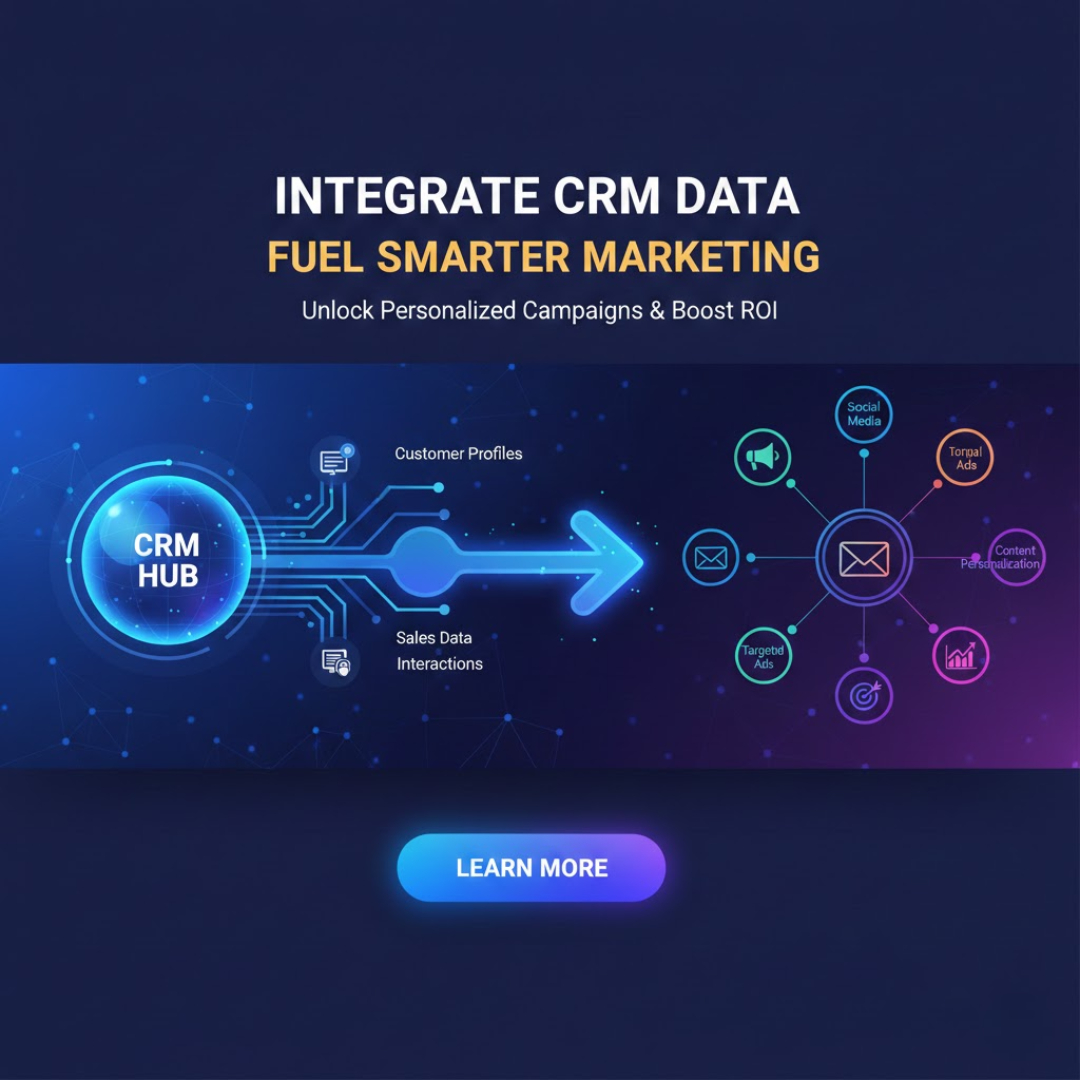
Modern marketing is no longer about isolated channels. Email, paid ads, content, social media, and sales conversations all intersect at the customer. CRM systems exist to capture this intersection—every interaction, preference, objection, and outcome. When marketing campaigns operate without CRM data, they function blindly.
Industry-wide, the shift toward CRM-led marketing is driven by rising acquisition costs and shrinking attention spans. Businesses cannot afford generic messaging anymore. They need relevance at scale. CRM integration allows marketers to segment audiences based on real behavior, not assumptions, and to design campaigns that reflect where the customer truly is in their journey.
For learners, this marks a critical transition point. You stop thinking like a channel manager and start thinking like a growth strategist—someone who understands the full customer lifecycle.
Understanding CRM Data Beyond Contact Information
One of the most common beginner mistakes is assuming CRM data is just names, emails, and phone numbers. In reality, CRM systems store behavioral, transactional, and contextual data that can power highly intelligent campaigns.
This includes lead source history, website activity, email engagement, sales conversations, deal stages, purchase frequency, support interactions, and even objections raised during sales calls. Platforms like HubSpot are designed to unify these touchpoints into a single customer view.
For students, learning to read this data is like learning a new language—the language of customer intent. Once understood, it reshapes every marketing decision you make.
The Strategic Value of CRM-Driven Segmentation
Effective CRM integration begins with segmentation—not demographic guesswork, but intent-based grouping. CRM data allows marketers to create segments based on lifecycle stage, engagement level, purchase readiness, or historical value.
This segmentation directly impacts campaign performance. A first-time lead should not receive the same message as a returning customer. A high-intent prospect needs reassurance and clarity, while a long-term customer needs value reinforcement and loyalty-building communication.
For aspiring professionals, this teaches an essential principle: relevance beats reach. Campaigns become more efficient, conversions improve, and marketing earns credibility within the organization.
Aligning Marketing Campaigns with the Customer Journey
CRM integration forces marketers to think in journeys rather than campaigns. Instead of asking “What should we send this week?”, you start asking “What does the customer need now?”
By aligning CRM data with marketing automation, campaigns become responsive. A user downloading a resource triggers education-focused communication. A prospect entering negotiation triggers trust-building content. A customer completing a purchase triggers onboarding and retention messaging.
Tools like ActiveCampaign enable this journey-based execution. For learners, this is where strategy becomes tangible and marketing starts to feel purposeful rather than repetitive.
Personalization at Scale Using CRM Insights
Personalization is often misunderstood as adding a name to an email. True personalization uses CRM insights to tailor messaging, timing, and channel choice. This might involve recommending content based on past behavior or adjusting offers based on purchase history.
When done ethically and intelligently, CRM-driven personalization improves engagement without feeling intrusive. It shows the customer that the brand is paying attention—and respecting their preferences.
From a career perspective, mastering this level of personalization positions you for advanced roles in lifecycle marketing, CRM strategy, and growth optimization.
Integrating CRM Data Across Channels
CRM integration is not limited to email. It influences paid advertising, content strategy, social media retargeting, and even offline campaigns. When CRM data syncs with ad platforms, marketers can exclude existing customers from acquisition ads, target high-value leads with tailored messaging, or re-engage dormant users intelligently.
Analytics platforms like Google Analytics help connect CRM-driven campaigns to measurable outcomes, ensuring marketing decisions are backed by evidence, not assumptions.
For students, this cross-channel integration builds holistic thinking. You begin to understand how every touchpoint contributes to growth.
Common Challenges in CRM Integration and How Professionals Solve Them
CRM integration is powerful—but not effortless. Common challenges include poor data quality, disconnected tools, lack of alignment between sales and marketing, and unclear ownership of data.
Professionals address these issues through regular data audits, clear documentation, shared KPIs, and collaboration between teams. The goal is not perfection, but consistency and accountability.
Learning to navigate these challenges prepares students for real-world complexity. It builds resilience and problem-solving ability—traits that employers value deeply.
CRM Integration in the Indian and Ahmedabad Business Context
In Ahmedabad’s evolving business landscape, CRM adoption is accelerating across education, real estate, IT services, and manufacturing sectors. Many organizations have CRMs but lack professionals who know how to use them strategically.
This gap creates opportunity. Marketers who understand CRM integration are often promoted faster, consulted more often, and trusted with strategic decisions. For learners in Gujarat, this skill is not just relevant—it is differentiating.
From Learner to Industry-Ready Professional
Integrating CRM data into marketing campaigns changes how you see your role. You stop being someone who “runs campaigns” and become someone who drives growth. This transformation requires mentorship, practice, and strategic exposure.
Institutions like Equinoxx Creative Academy focus on this shift by teaching CRM integration not as a tool feature, but as a mindset—one that prepares students for real industry expectations.
Conclusion
Integrating CRM data into marketing campaigns effectively is about alignment—between data and creativity, between marketing and sales, and between business goals and customer needs. It transforms campaigns from generic broadcasts into meaningful conversations and marketers from executors into strategists. For anyone serious about building a future-proof digital marketing career, CRM integration is a non-negotiable skill—and mastering it is a defining step toward the Best Digital Marketing Institute In Ahmedabad.
FAQs
1. Is CRM integration necessary for beginners in digital marketing?
Yes. Even basic understanding of CRM-driven campaigns gives beginners a strategic edge and prepares them for advanced roles early in their careers.
2. How long does it take to learn CRM integration professionally?
With guided learning and hands-on practice, foundational proficiency can be achieved within a few months, while mastery develops through real-world implementation.
3. Does CRM integration improve salary prospects?
Absolutely. Professionals skilled in CRM and lifecycle marketing are often paid more due to their direct impact on revenue and retention.
4. Are CRM skills relevant for local businesses in Ahmedabad?
Yes. Local businesses increasingly rely on CRM systems to manage leads, customers, and repeat sales, making CRM-savvy marketers highly valuable.
5. What roles require strong CRM integration skills?
Roles such as CRM Manager, Marketing Automation Specialist, Growth Marketer, and Lifecycle Strategist rely heavily on CRM integration expertise.


In this video, we show you how to work smarter, not harder in your business.
Farzana will show you how we manage our business and how we use Asana to keep everything running smoothly as well as sharing some of her top tips on managing your diary.