Walk into any WeWork, and you know exactly where you are within seconds. Same with an Apple Store, a Whole Foods, or a Chipotle. The space itself communicates brand identity before anyone says a word.
That's the impact of intentional environmental branding, and it's powerful. But it's also easy to get wrong.
Let’s answer some of your questions.
Should you brand your commercial interior?
Depends entirely on what you're trying to accomplish.
If you're running a business where customer experience drives loyalty, retail, hospitality, fitness, and healthcare, then yes, your physical space should reinforce your brand. People make split-second judgments about quality, values, and whether they belong in a space. Your interior either supports or contradicts the story you're telling everywhere else.
But if you're leasing spec office space to multiple tenants? Probably not worth the investment. Generic flexibility serves you better.
Why bother?
Because consistency builds trust. And trust builds loyal customers.
When your website promises "modern, innovative solutions" but your office looks like a 1997 insurance agency, people notice the disconnect. When your branding emphasizes sustainability but your space screams disposable materials and energy waste, that's a problem.
Your interior is a three-dimensional advertisement that either reinforces what makes you different or dilutes your message into forgettable beige. Everyone who walks through your doors - customers, vendors, and guests alike - interacts with your interior. A well-branded space connects those folks to who you are immediately. And helps them remember, too.
What’s a Good Place to Start?
Your brand identity is a solid foundation. This is the personality and values people associate with your business. It's not your logo or color scheme - those are brand elements. Rather, it's the answer to: "What do people think of when they think of us?"
● Are you professional and approachable? Then your interior might feature high-quality materials that communicate competence and seriousness. But you might add comfortable seating and good coffee to make the space inviting rather than overly formal. Your logo on coffee napkins, notepads, and pens keeps your name ready at hand.
● Are you family-friendly? This doesn’t mean you’ve got kids’ toys scattered everywhere, but it does mean you take little ones into consideration. If your space is fancy, formal, cold, or sterile (not comfortable for kids or their parents), then you’ve got a mismatch problem.
Your brand identity should answer: What experience do we want people to have with us? And your space should reinforce that.
What techniques work?
You’ve got lots of options. Here are a few to get you started:
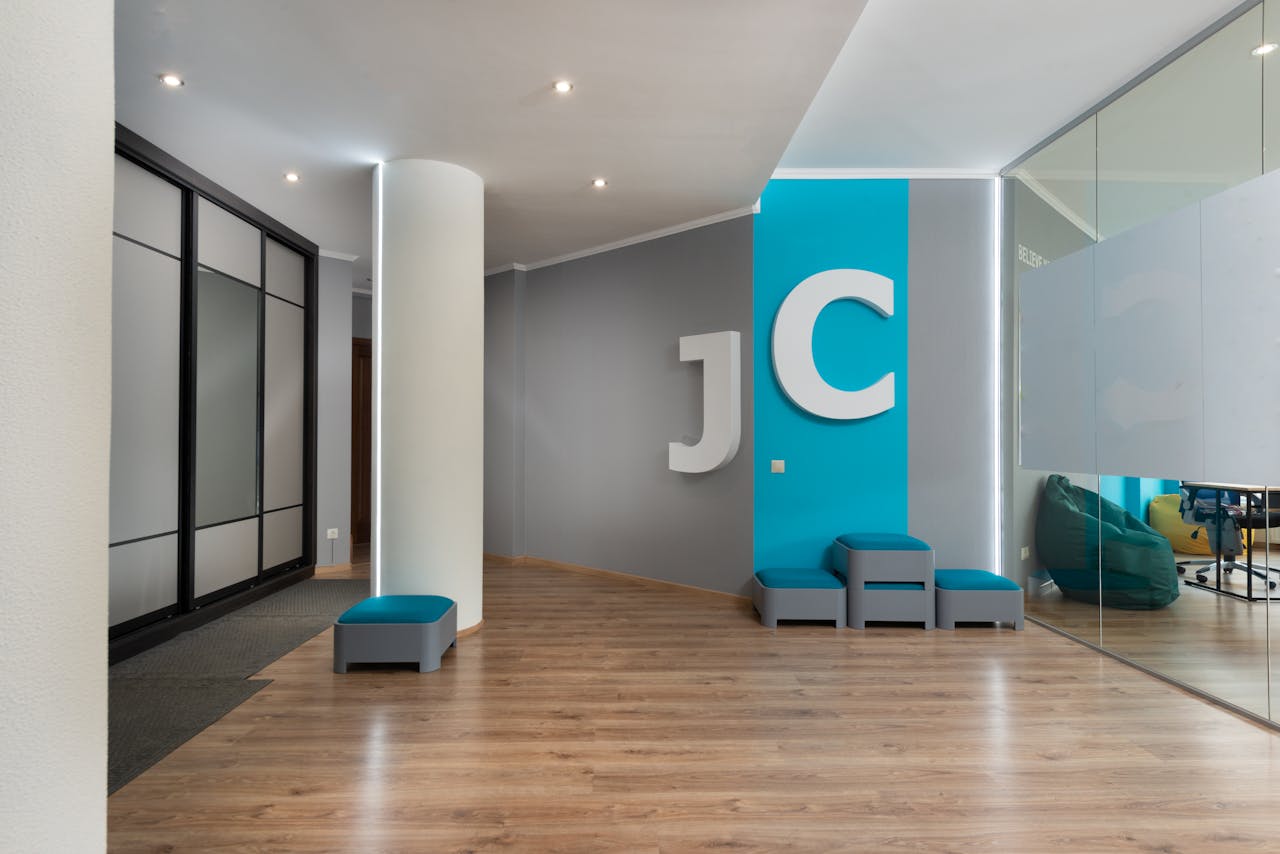
● Use color strategically. An accent wall in your brand color works, as do a few throw pillows, artwork, or other features. Conversely, painting everything that color feels tacky.
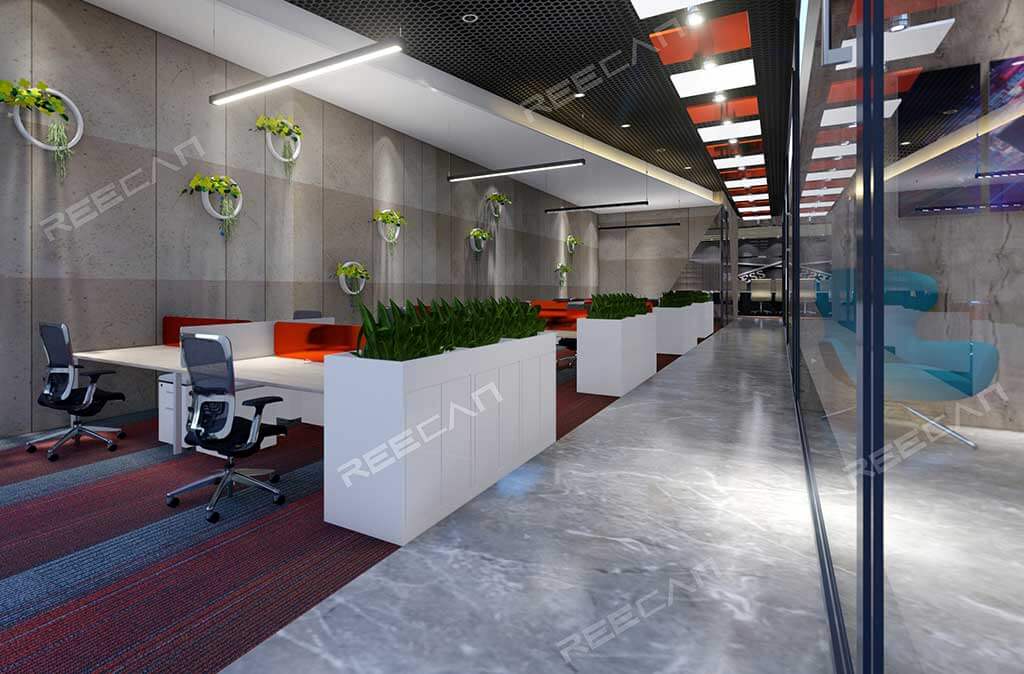
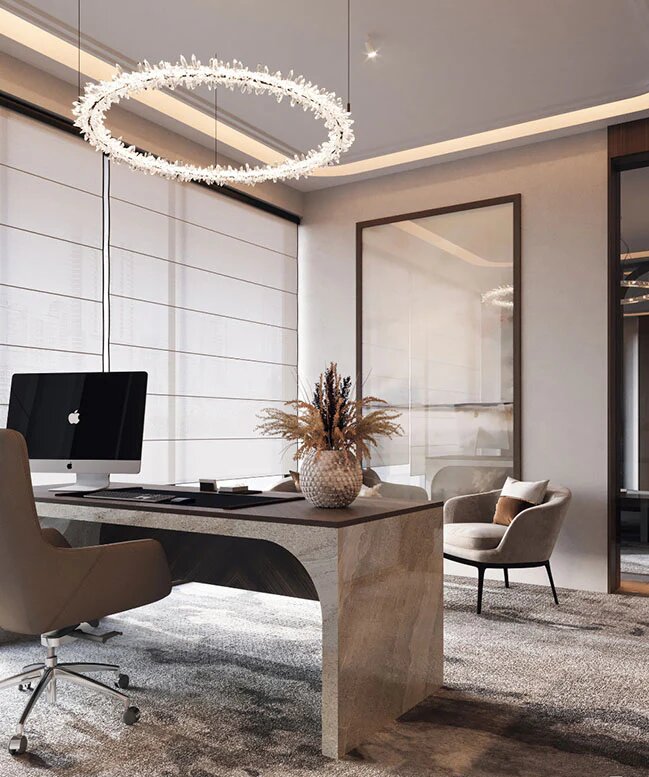
● Consider materials and textures. A law firm might use rich wood and leather to communicate established credibility. A tech startup might use concrete and steel to signal modernity and innovation.
● Lighting creates an atmosphere that aligns with your identity.
● Subtle trumps obvious almost every time. Your logo doesn't need to appear on every surface.
● Functionality first, aesthetics second.
● Your team lives in this space. If the branding feels performative or makes their work harder, you've failed.
What should you avoid?
● Trends. That industrial-chic look might be everywhere right now, but if it doesn't match who you are, it's just expensive decoration that distracts from your messaging.
● Going too literal. A surf shop doesn't need fake palm trees. A bakery doesn't need wheat stalks painted on every wall.
● Ignoring acoustics, air quality, and comfort in favor of visual impact. People will remember how the space felt long after they forget what color the walls were.
● Treating it as permanent. Brand evolution is normal. Build in flexibility so you're not locked into 2024's aesthetic in 2029.
The Bottom Line
Does your physical space make the same promise your brand makes everywhere else? If not, now is a great time to close that gap with great commercial interior products.
Your space isn’t just a place to get work done; it’s a space to communicate who you are and to make a powerful, lasting impression. Get it right, and you’ll notice right away.