


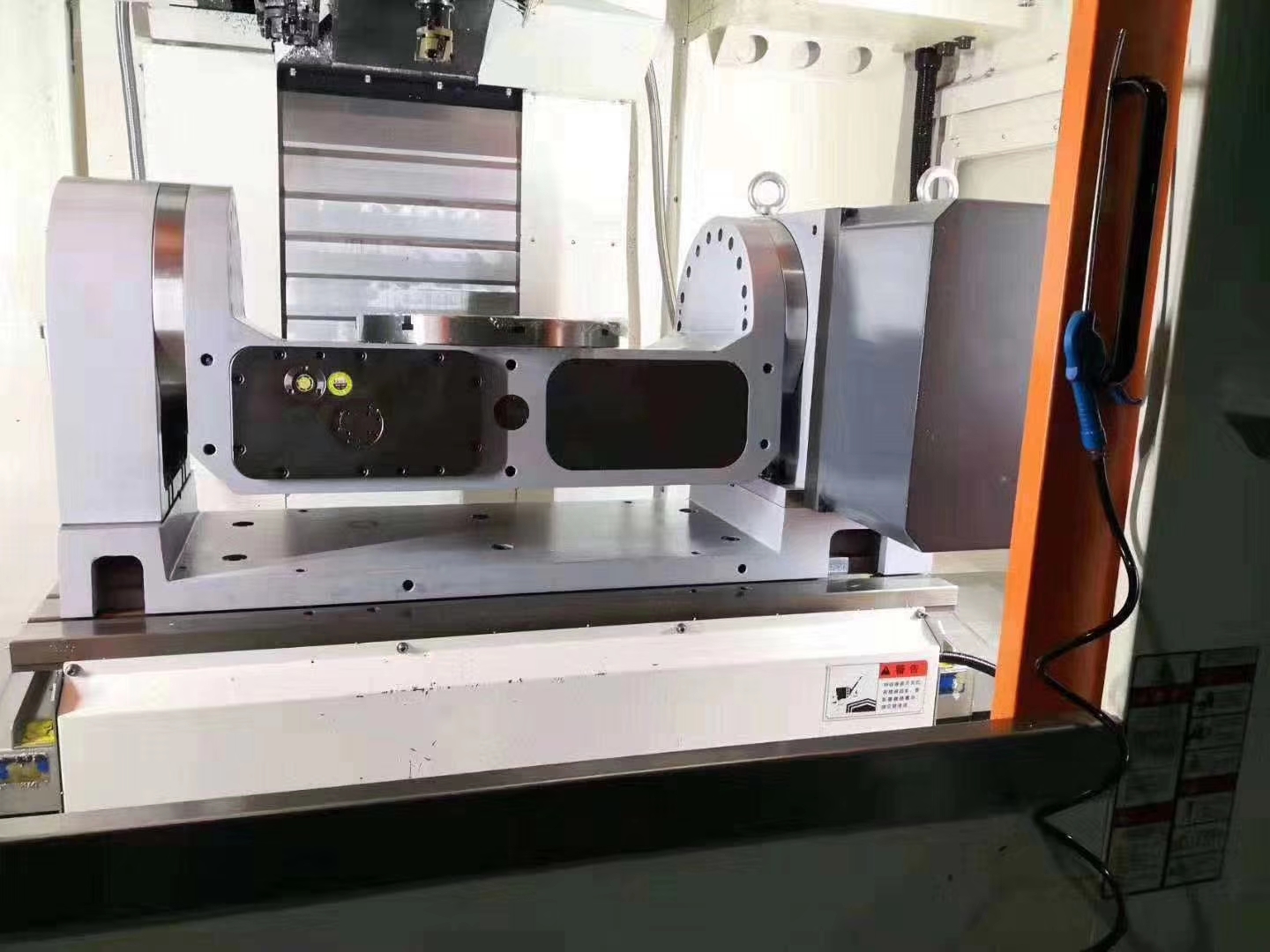
In today’s fast-paced and precision-driven manufacturing environment, every second counts—and every setup matters. Manufacturers across the globe are under growing pressure to deliver high-quality parts with shorter lead times and tighter tolerances, all while keeping costs under control. As a result, CNC machining centers are increasingly equipped with a Rotary Table for Machining Center applications to do more with less—less time, less manpower, and fewer errors.
So, how can you optimize your existing machine capabilities without investing in entirely new equipment? The answer lies in an often underutilized but incredibly powerful workholding and positioning solution: the rotary table for machining center.

At SilverCNC, we specialize in precision rotary tables, tailored specifically for machining centers that demand flexibility, repeatability, and performance. A rotary table for machining center doesn’t just add an extra axis—it completely changes how you handle complex parts and multi-face machining. It boosts throughput, minimizes re-fixturing, reduces operator intervention, and maximizes tool access, all of which translate to skyrocketing productivity.
Whether you're running a 3-axis vertical mill or a horizontal machining center, integrating a rotary table transforms your machine into a 4-axis or even a quasi-5-axis powerhouse—without the need for a complete equipment overhaul. Better still, a properly integrated rotary table can handle both indexing and continuous motion operations, providing the flexibility needed in industries like aerospace, medical device manufacturing, automotive, and high-performance mold making.
What Is a Rotary Table for Machining Center?
A rotary table for machining center is a precision workholding and motion device designed to rotate the workpiece along a single axis, usually the A-axis or B-axis, depending on the orientation. Most commonly, it is integrated into 3-axis vertical machining centers (VMCs) or horizontal machining centers (HMCs) to enable 4-axis capabilities.
Rotary tables can be used for:
- Indexing Work: Rapidly positioning the part to various orientations without continuous movement.
- Continuous 4-Axis Machining: Allowing the toolpath to wrap around the workpiece in a smooth, interpolated motion.
- Multi-Side Access: Enabling access to more part faces without repositioning.
- Precision Drilling Patterns: Circular hole drilling, especially around cylindrical surfaces.
They are servo-controlled, often equipped with precision encoders, and compatible with major CNC controls such as Fanuc, Siemens, Haas, Mazatrol, and Heidenhain.
How It Transforms Your CNC Workflow
Without a CNC rotary table, complex or multi-face parts often require several fixtures, multiple setups, and heavy reliance on operator accuracy. This not only increases cycle time but exposes you to greater risk of human error, misalignment, or data input mistakes.
With a rotary table in place:
- You reduce setup time significantly.
- You eliminate manual repositioning between operations.
- You boost repeatability—essential for batch production.
- You allow infinite angle machining for contours and undercuts.
Essentially, you transition from stop-and-go machining to continuous intelligent machining—drastically improving your workflow productivity.
Why It’s the Key to Next-Level Productivity
Let’s explore how a rotary table for machining center directly contributes to higher productivity:
a. Machine Utilization Increases
By minimizing setups and operator intervention, you're keeping the spindle engaged in actual machining rather than idle repositioning or resetting.

b. Reduction in Human Error
Manual setups introduce inconsistencies. Programmable rotary tables deliver precise, repeatable positioning every cycle.
c. Time Savings on Complex Parts
Parts that formerly required five or six operations can now be machined in two or even one operation, thanks to dynamic rotation.
d. More Versatile Workholding
A rotary table can accommodate a wide range of part sizes and geometries, adding greater variety to your shop’s capabilities.
e. Maximize Tool Life
By keeping optimal cutting angles and reducing abrupt tool changes, rotary tables contribute to smoother machining and extended tool performance.
SilverCNC’s Rotary Tables: Crafted for Performance
SilverCNC offers a robust range of rotary tables for machining centers, engineered with the latest servo technologies, long-lasting materials, and exceptional precision motors. Our models range from compact CNC rotary tables for smaller VMCs to large trunnion-style rotary tables with dual axes and high payload capacities.
Features include:
- High-torque servo motors with low backlash
- Rotary encoders for positioning within ±5 arc-seconds
- Direct drive or high-ratio worm gear models
- Heavy-duty braking systems
- Coolant sealed and chip-proof housings
- Flexible mounting options—horizontal or vertical
Our rotary tables are compatible with all major control platforms and equipped with full integration support.
Selecting the Right Rotary Table for Your Machine

Choosing the correct rotary table depends on various factors:
- Machine Size: Ensure you’re not overloading spindle travel or table weight limits.
- Payload Requirements: Consider the part and fixture combined weight.
- Speed vs Torque: Prioritize rapid indexing or high-load stability for your specific job.
- Control Integration: Is your CNC ready to add a new axis controller?
- Mounting Style: Right-angle units (vertical), trunnion-mounts, or horizontal.
SilverCNC offers free consultation services to help you find the perfect match based on your shop’s requirements.
Programming and CAM Integration
Adding a rotary axis changes your programming strategy—and your CAM software must support it. Most modern CAM packages like Mastercam, Fusion 360, SolidCAM, Siemens NX, and HyperMILL support rotary programming under 4-axis or multi-axis licenses.
Important notes:
- You’ll need a tailored post-processor for optimal code generation.
- Rotary axis movements reference specific G-code (e.g., A/B/C axis).
- Be sure to define rotary center points and work offsets accurately.
- SilverCNC works with CAM providers to ensure smooth implementation.
Installation and Setup Considerations
Integrating a rotary table for machining center is more plug-and-play than it used to be, especially with SilverCNC's complete integration kits.
Installation includes:
- Securely mounting the rotary table
- Connecting to the CNC servo controller
- Configuring parameters (gear ratio, home positions, backlash compensation)
- Setting up tool and part coordinate systems
- Testing indexing and continuous movement
We offer both in-person and remote setup support, complete with manuals, videos, and configuration templates.
Maintenance Tips to Maximize Longevity
To get the most from your rotary table, follow these practices:

- Keep surfaces and seals clean—wipe off coolant and chips regularly.
- Cycle the brake system to maintain clamping efficiency.
- Check backlash periodically and adjust if needed.
- Grease or lubricate as per manufacturer intervals.
- Protect cables and junctions from interference or coolant exposure.
Our SilverCNC rotary tables are built for industrial resilience, but regular maintenance ensures performance for the long haul.
In high-stakes manufacturing, productivity and precision are non-negotiable. A rotary table for machining center offers the single best opportunity to elevate both—while using your existing machine assets more effectively. It helps you compete on lead time, part complexity, and surface finish, without building your cycle time or overhead.
Whether you're machining high-mix, low-volume parts or standard production runs, upgrading your machining center with a rotary table can multiply your shop’s versatility, profitability, and strategic scalability.
Frequently Asked Questions (FAQs)
Q1: Will a rotary table slow down my machine operations?
A: Quite the opposite. While indexing adds short pauses, overall cycle times typically drop significantly due to reduced setups and re-fixturing.
Q2: Can I install a rotary table on any VMC?
A: Most 3-axis mills support add-on 4-axis rotary tables. We provide compatibility checks and recommendations during the quoting process.
Q3: What’s the difference between a trunnion table and a rotary table?
A: A rotary table rotates a part around one axis. A trunnion table adds a second pivoting axis, often used for 5-axis work. SilverCNC offers both.
Q4: Does it require special G-code to run a rotary table?
A: Yes, rotary moves use specific codes (e.g., A-axis) and feedrate units. Your CAM software and controller must support this motion, and we can assist with post-processor creation.
Q5: How much maintenance is needed?
A: Not much—keep it clean, lubricate periodically, and monitor for backlash. Well-maintained tables from SilverCNC easily run for 10+ years.
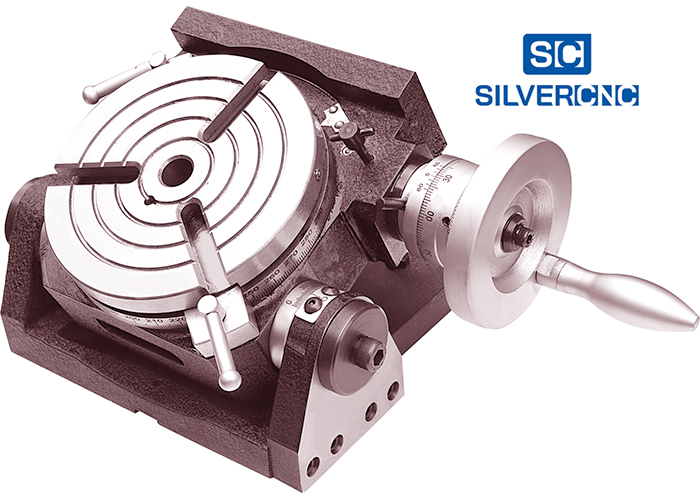

This report empowers perusers to settle on significant choices in regards to their business, with the assistance of an assortment of information encased in the examination.Big Bore Rotary Table market has been investigated by using the best combination of secondary sources and in-house approach alongside a novel mix of primary insights.
: https://www.industryandresearch.com/report/Global-Big-Bore-Rotary-Table-Market-Size-Share--Trends-Analysis-Report-By-Product-Type-By-Application-By-Region-And-Segment-Forecasts-to-2020---2025/204191#samplereportCompetitive Analysis:Big Bore Rotary Table Market Main Competitors are : NIKKEN KOSAKUSHO WORKS, TJR Precision Technology, UCAM, Samchully Machinery, PIONEER, Ganro, MMK Matsumoto, Sankyo AutomationKey Market Segmentation of Big Bore Rotary Table:The scope of the report additionally incorporates additional data of market information and its investigation.
This incorporates bits of knowledge seeing key market parts, for example, market fragments, industry esteem chain investigation, piece of the pie outline, key monetary pointers, utilization information figures, request supply circumstances, segmental execution survey and that's just the beginning.
This may help perusers including providers, merchants, purchasers of the business to comprehend presence of the Big Bore Rotary Table market across various regions.Big Bore Rotary Table Market Segmented on the basis of Type, Application and Region:Global Big Bore Rotary Table Market, By Product TypeVertical Mounting Type, Horizontal Mounting TypeGlobal Big Bore Rotary Table Market, By ApplicationMedical Industry, Auto Industry, Oil Industry, OthersAdditionally, the Big Bore Rotary Table statistical surveying shares granular level data got from inside and out investigation of some compelling parts of the business.
This incorporates development energizing components of the business, different sorts of effects including political, natural, monetary, social and then some, factors ruining anticipated development of the business, piece of the pie extension, undiscovered chances, market size expectations, and so forth This may help perusers to assemble dependable data with respect to Big Bore Rotary Table market to arrive at more astute decisions.Buy Latest Copy of Report Now!
https://www.industryandresearch.com/report/Global-Big-Bore-Rotary-Table-Market-Size-Share--Trends-Analysis-Report-By-Product-Type-By-Application-By-Region-And-Segment-Forecasts-to-2020---2025/204191#samplereportMoreover, the Big Bore Rotary Table market report consolidates significant data with respect to key market contenders.
