

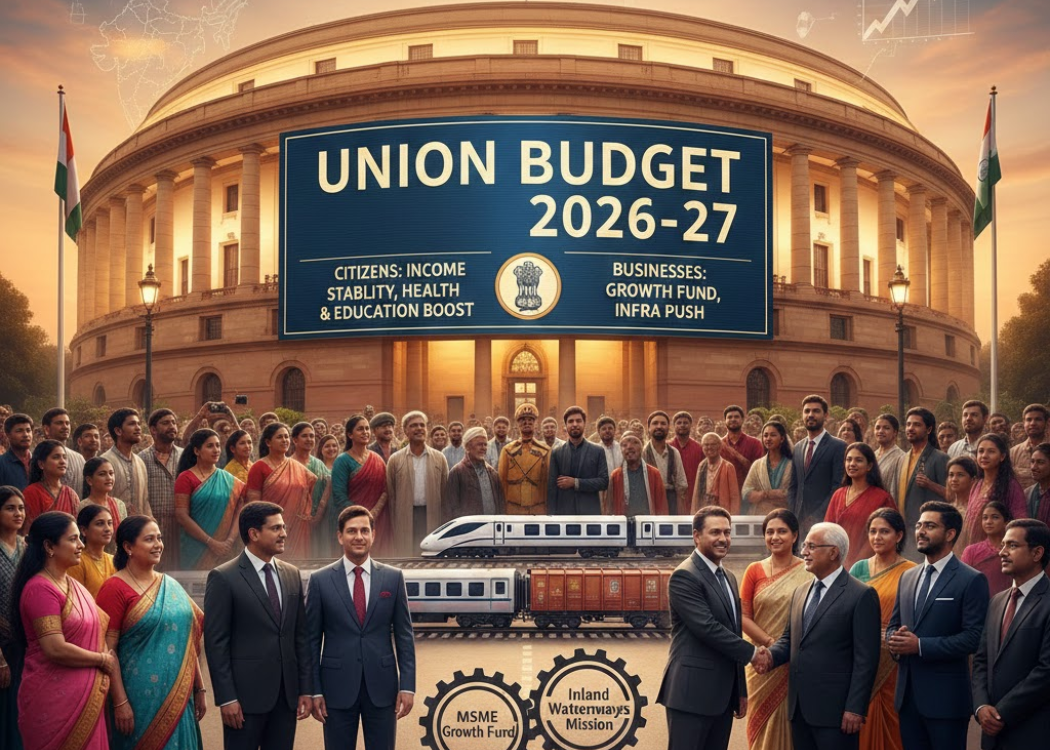
On 1 February 2026, the Government of India presented the Indian Union Budget 2026, outlining the financial roadmap for the year 2026–27. The budget was framed at a time when India’s economy was showing steady growth amid global uncertainty. The focus remained on supporting citizens’ incomes, encouraging business expansion, strengthening infrastructure, and maintaining fiscal discipline. For households and enterprises alike, Budget 2026 introduced changes that influence daily finances, long term planning, and investment decisions.
Tax Changes and Compliance Reforms
One of the key outcomes of the Indian Union Budget 2026 was stability in personal income taxation. The government chose not to alter individual income tax slabs, providing certainty to salaried and self employed taxpayers. This decision allowed households to plan savings and expenses without sudden changes to tax liabilities.
A major reform came through the introduction of the new Income Tax Act, effective from 1 April 2026. This replaced a decades old law and focused on clarity, simpler language, and reduced disputes. The revised framework offers easier return filing, fewer compliance hurdles, and extended timelines for correcting errors. For businesses and professionals, this shift aims to lower litigation and build trust between taxpayers and authorities.
The budget also rationalised Tax Collected at Source on overseas spending. Education, travel, and medical expenses abroad now fall under more uniform and moderate rates, easing the burden on families with global requirements.
What Changed for Citizens
Healthcare and Social Welfare
Public healthcare received higher funding under Budget 2026. Increased allocations were directed toward strengthening hospitals, expanding insurance coverage, and improving primary healthcare services. These steps are designed to reduce out of pocket medical expenses and improve access in both urban and rural areas.
Education and Youth Support
Education and skill development remained a priority. The budget announced new girls’ hostels across districts to improve access to education and safety. Additional investment in training and skill programs aimed to improve employability for young Indians, particularly in emerging sectors.
Support for Farmers
Agriculture saw a push toward technology driven growth. The launch of a digital advisory platform for farmers aims to support better decision making related to crops, weather, and markets. By improving access to information, the initiative seeks to raise productivity and farm incomes.
Infrastructure as a Growth Engine
Infrastructure continued to be the backbone of economic expansion in the Indian Union Budget 2026. Capital expenditure for the year was set at ₹12.2 lakh crore, marking a clear increase over the previous year. This investment is expected to generate employment, stimulate demand for raw materials, and strengthen national connectivity.
Railways received special attention with plans for multiple high speed rail corridors connecting major cities. These projects are intended to improve mobility, reduce travel time, and encourage regional development. Inland waterways were also prioritised, with new routes planned to lower logistics costs and ease freight movement for businesses.
Impact on Businesses
MSMEs and Startups
Small and medium enterprises remained central to the government’s growth strategy. A ₹10,000 crore MSME Growth Fund was announced to support scaling businesses, improve competitiveness, and boost job creation. Simplified compliance rules, extended filing timelines, and lower penalties further reduced operational pressure on smaller firms.
Startups also benefited from improved access to capital and regulatory clarity. These measures aim to encourage innovation and strengthen India’s entrepreneurial ecosystem.
Manufacturing and Industrial Growth
Manufacturing received strong policy backing in Budget 2026. Incentives for electronics manufacturing were expanded with a significant outlay to support domestic production. The semiconductor mission was continued to strengthen chip design and manufacturing capabilities, reducing dependence on imports.
The pharmaceutical and biopharma sectors also gained attention through multi year funding commitments aimed at boosting domestic manufacturing and research.
Strategic Minerals and Supply Chains
To strengthen supply chain security, the budget announced the development of rare earth and critical mineral corridors in select states. This move is intended to support industries such as electronics, renewable energy, and electric vehicles while reducing reliance on foreign sources.
Financial Markets and Corporate Measures
Reforms in banking and capital markets were introduced to deepen investment channels. While certain transaction taxes were increased, the broader objective was to improve transparency, market stability, and long term capital formation.
Conclusion
The Indian Union Budget 2026 adopted a balanced approach that combined stability for citizens with growth opportunities for businesses. By keeping tax slabs unchanged, simplifying compliance, and increasing investment in infrastructure and manufacturing, the budget aimed to strengthen economic confidence. For households, it offered clarity and targeted social support. For businesses, it provided incentives, funding access, and a more predictable policy environment. Overall, Budget 2026 set the tone for sustainable growth driven by investment, innovation, and inclusive development.