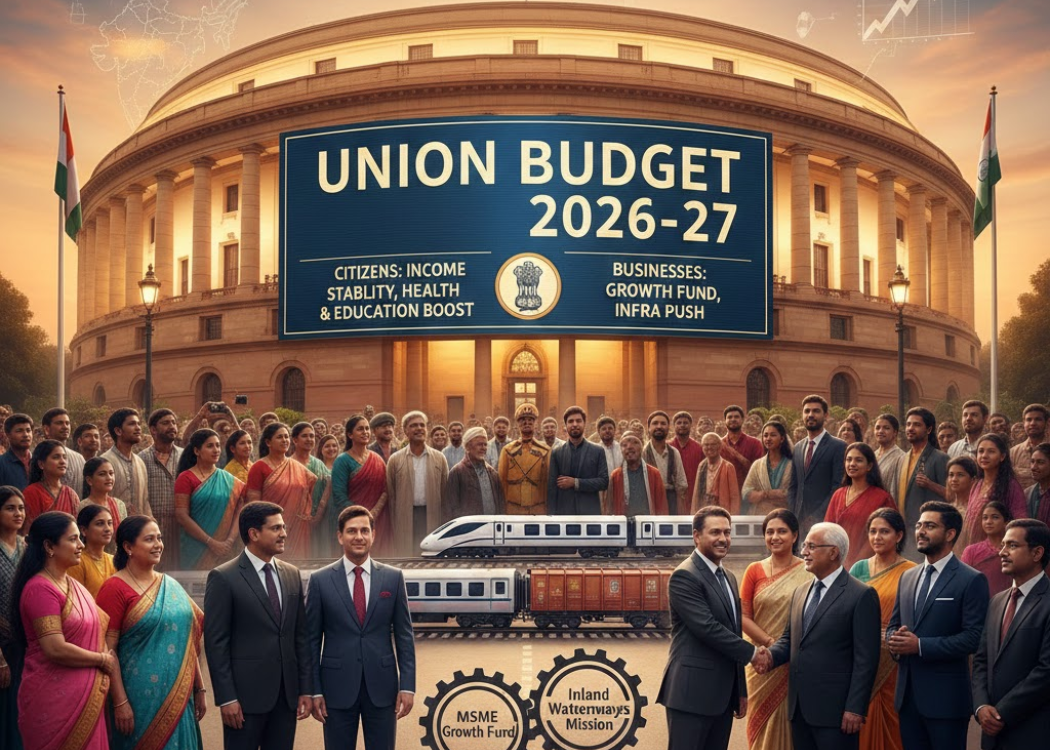



The Union Budget directly influences how much you earn, spend, save, and invest. While headlines often focus on large numbers and government priorities, the real story lies in how policy changes affect everyday life. A comparison of the union budget 2025 vs 2026 offers a clear picture of shifting economic priorities and what they mean for individuals, families, and businesses.
Economic Focus: Continuity with a Shift in Priorities
Union Budget 2025 focused on stabilising growth after global uncertainty, with an emphasis on infrastructure, fiscal discipline, and steady consumption. The approach was cautious, aimed at maintaining momentum without putting pressure on public finances.
Union Budget 2026 continues this growth narrative but with a sharper focus on domestic demand, job creation, and manufacturing. While fiscal responsibility remains a priority, Budget 2026 shows greater confidence in long-term expansion, especially through capital expenditure and private investment support.
Income Tax and Take-Home Pay
For salaried individuals, Budget 2025 concentrated on simplifying compliance and encouraging the use of the new tax regime. However, relief was limited for many middle-income earners.
Budget 2026 builds on this framework with targeted adjustments that improve disposable income for a wider section of taxpayers. The emphasis is on increasing spending power, which directly benefits household consumption. For professionals and middle-class families, the union budget 2025 vs 2026 comparison clearly shows a shift towards higher net income and better savings potential.
Cost of Living and Inflation Management
Inflation control remained a key concern in Budget 2025, with measures aimed at supply chain stability and essential commodities. While prices moderated, households still faced pressure on daily expenses.
Budget 2026 strengthens inflation management by focusing on logistics, agricultural supply, and energy efficiency. These steps are expected to reduce volatility in food and fuel prices over time. For consumers, this translates into more predictable monthly expenses and improved purchasing confidence.
Employment and Career Opportunities
Job creation initiatives in Budget 2025 were linked mainly to infrastructure projects and public investment. While effective, the impact was gradual.
Budget 2026 expands employment generation through manufacturing, digital services, and skill development programs. Young professionals, first-time job seekers, and skilled workers are likely to see more opportunities. This is one of the most visible differences when analysing union budget 2025 vs 2026 from a career perspective.
Support for Small Businesses and Entrepreneurs
Small businesses and startups received credit access and compliance relief in Budget 2025, helping them recover and stabilise.
In Budget 2026, the focus moves beyond survival to expansion. Improved financing, technology adoption, and market access are key themes. Freelancers, self-employed professionals, and MSMEs stand to benefit from a more growth-oriented policy environment.
Infrastructure and Urban Development
Infrastructure spending was a strong pillar of Budget 2025, aimed at boosting economic activity and employment.
Budget 2026 accelerates this effort with greater emphasis on urban mobility, housing, and regional connectivity. For citizens, this means better transport systems, improved public services, and long-term benefits in real estate and local development.
Healthcare and Education
Budget 2025 prioritised strengthening existing healthcare and education frameworks.
Budget 2026 goes further by focusing on quality, accessibility, and digital integration. Families are likely to benefit from improved public healthcare delivery and enhanced education infrastructure, particularly in urban and semi-urban areas.
Savings and Financial Planning
From an investment standpoint, Budget 2025 encouraged stable long-term planning.
Budget 2026 sends a stronger signal toward wealth creation through consistent policy direction and improved investor confidence. Individuals planning retirement, long-term savings, or asset allocation may find the newer budget more supportive.
Final Takeaway: What Should You Do Now?
The comparison of the union budget 2025 vs 2026 shows a clear evolution from stability to expansion. Budget 2026 places greater emphasis on income growth, employment, and consumption, while maintaining fiscal discipline.
For individuals, this is a good time to reassess financial plans, review tax strategies, and explore new career or business opportunities. Understanding these changes early helps you make smarter decisions in the year ahead.