In a time when performance, efficiency, and space-saving design are more important than ever, the demand for compact computing solutions continues to rise. Whether you’re managing industrial operations, building an edge computing system, deploying signage in retail, or even assembling a clutter-free office desktop, you’ve likely come across one powerful little device that keeps showing up across industries — the Fanless Mini PC.
At ValanoIPC, we believe that innovation doesn’t always make noise — sometimes, it runs silently in the background, boosting performance and reliability without demanding attention. And that’s exactly what the Fanless Mini PC delivers: silent operation, rugged endurance, and scalable flexibility in environments where traditional PCs might overheat, gather dust, or simply take up too much space.
What Is a Fanless Mini PC?
A Fanless Mini PC is exactly what it sounds like: a small-form-factor computer designed without internal fans for cooling. Instead, these systems use passive cooling methods — typically via solid metal chassis or specialized heatsinks — to dissipate heat efficiently and quietly, even under constant load.
Despite its minimalistic form, a Fanless Mini PC packs surprising power. With Intel® or AMD® embedded processors, SSD storage, multiple I/O ports, and industrial-grade reliability, it is capable of handling everything from automation, networking, and surveillance to POS systems and home theater setups.
Key Features:
- Compact size (as small as your hand)
- Passive, silent coolin
- Durable aluminum or steel enclosure
- Industrial-grade component
- Wide input voltage and temperature ranges
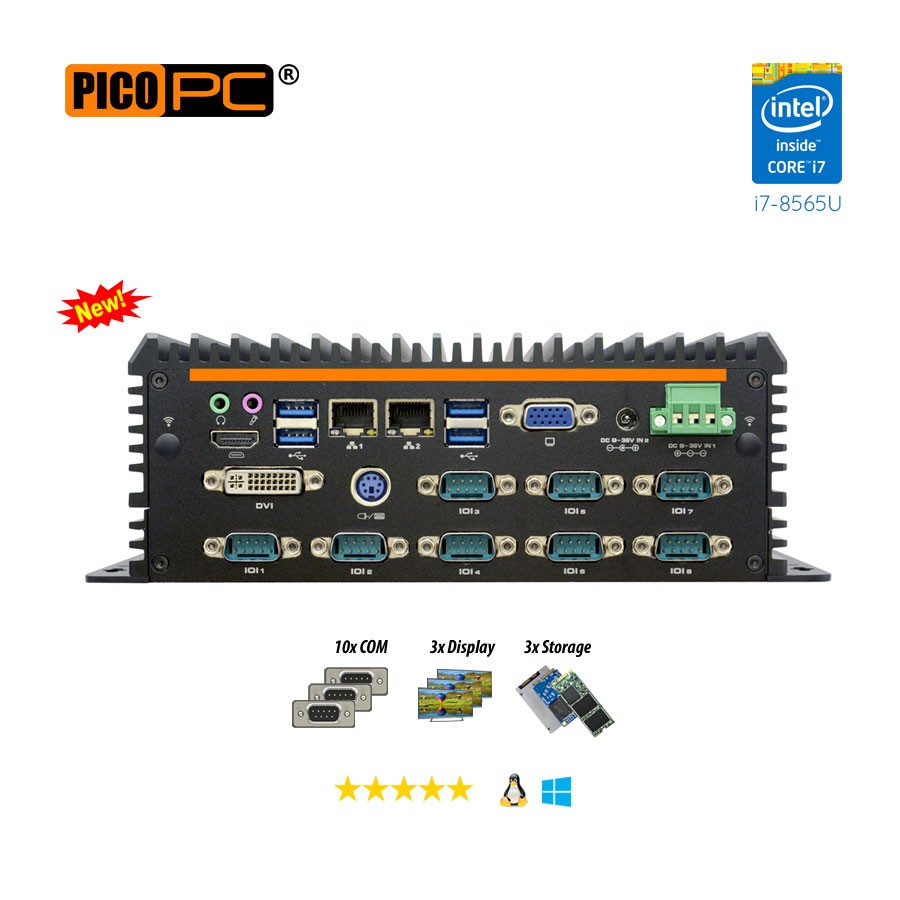
- Multiple connectivity options (USB, LAN, COM, HDMI, etc.)
Why Choose a Fanless Mini PC?
1. Silent Operation
Without spinning fans, there's zero noise. This makes fanless PCs perfect for noise-sensitive environments:
- Control rooms
- Medical labs
- Music studios
- Museums or libraries
- Home offices
2. Dust and Particle Resistance
Fans tend to pull in dust, which accumulates inside and eventually leads to overheating or component failure. Fanless Mini PCs, however, are fully enclosed and resistant to particulate damage, making them ideal for:
- Industrial factories
- Workshops
- Food processing plants
- Outdoor kiosks
3. Lower Power Consumption
A Fanless Mini PC consumes far less power than desktop towers or server systems. Low-TDP (Thermal Design Power) CPUs and SSDs eliminate the need for extra cooling, keeping energy usage (and costs) down — an important consideration for:
- Edge computing and IoT
- Solar-powered outdoor installations
- Embedded monitoring systems
- 24/7 digital signage
4. Minimal Maintenance Requirements
With fewer moving parts, the chance of mechanical failure is significantly reduced. These systems are built to last, making them an excellent fit for long-term deployment in:
- Harsh environments
- Remote monitoring stations
- Unattended operation sites
5. Versatile Mounting Options
Their small footprint and rugged enclosure allow installation in tight or unconventional spaces. Most ValanoIPC Fanless Mini PCs come with:
- VESA mount support
- DIN rail options
- Wall or chassis bracket kits
Key Applications of a Fanless Mini PC:
Across industries, the utility of a Fanless Mini PC is increasing. Here’s where and how they're making an impact:
- Industrial Automation
Used in manufacturing lines to monitor sensors, run PLC software, and coordinate robotics — even under dusty, vibration-heavy, or high-heat conditions.
- Retail & POS
Compact enough to be mounted behind digital signage screens or under counters, these systems run point-of-sale software, display advertisements, monitor foot traffic, or manage inventory.
- Edge Computing & IoT Gateways
Fanless Mini PCs serve as local data processors in edge networks, reducing the need for constant cloud communication — ideal for applications like smart grids, security systems, and autonomous devices.
- Healthcare & Medical Devices
In medical environments where noise and air cleanliness are priorities, Fanless Mini PCs manage lab instruments, imaging systems, and patient monitoring stations.
- Transportation and Fleet Management
Their vibration resistance and thermal endurance make them suitable for vehicles, railways, and maritime setups for GPS tracking, system diagnostics, and route control.
Technical Factors to Consider
Before choosing a Fanless Mini PC for your application, consider the following specs and support options:
- Processor Options
Most fanless systems run low-power Intel® Core™, Atom™, Celeron®, or AMD Ryzen™ Embedded processors — balancing efficiency with performance.
- Storage
SSD storage is standard, ensuring fast read/write access without vibration sensitivity. ValanoIPC systems support:
- 1x or 2x mSATA
- 2.5" SSD bays
- NVMe support in performance models
- I/O Port Selection
Depending on your setup, ensure your mini PC includes:
- USB 2.0/3.0
- RS232/RS485 serial ports
- Gigabit LAN
- Display ports (HDMI, VGA, DP)
- GPIO or CAN Bus
- Thermal Range and Sealing
Look for models rated between -20°C to +60°C (or higher) for outdoor or high-temperature zones. IP-rated enclosures add water and dust protection.
Why ValanoIPC’s Fanless Mini PCs Stand Out?
At ValanoIPC, we design fanless computing systems with long-term deployment and high-performance requirements in mind. Our fanless mini PCs are:
- Built with industrial-grade mainboards
- Comply with CE, FCC, and RoHS standards
- Covered by warranty and long lifecycle support
- Hardened for shock, vibration, and EM interference
What Sets Us Apart:
- Custom BIOS and OS image support
- Linux and Windows compatibility
- Ready-to-ship AND build-to-order options
- Excellent global logistics and technical support
Our mission is to empower industrial and commercial users with computing platforms that never back down — even in the most demanding conditions.
Quietly Powerful, Unfailingly Reliable
A Fanless Mini PC is more than just a new category of small computer — it's a foundation for smarter operations, quieter workspaces, and expanded possibilities in rugged and high-performance environments. From factories and retail counters to field installations and home labs, these systems show that huge impact can come in surprisingly tiny, silent packages.

Frequently Asked Questions (FAQ)
Q1: Are Fanless Mini PCs powerful enough for multitasking?
A: Yes, modern models run quad-core CPUs, support up to 32GB RAM, and handle office apps, automation software, 4K displays, and cloud tasks with ease.
Q2: How do Fanless Mini PCs cool themselves without overheating?
A: They use passive cooling, dissipating heat through metal chassis or built-in heat sinks. The system is thermally engineered to remain within safe operating temperatures without active airflow.
Q3: Can I use a Fanless Mini PC outside?
A: Yes, but make sure it's rated for outdoor/harsh environments, ideally IP-rated and with wide operating temperature specs. ValanoIPC offers sealed models for rugged use.
Q4: Are these systems secure for remote or networked deployments?
A: Absolutely. Many models include TPM 2.0 chips, firewall integration, watchdog timers, and are compatible with network security protocols. They're widely used in digital signage and edge computing.
Q5: Do they support wireless connectivity?
A: Yes. Most ValanoIPC Fanless Mini PCs offer Wi-Fi, Bluetooth, and even 4G/5G module support via mini PCIe or M.2 slots for fully wireless deployment.