

Rice is not just a daily meal—it’s a global trade powerhouse. From family kitchens to international ports, rice connects farmers, exporters, and consumers across continents. And when it comes to exports, one comparison always steals the spotlight: Basmati rice vs Non-Basmati rice.
So which one brings more value to the export market? Is it the fragrant premium Basmati or the high-volume Non-Basmati varieties? Let’s break it down in a simple, engaging way—no technical overload, just real insights.
Understanding the Global Rice Export Market
The global rice export market feeds billions of people every day. Countries import rice based on affordability, availability, taste preferences, and food security needs. India plays a crucial role here, standing tall as the world’s largest rice exporter.
What makes India special is its ability to export both premium and mass-market rice, serving luxury dining tables and everyday households alike.
What Defines Export Market Value in Rice Trade?
Export market value is not just about price. It’s a mix of multiple factors working together.
Key elements that shape export value
Price per metric ton
Consistency in demand
Quality and grain standards
Brand perception in global markets
Import regulations and trade policies
Think of it like selling cars. A luxury car sells fewer units but earns more profit per sale, while an economy car sells in bulk with thinner margins. Rice exports follow the same logic.
Basmati Rice – The Premium Export Favorite
Basmati rice enjoys a special place in international trade. It’s not just sold—it’s experienced.
What makes Basmati rice special?
Basmati is a long-grain aromatic rice grown mainly in India and Pakistan. Its natural fragrance, soft texture, and elegant appearance after cooking make it highly desirable.
Unique Characteristics of Basmati Rice
Aroma that creates instant appeal
The natural aroma of Basmati rice is its strongest selling point. Even before cooking, it signals quality.
Grain elongation after cooking
Basmati grains elongate significantly when cooked, enhancing visual appeal and portion value.
Geographical Indication advantage
Indian Basmati rice is protected by a GI tag, which boosts trust and authenticity in international markets.
Major Export Destinations for Basmati Rice
Basmati rice is mainly exported to regions where consumers value premium food products.
Middle Eastern countries like Saudi Arabia, UAE, and Iran
European markets such as the UK and Germany
North America including the USA and Canada
Australia
These markets prefer quality over quantity and are willing to pay higher prices.
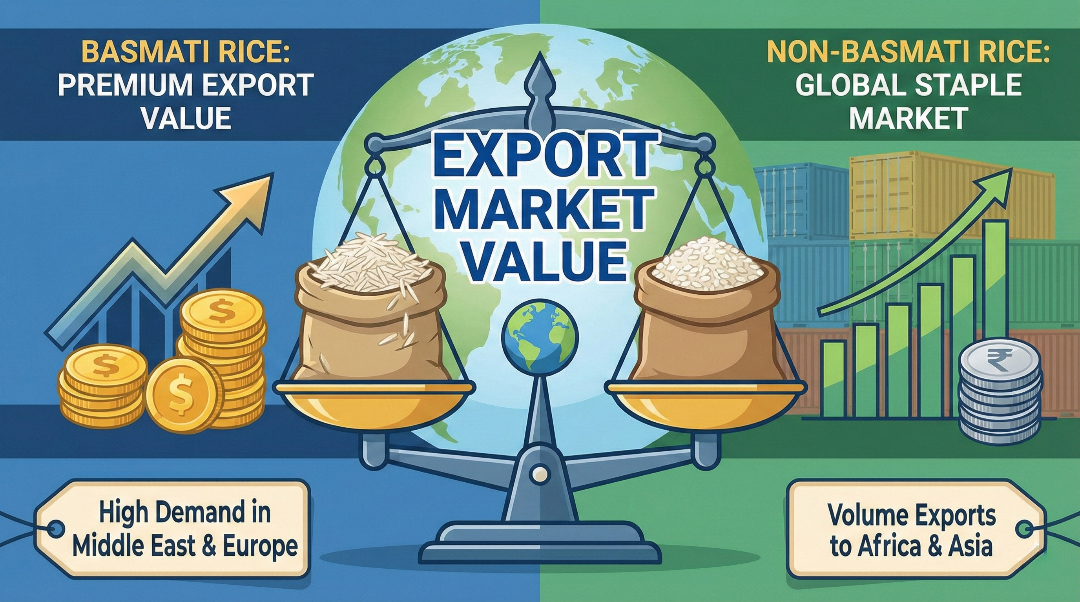
Export Market Value of Basmati Rice
Higher price per metric ton
Basmati rice commands a premium price compared to other rice varieties.
Average export price ranges between USD 900 and USD 1,400 per metric ton
Aged and extra-long varieties can fetch even higher rates
Strong branding and positioning
Unlike commodity rice, Basmati is marketed as a premium product, which significantly increases its export value.
Challenges in Basmati Rice Exports
Despite its premium status, Basmati rice faces some hurdles.
Limited cultivation area
Basmati can only be grown in specific regions, restricting large-scale production.
Strict quality requirements
Minor quality issues like broken grains or moisture can impact pricing.
Market sensitivity
Premium markets are more sensitive to economic fluctuations.
Non-Basmati Rice – The Backbone of Global Food Supply
If Basmati is the luxury segment, Non-Basmati rice is the daily essential.
What is Non-Basmati rice?
Non-Basmati rice includes varieties such as IR64, Sona Masuri, Swarna, parboiled rice, and white rice. These are widely consumed across developing and emerging economies.
Key Features of Non-Basmati Rice
Affordable pricing
Non-Basmati rice is budget-friendly, making it suitable for mass consumption.
High production volume
These varieties are easier to cultivate and yield more, ensuring steady supply.
Versatile usage
Used in household cooking, institutional supply, and government food programs.
Major Export Destinations for Non-Basmati Rice
Non-Basmati rice mainly serves regions with high population growth and food security needs.
African countries like Nigeria, Benin, and Senegal
South and Southeast Asian nations
Neighboring countries such as Bangladesh and Sri Lanka
Export Market Value of Non-Basmati Rice
Lower price but massive demand
Non-Basmati rice is sold at lower prices but in very large quantities.
Average export price ranges from USD 350 to USD 550 per metric ton
Parboiled rice may earn slightly higher rates
Essential role in global trade
By volume, Non-Basmati rice dominates the international rice market.
Challenges in Non-Basmati Rice Exports
Government policy impact
Export bans, quotas, and minimum export price rules can affect shipments.
Tight competition
Many exporting countries compete on price, reducing margins.
Commodity perception
Non-Basmati rice lacks branding power, making differentiation difficult.
Basmati vs Non-Basmati: A Direct Comparison
Pricing perspective
Basmati rice earns significantly higher prices per unit, while Non-Basmati focuses on affordability.
Volume perspective
Non-Basmati rice leads in total export volume, supplying food to millions.
Demand stability
Basmati demand is lifestyle-driven, whereas Non-Basmati demand is necessity-driven.
Which Rice Has Higher Export Market Value?
The answer depends on how value is measured.
Value by price
Basmati rice clearly wins due to its premium pricing.
Value by volume
Non-Basmati rice dominates because of large-scale demand.
Value by trade strategy
Both types are essential for a balanced export portfolio.
India’s Advantage in the Global Rice Export Market
India enjoys a unique position by leading exports in both Basmati and Non-Basmati rice. This dual strength helps maintain steady foreign exchange earnings and global trade influence.
Future Trends in Basmati Rice Exports
Rising demand for aged Basmati rice
Growth in organic and premium segments
Increased focus on branding and packaging
Future Trends in Non-Basmati Rice Exports
Growing imports from African nations
Increased demand for parboiled and fortified rice
Expansion of value-added processing
Which Rice Is Better for Exporters?
For new exporters
Non-Basmati rice offers easier entry, faster turnover, and lower investment.
For experienced exporters
Basmati rice provides higher margins, brand loyalty, and long-term contracts.
Final Thoughts
Basmati rice and Non-Basmati rice are not competitors—they are complements in the global export ecosystem.
Basmati rice delivers premium value and strong branding
Non-Basmati rice ensures volume, stability, and food security
The smartest exporters don’t choose sides. They understand the strengths of both and build strategies that grow with the market.
If You Get connect with us for Trade Deal So can contact: https://vertezsteelglobalworksllp.com/


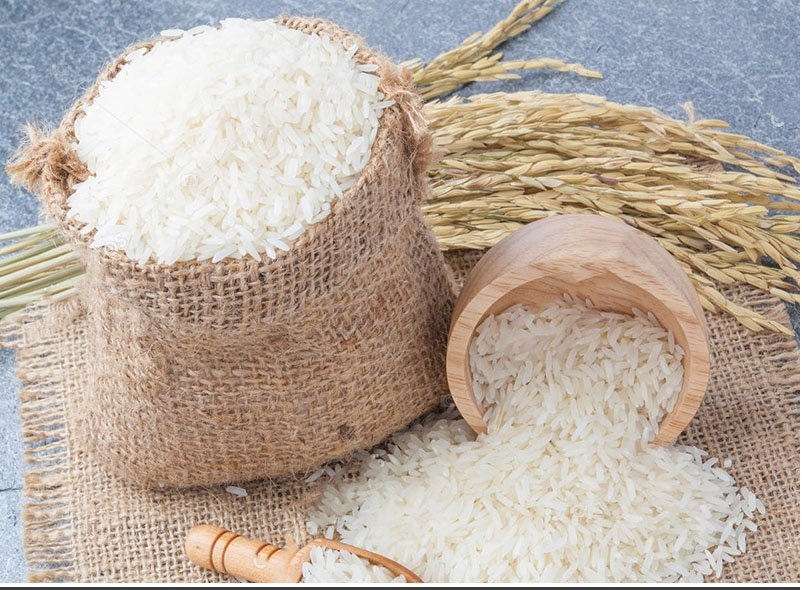
All the more then 50k purchasers and 8k dealers are working together on Tradologie.com with the least exertion and most extreme benefit.Basmati Rice is one of the most significant staple nourishments in India.
Its common properties like its long and thin shape and astonishing scent settle on it the best option for different sizzling, mouth-watering, and fragrant cooking styles in all pieces of the world.
Basmati Rice is normally and solely developed in the northern belts of India and furthermore in some southeastern pieces of Pakistan.
It is additionally the most acclaimed Kharif crops among the ranchers of the previously mentioned districts.
Notwithstanding, it is the rice brokers and exporters who carry this great assortment of rice to your plates.Basmati Rice is very well known in the Asian, European, and American nations, particularly the nations falling in the locales of the Middle East and the Gulf.
Its one of a kind normal aroma and long grains make it a well known and 'highly sought after' rice around the world.