

Summary
Have you ever had that sinking feeling when the phone rings at the front desk two days after a prep appointment? You know the one. You have just performed what you thought was a textbook crown preparation. The margins were crisp, the impression was flawless, and the temporary crown looked like a work of art. Yet, here is your patient on the other end of the line, sounding miserable. They are sipping water and wincing; even a breath of cold air sets them off.
"It hurts when I drink tea, doctor. It throbs at night."
As dental professionals, our hearts sink because we empathise. We went into this profession to heal pain, not cause it. But beyond the empathy lies a frustrating clinical mystery: What went wrong? You blame the depth of the prep. You question your bonding protocol. You wonder if the tooth has a hairline fracture.
But how often do you look at the humblest material in your tray—the dental temporary cement?
It is the unsung hero (or silent villain) of restorative dentistry. We often treat temporisation as a mere stopgap, a placeholder until the "real" dentistry arrives from the lab. However, that two-week interim period is biologically critical. If your provisional restoration leaks, vibrates, or irritates the pulp, you aren't just causing temporary discomfort; you are risking the long-term vitality of the tooth.
Why Does a "Perfect" Prep Still Hurt?
Let’s dive into the biology of what is happening inside that dentine. When you cut a tooth for a crown, you are essentially performing surgery on a vital organ. You have exposed thousands of microscopic dentinal tubules, each filled with fluid and nerve endings.
Post-operative sensitivity is essentially a hydraulic issue. According to the Brännström’s Hydrodynamic Theory—the most widely accepted explanation for dental sensitivity—pain occurs when fluid within these tubules moves. This movement stimulates nerve receptors, sending a sharp signal to the brain.
The most common cause of this fluid movement in a provisional phase is micro-leakage. If your temporary crown doesn't seal perfectly, bacteria and fluids from the oral cavity seep underneath. This creates a "pumping" action every time the patient chews. The result? A hyperaemic pulp that is angry, inflamed, and screaming for help.
This is where your choice of dental temporary cement becomes the critical line of defence. It isn't just glue; it is a biological dressing.
Is Your "Dental Set" Working Against You?
We need to talk about the chemistry. For decades, the debate has raged between eugenol and non-eugenol cements. Eugenol (oil of cloves) is dentistry’s oldest sedative. It is fantastic for calming an irritated pulp. However, it has a notorious reputation for interfering with the setting of resin cements used for the final restoration.
This creates a dilemma. Do you choose patient comfort now (eugenol) and risk a weaker bond later? Or do you choose a resin-compatible cement and risk sensitivity now?
The problem often lies in the film thickness and the solubility of the material. A cement that is too thick can elevate the bite, causing occlusal trauma—another massive cause of sensitivity. Conversely, a cement that washes out too easily leaves a gap for bacteria to invade.
Recent studies suggest that up to 10-15% of vital teeth prepared for crowns can develop pulpal complications. That is a statistically significant number. If your dental set—your standard tray setup for temporisation—includes a generic, bargain-bin cement, you might be unknowingly contributing to this statistic. The material must flow easily to create a thin film, seal the margins tightly, and yet have enough compressive strength to withstand chewing forces without shattering.
How Can Shofu’s Materials Change the Game?
At Shofu, we believe that the provisional phase is not just about "covering the gap"; it is about "healing the wound."
The ideal scenario is a material that seals like a fortress but soothes like a balm. This is why investing in a high-quality dental temporary cement is one of the most cost-effective practice builders available. Think about it: a single emergency appointment to recement a temporary or soothe a sensitive tooth costs you 30 minutes of chair time. That is 30 minutes of lost revenue, not to mention the loss of patient confidence.
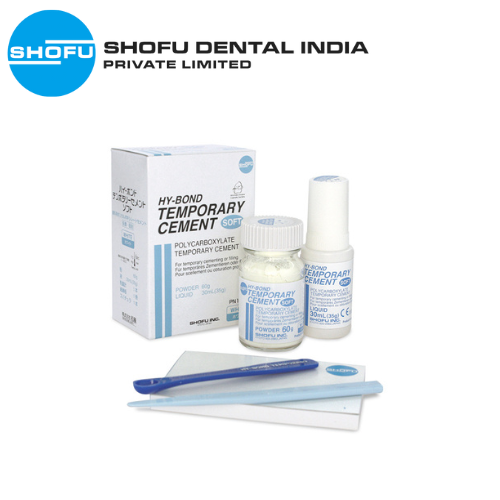
Shofu’s approach to temporary luting focuses on specific carboxylate and ZOE (Zinc Oxide Eugenol) formulations that offer high sealing ability with extremely low film thickness. For example, our Hy-Bond range is designed to offer that precise balance. It allows the temporary to seat fully without occlusal interference (preventing bite-related pain) and provides a hermetic seal that stops hydrodynamic fluid movement dead in its tracks.
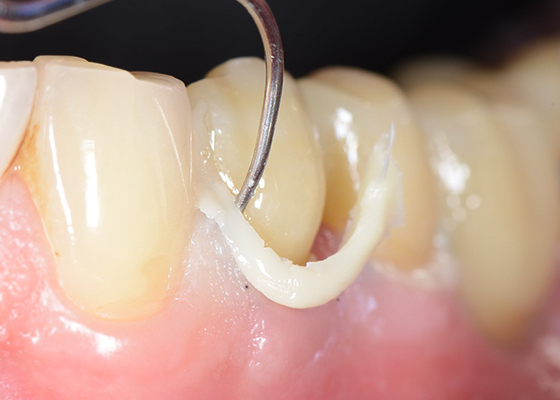
Moreover, modern formulations have solved the "cleanup" nightmare. We have all struggled with cement that sets like concrete and requires a bur to remove, risking damage to the prep. A superior material should have a distinct "rubbery" phase in its dental set, allowing you to peel away excess easily from the margins without dragging the cement out from under the crown.
Are You Ready to Make Sensitivity a Thing of the Past?
Your patient doesn't care about the brand of impression material you use or the type of bur in your handpiece. They care about one thing: "Will it hurt?"
When a patient returns for the final seat with a healthy, non-sensitive tooth and healthy pink gums, the final cementation is a breeze. No anaesthesia is required. No jumping in the chair when you air-dry the tooth. It turns a stressful appointment into a celebration of the new smile.
The "Paper Trail" of your clinical success starts with the chemicals you choose. Don't let a £20 tube of poor-quality cement ruin a £500 crown procedure. By upgrading your temporisation protocol, you aren't just fixing a tooth; you are building trust.
- Review Your Protocol: Is your current cement washing out? Are the gums inflamed?
- Test the Seal: Can you remove the temporary easily, or does it fall off?
If you are seeing a pattern of post-op phone calls, it is time to look at the bottle on the shelf.
Ready to upgrade your temporisation toolkit?
Explore Shofu’s range of advanced dental cements designed for the modern clinician. Give your patients the comfort they deserve and yourself the peace of mind you need.
Frequently Asked Questions
1. Does eugenol in temporary cement really prevent permanent bonding?
This is a common concern. While it is true that free eugenol can inhibit the polymerisation of resin cements, modern dental temporary cement formulations have largely mitigated this risk. If you are using a resin-based final cement, you can either opt for a non-eugenol temporary cement or ensure you thoroughly clean the prep (using a pumice scrub or an alcohol wipe) to remove any eugenol residue before final cementation.
2. Why do my patients complain of a "high bite" with temporaries?
This is often due to the film thickness of the cement. If the cement is too viscous or "grainy," it prevents the temporary crown from seating fully down on the margin. This leaves the crown slightly elevated, causing the opposing tooth to hit it prematurely. This trauma causes inflammation of the periodontal ligament, leading to significant pain. Choosing a cement with a low film thickness (like Shofu’s polycarboxylate options) can prevent this.
3. How long should a dental temporary cement last?
A good temporary cement is designed to last for the standard interim period of 2 to 4 weeks. However, some long-term provisional cements are formulated to last for 6 months or more if the treatment plan involves periodontal therapy or implant healing. It is crucial to match the cement's strength to the intended duration of the temporary.
4. What is the best way to remove excess cement from the gums?
Timing is everything. Every cement has a specific "gel phase" or rubbery stage during its dental set. If you try to remove it while it is too runny, you will smear it everywhere. If you wait until it is rock hard, you risk damaging the gum or pulling off the crown. Wait for the gel phase, and peel it away gently with an explorer or scaler. Floss down once, and pull the floss out to the side—never pop it back up, or you might pop the crown off!
5. Can I use a permanent cement for a temporary crown if the retention is poor?
This is a risky move. While it might solve the issue of the crown falling off, you will likely face a nightmare when it is time to remove it. You may end up having to cut the temporary off, which risks damaging your prep margins. Instead of permanent cement, try increasing the retention of the prep itself (adding grooves or boxes) or using a stronger, resin-modified temporary cement, but strictly on a provisional basis.