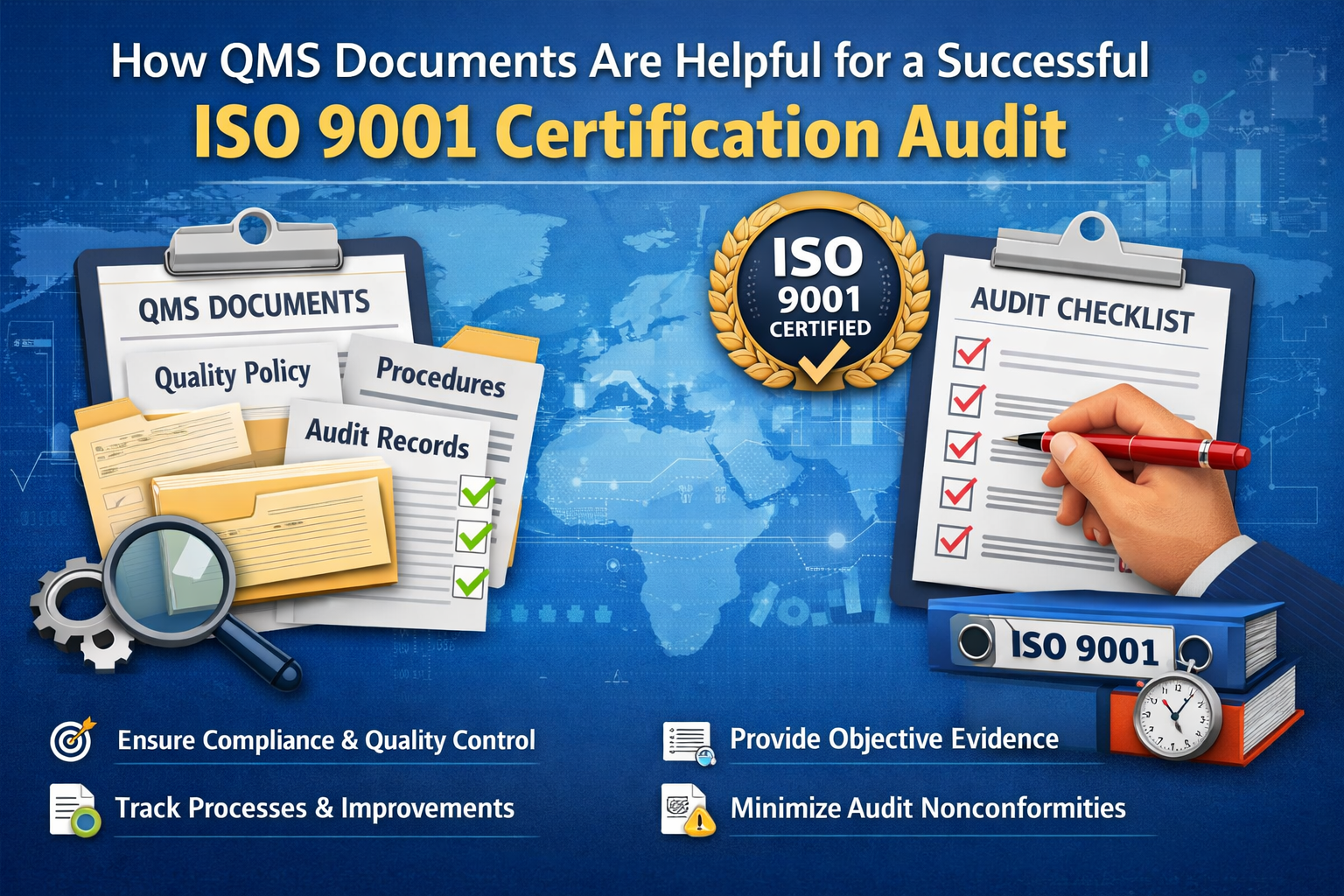
When developing an ISO 9001-compliant QMS, one of the most important steps in the early stages is to understand what documented information you need to maintain and retain. Although the new version of the standard does not specify a minimum list of documents by name, there are specific ISO 9001 documents and records required to prove that your processes are properly planned, implemented, and controlled.
The very core of the ISO 9001 requirement is to shift from rigid documentation to documented information that shall justify how effective your QMS is. A sound documentation strategy ensures compliance during external audits and also helps your organization deliver products and services that consistently meet customer requirements.
Mandatory Documented Information for ISO 9001 Compliance
Under the ISO 9001 management system, documented information may be grouped into two broad categories: documents that specify your QMS structure and records that offer proof that your management system is functioning effectively. Even though their number and nature may vary depending on the nature and size of your organization, some of these may include:
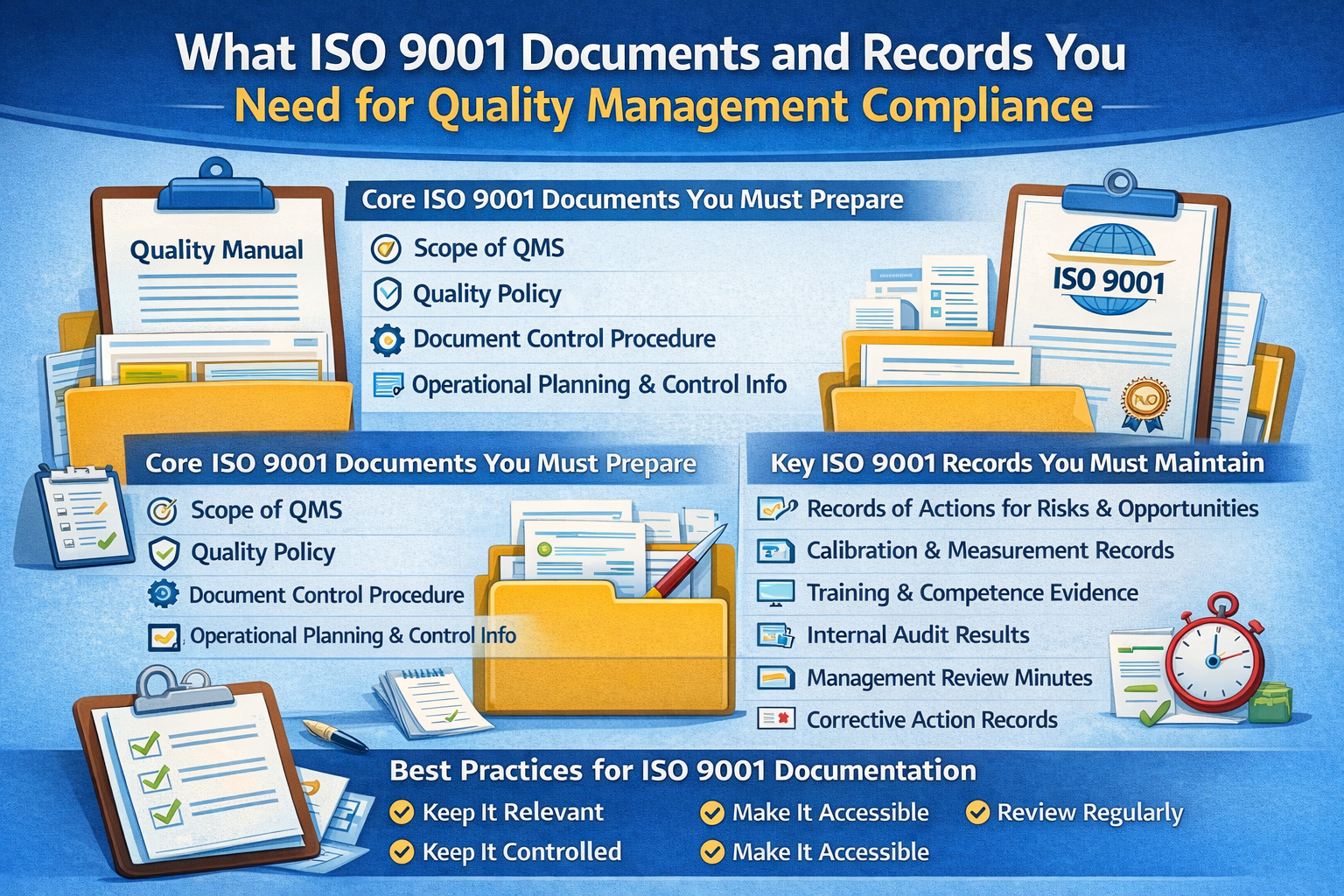
Core ISO 9001 Documents You Must Prepare
• Scope of the Quality Management System: A definition of what areas of your business the QMS operates within and what products or services are available within your business.
• Quality Policy: An organization-level statement of commitment to quality and improvement from the top management.
• Document Control Procedure: This defines the procedures used to control documents, such as how they are approved, updated, distributed, and retired, so employees will always be using the latest version of any document.
• Operational Planning and Control Information: Documents that explain how your organization plans and controls customer-related processes to meet requirements.
These documents lay the foundation for your QMS by capturing how your organization intends to meet ISO 9001 requirements and provide clarity to employees and auditors alike.
Key ISO 9001 Records You Must Maintain
A record is evidence that an activity has been completed and is essential for proving compliance. Examples include:
• Records of Actions for Risks and Opportunities: These provide details about how your organization identified risks and opportunities and evaluated results.
• Calibration and Measurement Records: Evidence that equipment for monitoring and measuring is properly standardized and meets the standards for use.
• Training and Competence Evidence: Records demonstrating that employees are trained and competent to perform their roles.
• Internal Audit Results: Documentation of internal audit findings and corrective actions taken.
• Management Review Minutes: QMS performance evaluation Records from the management review.
• Corrective Action Records: Documentation of nonconformities and actions taken to prevent recurrence.
These ISO 9001 documents and records are evidence that your system is operating as intended and that continual improvement efforts are being tracked.
Helpful Templates and Structured Documentation Kit
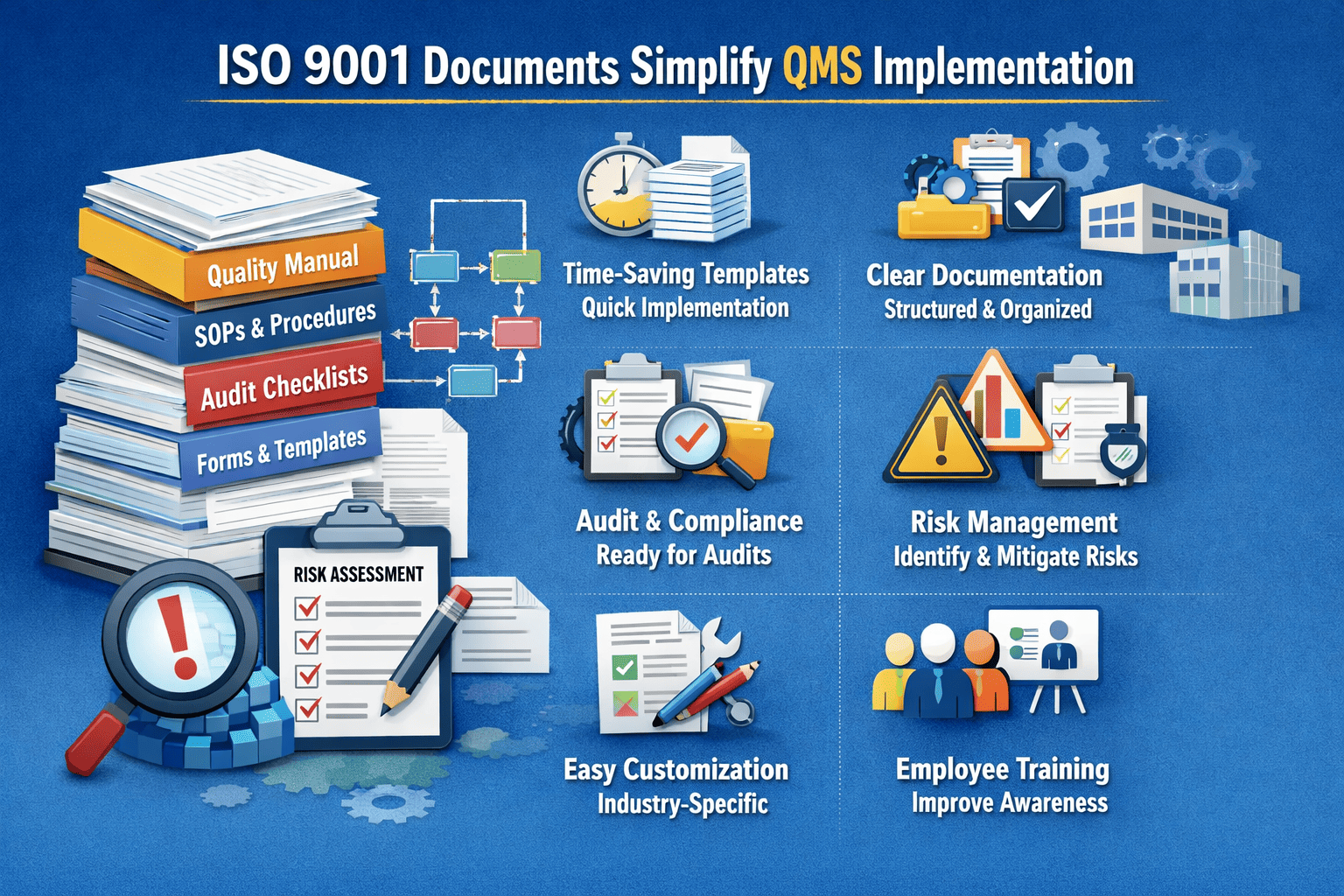
Organizations have often found using structured templates and documentation kits to be helpful in developing their ISO 9001 documentation more efficiently. Using quality manuals, procedures, protocols, and record templates can even help you complete your ISO 9001 documentation project and prevent the omission of important facts and details.
For a complete set of ready-to-use templates and step-by-step guidance on the documented information your organization needs for certification, consider the ISO 9001 Documents toolkit from Global Manager Group. This resource includes quality manuals, procedures, standard operating procedures (SOPs), editable forms, flowcharts, and comprehensive audit checklists designed to help you create and maintain a compliant QMS more efficiently and confidently.
Best Practices for ISO 9001 Documentation
To make your documentation work harder for you (not just for audits), use the following best practices:
1. Keep It Relevant: Only document what adds value and supports process effectiveness. Avoid excessive paperwork that no one uses.
2. Keep It Controlled: Use version control to ensure the latest approved documents are being used.
3. Make It Accessible: Make sure your staff access the files and records they need easily.
4. Review Regularly: Periodically review your documentation to ensure it still accurately reflects proper practices and requirements.
Conclusion
Having knowledge of ISO 9001 documentation and records, which are essential for quality management system certification, is critical towards developing a successful quality management system standard, as it requires the definition of requirements and procedures, which should be ensured at all times despite the flexibility provided in the document management process as per the standard.