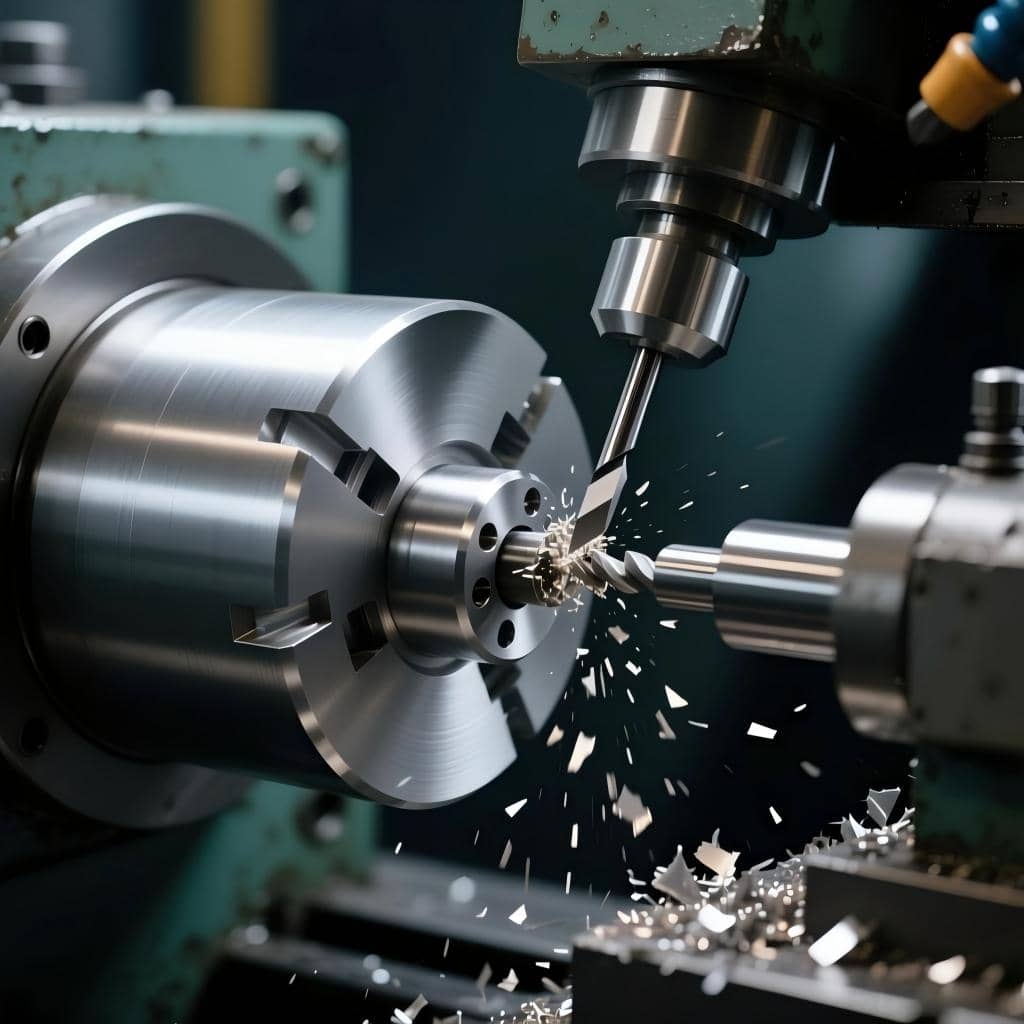
The true measure of a successful cnc turning process is not just the final dimensions of the part, but its surface integrity and overall quality. For components used in aerospace or high-vacuum environments, the surface finish can affect everything from fatigue life to seal performance. Achieving a mirror-like finish or a specific Ra (Roughness Average) value requires a delicate touch in both the mechanical setup and the refined instructions of the cnc turning g code.
Surface finish in the cnc turning process is influenced by three main factors: the nose radius of the tool, the feed rate, and the spindle speed. The relationship is often defined by the formula where a larger radius and a slower feed rate result in a smoother surface. To execute this perfectly, the cnc turning g code must be programmed with a dedicated finishing pass, often utilizing G70. This cycle follows the final contour of the part at a much slower feed rate and higher spindle speed than the roughing passes, "wiping" away the tool marks left behind by previous operations.
[Image comparing various surface finish qualities in CNC turned parts]
Another critical factor in quality assurance is the management of tool wear. In a high-volume cnc turning process, the tool's edge will inevitably degrade. Advanced CNC controllers can use G-code macros to track the number of parts produced and automatically prompt the operator to check the tool or even switch to a sister tool in the turret. This proactive approach to cnc turning g code prevents the production of out-of-tolerance parts and ensures that the surface finish remains consistent from the first part to the thousandth.
Furthermore, the cnc turning process can be enhanced through the use of "Vibration Dampening" techniques. If a part has a high length-to-diameter ratio, it is prone to "chatter," which leaves ugly waves on the surface. By slightly varying the spindle speed during the cut—a technique known as Spindle Speed Variation (SSV)—the cnc turning g code can disrupt the harmonic frequencies that cause vibration. This allows for a much cleaner cut on long, slender parts that would otherwise be impossible to machine to a high standard.
In conclusion, the pursuit of quality in CNC machining is an ongoing journey of refinement. By understanding the nuances of the cnc turning process and utilizing the full power of cnc turning g code, manufacturers can produce parts that are not only accurate but also beautiful and durable. From the initial roughing cut to the final inspection, every step is a testament to the incredible synergy of human skill and machine intelligence.