




Enrolling in your first salsa dance class opens the door to far more than just learning a few dance steps. Salsa is a full-body, music-driven, partner-based art form that blends rhythm, movement, and human connection. For beginners, it can feel intimidating at first, but once you understand how salsa works, the learning curve becomes far less overwhelming and far more rewarding.
Salsa is one of the most widely danced Latin styles in the world because it is social, energetic, and endlessly expressive. Whether you want to improve fitness, meet new people, or explore Latin culture, salsa offers all three in a single activity.
Origins and Cultural Significance of Salsa
Salsa was born in New York City during the 1970s, but its roots go much deeper. The dance and music evolved from Cuban son, mambo, Puerto Rican rhythms, and Afro-Caribbean percussion, combined with jazz influences from American cities. The name “salsa,” meaning “sauce,” reflects how different cultures and styles were mixed into one vibrant, flavorful dance.
As salsa spread globally, regional styles developed. New York–style salsa emphasizes clean lines, musical precision, and elegant partner work. Los Angeles–style salsa highlights dramatic spins, speed, and performance flair. Cuban casino salsa focuses on circular movement, playful improvisation, and group interaction.
Understanding these variations helps beginners avoid confusion when they start taking classes. While the music may sound the same, the way dancers move and connect can vary depending on the style being taught.
Fundamental Salsa Dancing Techniques
At the heart of salsa is the basic step, which follows an eight-count rhythm. Dancers step on beats 1-2-3, pause on 4, then step on 5-6-7, pausing again on 8. This structure creates the rhythm that all turns, spins, and partner movements are built upon.
For beginners, mastering this timing is more important than learning fancy patterns. Without solid rhythm, everything else falls apart.
Key technical elements taught in salsa classes include:
- Weight transfer so you stay balanced and responsive
- Hip and torso movement that gives salsa its fluid style
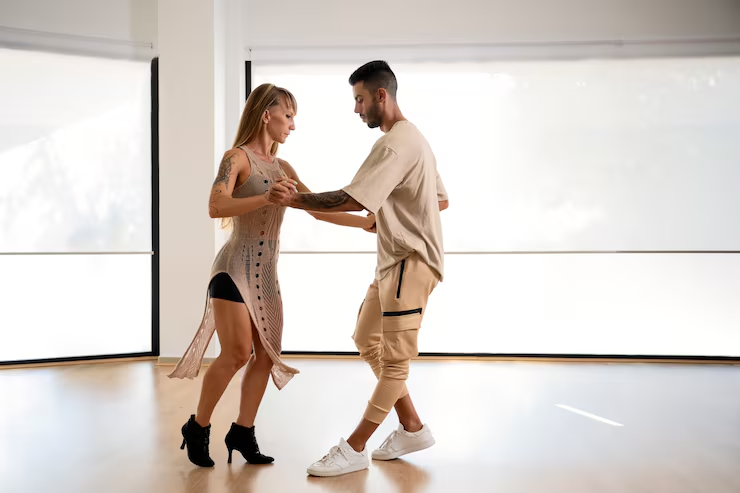
- Frame and connection to communicate with your partner
- Timing and rhythm recognition so you stay in sync with the music
- Floor awareness to avoid collisions during social dancing
Salsa is not just about moving your feet it is about coordinating your entire body in response to music and your partner.
How Beginner Salsa Classes Are Structured
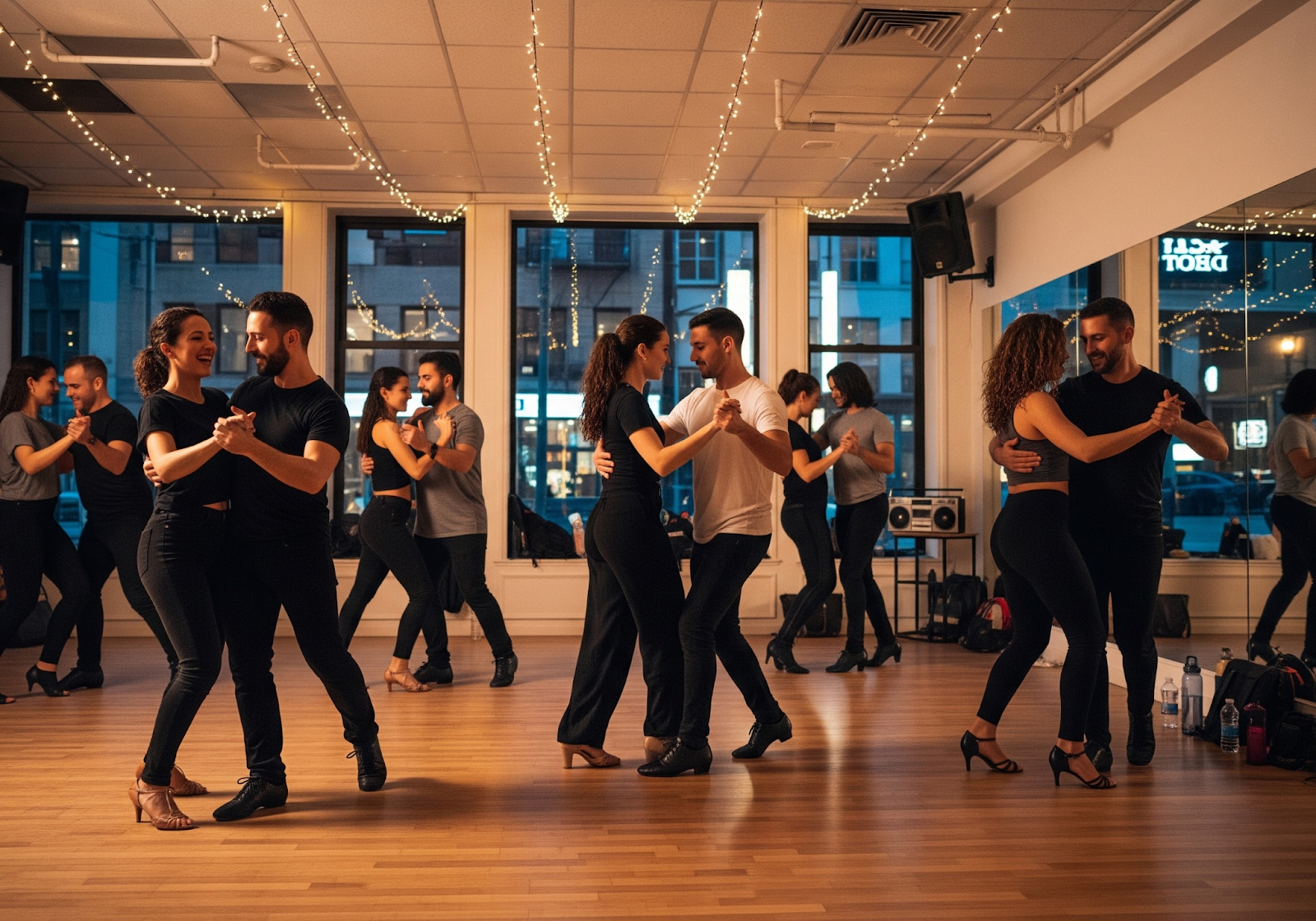
Good beginner salsa programs are designed to build confidence gradually. You do not start with complicated choreography. You start with the basics and layer skills on top of each other.
A typical progression looks like this:
- Weeks 1–2: Learning the basic step, rhythm, and posture
- Weeks 3–4: Introducing right and left turns, plus cross-body leads
- Weeks 5–6: Combining multiple turns and transitions
- Weeks 7–8: Adding styling, musicality, and smoother partner flow
Most classes rotate partners, allowing students to dance with different people. This prevents dependence on one partner and develops real-world lead-and-follow skills.
Physical and Social Benefits of Salsa
Salsa is a serious workout disguised as fun. A typical class or social dance session burns between 400 and 600 calories per hour, improves cardiovascular health, and strengthens the legs, core, and back. The constant shifting of weight and direction also improves balance and coordination.
Mentally, salsa improves memory and reaction time. Learning patterns, responding to music, and adapting to different partners keeps the brain engaged.
Socially, salsa is one of the most powerful confidence builders available. It teaches communication without words, builds self-expression, and connects people across cultures and age groups. Many long-term friendships and even relationships begin on the salsa dance floor.
Common Beginner Challenges and How to Beat Them
Every new dancer struggles at first. Timing, coordination, and partner connection all feel awkward in the beginning. That is normal.
What matters is how you approach the process.
The fastest way to improve is to:
- Practice the basic step daily
- Listen to salsa music so your ears learn the rhythm
- Attend social dances even when you feel unready
- Watch yourself on video to catch mistakes
- Stay patient and consistent
Most people quit not because salsa is hard, but because they expect instant results. Progress comes from repetition, not perfection.
What to Wear and What Shoes to Use
Wear clothing that lets you move freely without being baggy or restrictive. You want instructors and partners to see your body lines and foot placement.
Shoes matter more than beginners realize. Avoid rubber-soled sneakers that stick to the floor. Choose shoes with smooth soles that allow easy pivoting. Many dancers eventually switch to proper dance shoes, but comfortable dress shoes work fine at first.
Final Thoughts
Salsa dance classes are not just about dancing. They are about learning to move with confidence, connect with others, and express music through your body. Beginners who commit to regular practice, remain open to feedback, and trust the process will see rapid improvement.
The skills you build in salsa—coordination, timing, confidence, and communication—carry far beyond the dance floor. That is why people who start salsa often never stop.
We provide dance lessons at all levels of competition and frequently teach a variety of salsa and other programmes both online and offline Best Salsa Dance Classes in Panchkula, you may join us and take advantage of the chance!
Our qualified instructors are always ready to help you take your dance to the next level.
Salsa dancing, in particular, is one of the most popular dance genres in Chandigarh today.
There are several social and Latin dancing clubs to choose from!
Tricity, renowned salsa pros, and performance focused teams also offer group and private salsa lessons!
There is never a need for a partner, and complete novices are always welcome!