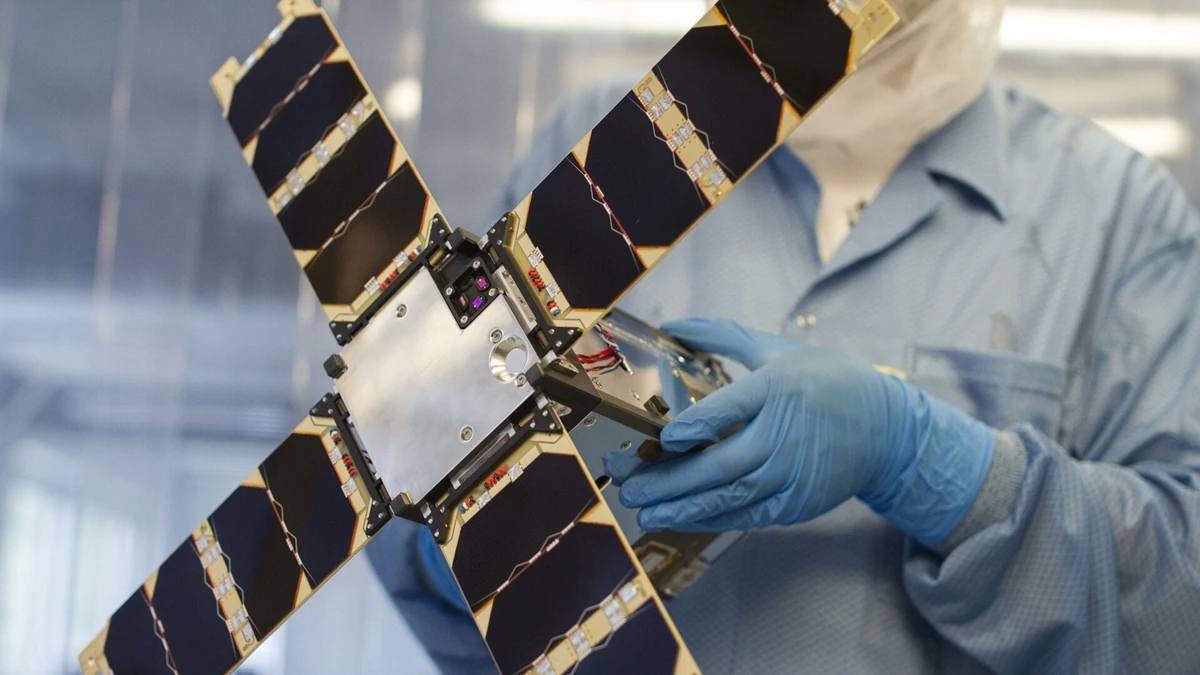
The Europe Small Satellite Market is entering a dynamic expansion phase as demand for space based data, communication, and security capabilities continues to rise across the region. Small satellites are transforming how governments, commercial enterprises, and research organizations collect information, communicate globally, and monitor environmental and security conditions. The Europe Small Satellite Market is evolving rapidly due to advancements in satellite miniaturization, modular architecture, and cost efficient launch capabilities, enabling broader adoption across multiple sectors.
The Europe Small Satellite Market is projected to grow from USD 1.33 billion in 2025 to USD 2.81 billion by 2030, registering a compound annual growth rate of 16.1%. In terms of volume, the market is expected to increase from 253 units in 2025 to 347 units by 2030. This expansion reflects growing reliance on small satellites across communication, Earth observation, navigation, and security missions. The Europe Small Satellite Market continues to strengthen as satellite data becomes essential for real time decision making, digital transformation, and global connectivity.
France dominates the Europe Small Satellite Market with the largest share, supported by strong industrial capability and major satellite manufacturers. The commercial segment represents the largest contributor to the market, while defense is expected to register the fastest growth rate through 2030. The Europe Small Satellite Market is becoming a critical pillar of Europe’s digital and space economy.
Europe Small Satellite Market Size and Growth Outlook
The Europe Small Satellite Market demonstrates strong and sustained growth driven by expanding space applications and rising demand for reliable satellite data. The market is projected to nearly double in value between 2025 and 2030, reflecting increasing deployment of small satellite constellations and mission specific platforms.
Mini satellites in the 101 to 1,200 kilogram range are expected to record the highest growth rate, offering a balance between performance and cost efficiency. These satellites support advanced payloads and are suitable for constellation deployment across communication, Earth observation, navigation, and security missions. The Europe Small Satellite Market continues to expand as small satellites become the preferred solution for scalable and flexible space operations.
The commercial segment remains the dominant end use sector, driven by demand for communication services, data analytics, and Earth observation insights. Meanwhile, defense applications are growing rapidly as governments strengthen space based surveillance and security capabilities. The Europe Small Satellite Market is increasingly recognized as a strategic enabler of both economic and national security priorities.
Key Drivers of the Europe Small Satellite Market
One of the primary drivers of the Europe Small Satellite Market is the increasing number of EU funded space missions. European governments and institutions are investing heavily in space programs focused on communication, Earth observation, and security. These missions require small satellites capable of delivering frequent revisit times, high reliability, and long term mission support, fueling demand across the region.
The rising need for real time and accurate satellite data is another significant growth factor. Industries such as agriculture, logistics, insurance, and environmental monitoring rely on satellite insights for forecasting, resource management, and operational optimization. The Europe Small Satellite Market benefits from growing adoption of data driven decision making across commercial and public sectors.
Hosted payload models are also creating new opportunities within the Europe Small Satellite Market. By sharing satellite platforms, operators can reduce mission costs and accelerate deployment while supporting multiple payloads on a single satellite. This approach enhances flexibility and expands the range of applications supported by small satellite systems.
Download PDF Brochure: https://www.marketsandmarkets.com/pdfdownloadNew.asp?id=233422030
Technology Trends Shaping the Europe Small Satellite Market
Technological innovation is transforming the Europe Small Satellite Market through improvements in satellite architecture, propulsion, and onboard processing. Modern satellite bus platforms are becoming more modular, energy efficient, and capable of supporting advanced payloads and longer mission durations. Enhanced integration of power systems, thermal management, and onboard computing is enabling higher performance and reliability across small satellite missions.
Propulsion technology plays a critical role in improving maneuverability, orbit control, and mission lifespan. Electric and chemical propulsion systems are increasingly used in European small satellite programs to enable precise orbit insertion, station keeping, and controlled deorbiting. These advancements are strengthening operational efficiency and sustainability within the Europe Small Satellite Market.
The adoption of high frequency communication bands such as Ku band is also shaping the market. Ku band supports high data rates and reliable connectivity, making it suitable for communication intensive and data heavy satellite missions. This technology is widely used across commercial and institutional programs, reinforcing its importance within the Europe Small Satellite Market.
Market Segmentation and Platform Insights
Mini satellites represent the fastest growing segment within the Europe Small Satellite Market due to their ability to carry advanced payloads while maintaining cost efficiency. These satellites are widely deployed across communication, Earth observation, navigation, and security missions.
The satellite bus segment accounts for the largest share of the Europe Small Satellite Market as it forms the core platform supporting power, processing, and payload integration. Demand is increasing for modular and reliable bus platforms capable of supporting multi satellite constellations and extended missions.
Communication remains the largest application area, driven by the need for broadband connectivity, data relay, and scalable satellite networks. Small satellites enable rapid deployment and flexible network expansion, making them essential for meeting growing global communication demands. The Europe Small Satellite Market continues to evolve as satellite technology becomes more integrated with digital infrastructure and global connectivity systems.
Regional Dynamics in the Europe Small Satellite Market
France leads the Europe Small Satellite Market with a dominant share supported by advanced manufacturing capability and strong institutional investment in space programs. The United Kingdom is expected to be the fastest growing market, driven by increasing defense based satellite programs, commercial constellation investment, and participation from private space companies.
Across Europe, rising demand for communication, Earth observation, and security applications is accelerating satellite deployment. Supportive government initiatives and growing collaboration between public and private sectors are strengthening Europe’s position in the global space economy. The Europe Small Satellite Market continues to expand as regional capabilities in satellite manufacturing, launch services, and data analytics improve.
Competitive Landscape and Key Players in the Europe Small Satellite Market
The Europe Small Satellite Market features a strong ecosystem of established aerospace leaders and emerging innovators. Major players such as Airbus and Thales Alenia Space hold dominant positions due to their extensive product portfolios, advanced manufacturing capabilities, and participation in both government and commercial space programs. These companies play a central role in delivering high performance satellite platforms and mission critical space systems across Europe.
Companies such as Gomspace, OHB SE, and BAE Systems contribute significantly to satellite platform development, payload integration, and defense related space technologies. Their expertise supports the expansion of communication, Earth observation, and security applications across the Europe Small Satellite Market.
Surrey Satellite Technology Limited, Hemeria, Berlin Space Technologies, AAC Clyde Space, and Open Cosmos represent emerging leaders advancing small satellite innovation through modular platform design, system integration, and cost efficient mission solutions. These companies are strengthening Europe’s competitive position in the global small satellite industry and driving technological progress across the Europe Small Satellite Market.
Challenges Facing the Europe Small Satellite Market
Despite strong growth, the Europe Small Satellite Market faces several challenges. Increasing congestion in low Earth orbit raises concerns about collision risk and spectrum availability, complicating satellite operations and licensing processes. Spectrum allocation and orbital slot management remain complex and time consuming, potentially delaying new satellite missions.
Limited access to frequent and reliable European launch services also presents a challenge. Delays in launch availability can affect constellation deployment schedules and increase reliance on non European launch providers. These factors introduce uncertainty into mission planning and operational timelines within the Europe Small Satellite Market.
Future Outlook of the Europe Small Satellite Market
The future of the Europe Small Satellite Market is shaped by continued technological innovation, growing commercial demand, and expanding institutional investment in space programs. Small satellites will play an increasingly central role in communication, Earth observation, navigation, and security missions.
Advancements in satellite architecture, propulsion, and onboard analytics will enhance performance, efficiency, and mission flexibility. The adoption of hosted payload models and modular platforms will further reduce costs and accelerate deployment. By 2030, the Europe Small Satellite Market is expected to become larger, more technologically advanced, and integral to Europe’s digital and space economy.
Related Report:
Small Satellite Market by Mass (1-10, 11-100, 101-1,200 kg), Frequency (L, S, C, X, Ku, Ka, Q/V/E, HF/VHF/UHF, Laser/Optical), Propulsion Technology (Chemical, Electric, Hybrid), Application, Customer, System and Region - Global Forecast to 2030
North America Small Satellite Market by System (Satellite Bus, Payloads, Satellite Antennas, Others), Propulsion Technology (Chemical, Electric, Other Technologies), Customer, Frequency, Mass, and Application - Forecast to 2030
Asia Pacific Small Satellite Market by System (Satellite Bus, Payloads, Satellite Antenna, Others), Propulsion Technology (Chemical, Electric, Other Technologies), Customer, Frequency, Mass, Application - Forecast To 2030