


Table of Contents
- Introduction
- How Private Cloud Works
- How Public Cloud Works
- Key Differences at a Glance
- What WA Businesses Should Consider Before Choosing
- When Managed Private Cloud Services Make Sense
- The Role of Managed IT Services in Perth
- Frequently Asked Questions
Introduction
Cloud usage in Western Australia has risen in recent years as a result of hybrid work, cybersecurity concerns, and increased regulatory requirements. Organizations, from Perth-based professional service organizations to remote mining operators, are examining their data location and storage locations, whether they are on-site or in the cloud.
The most common question among decision makers is whether a private or public cloud approach is more suited. The solution will be built on the profile of business risk, regulatory requirements, performance objectives, and internal IT capacity. This is a guide to both approaches in real-world scenarios, as well as how managed private cloud services may be integrated into WA organizations' overall IT strategy.
How Private Cloud Works?
In a private cloud model, servers, storage and networking resources are provisioned exclusively for one organisation. The environment may be hosted in a local Australian data centre or managed off site by a specialist provider.
A typical private cloud setup includes:
- Dedicated virtual infrastructure
- Segmented networks and firewalls
- Custom security policies
- Controlled backup and disaster recovery processes
- Performance resources reserved for one organisation
Because of the lack of a shared infrastructure, organisations can have greater control over data storage, system architecture, and compliance requirements. This could be especially important in Western Australia, where mining, energy, health, and professional services typically deal with sensitive or regulated data.
Routine chores such as patching, monitoring, and performance optimisation are handled by qualified engineers rather than internal personnel when using the managed private cloud service.
How Public Cloud Works?
Public cloud platforms operate on a multi tenant model. Infrastructure is owned and operated by global providers, and customers access services via the internet.
Common characteristics include:
- Pay as you go pricing
- Rapid scalability
- Standardised service configurations
- Shared infrastructure across multiple organisations
Public cloud is often attractive for startups and growing businesses due to lower upfront capital costs and fast deployment. However, governance and data sovereignty considerations may require additional planning, especially where sensitive business or client information is involved.
Private Cloud vs Public Cloud: Key Differences
The choice between private and public cloud is not purely technical. It also involves risk appetite, compliance exposure and operational maturity.

For many WA businesses, the distinction becomes clearer when compliance, uptime and data sovereignty are considered alongside cost.
What WA Businesses Should Consider Before Choosing?
Western Australia presents unique operational conditions. IT decisions are affected by geographic isolation, dependence on remote locations and industry-specific compliance requirements.
Before selecting a cloud model, businesses should assess the following:
1. Regulatory and Industry Requirements
Healthcare and financial services organisations and mining activities have to comply with rigorous privacy and data protection requirements. A private cloud may also ease compliance audit since it gives better insight into the location of data.
2. Data Sovereignty
Australian data residency requirements become more and more topical. A privately hosted cloud infrastructure can be based locally and therefore it carries less legal and contractual risk than public distributed infrastructure.
3. Uptime and Business Continuity
Unavailability in other areas, such as logistics or resources, could be costly. Specially designed infrastructure based on a cloud services architecture can provide more predictable performance and tailored disaster recovery plans.
4. Internal IT Capability
Does the organisation have in house expertise to manage complex cloud infrastructure? If not, partnering with managed IT services Perth providers can bridge that gap.
5. Long Term Cost Predictability
The cost of the public cloud usage may grow unpredictably with the increase in the workloads. The private cloud environments are usually based on well-organized monthly contracts which provide better budgeting.
The Role of Managed IT Services in Perth
Cloud strategy is not the isolated one. It becomes a component of a more comprehensive IT governance process, comprising cybersecurity, user support, backup, and compliance monitoring.
The best managed IT support company will typically assist businesses in:
- Conducting infrastructure assessments
- Mapping compliance obligations
- Designing cloud migration strategies
- Implementing backup and disaster recovery plans
- Monitoring environments for performance and threats
Importantly, the role of managed IT services Perth providers is advisory as well as operational. They help businesses avoid common pitfalls such as over provisioning public cloud resources or underestimating security requirements.
Rather than treating cloud as a standalone product, experienced providers integrate it into a cohesive business continuity strategy.

Hybrid Approaches: A Practical Middle Ground
It is also worth noting that many WA organisations adopt hybrid strategies. Core systems may reside in a private cloud for control and compliance, while less sensitive workloads operate in public environments.
This model allows:
- Flexible scaling for development environments
- Secure hosting for financial and operational systems
- Gradual migration without disruption
- Risk segmentation across workloads
Hybrid architecture requires careful planning and clear governance policies. Without structured oversight, complexity can increase and visibility may decline.
Common Decision Framework for WA Businesses
A practical way to approach the decision is through structured evaluation:
Step 1: Identify business critical systems
Step 2: Classify data sensitivity and compliance exposure
Step 3: Calculate acceptable downtime thresholds
Step 4: Assess internal IT capabilities
Step 5: Compare long term operational costs rather than short term savings
This method ensures the cloud model aligns with strategic objectives rather than short term convenience.
Frequently Asked Questions
1. Is a private cloud more secure than a public cloud?
The private cloud allows greater control over the infrastructure and policies. The quality of configuration and management is regarded as a security factor, rather than the deployment model itself.
2. Are managed private cloud services suitable for small businesses?
They may be appropriate for small organisations that handle sensitive information or work in controlled sectors, particularly when internal IT resources are limited.
3. Does a public cloud cost less than a private cloud?
Although public cloud may be less expensive in the beginning, long-term expenditures may increase due to scale and data transport charges.
4. Can WA businesses keep data within Australia using public cloud?
A number of these public suppliers serve Australian locations, and data governance should be carefully monitored to ensure compliance.
5. What role do managed IT services Perth providers play in cloud strategy?
They assess business requirements, design a secure architecture, manage infrastructure, and provide continuous monitoring to reduce operational risk.
Final Considerations for WA Organisations
The choice of cloud type is not limited to either private or public cloud. It is a strategic evaluation that has been influenced by the industry, regulatory exposure, and long term operational priorities. Private cloud services provide a balance of control and professional management to many western Australian businesses, especially those that operate with compliance driven or high availability.
Organisers like Stellar Systems, a Perth based IT provider, can also play a part in this ecosystem by providing local informed infrastructure and advisory services. It is important to continue to evaluate the providers who have proved to be technically competent, transparent in their governance and have a well-informed view of the regulatory environment in Western Australia. Knowledgeable choice of a cloud enhances resilience, facilitates compliance and allows sustainable expansion in a more digital business world.
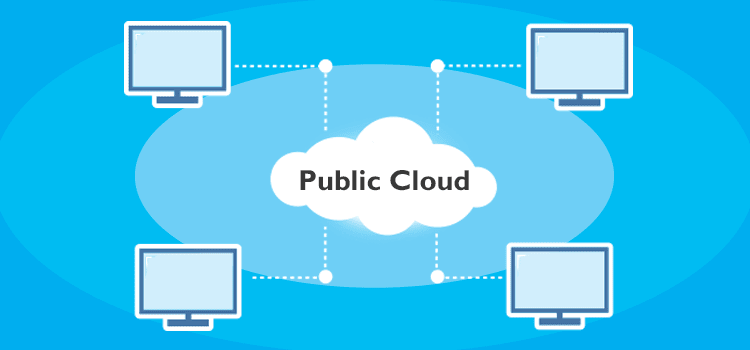
What does a Public Cloud mean?Public Cloud is the most recognized models of cloud computing by the consumers.
Here, cloud services are provided in a virtualized environment, applications or storage is made available to the general public and services can be on pay per consume model offered by the service provider.Private and Hybrid Cloud Vs Public CloudPrivate Cloud – When an organization wishes to go for a private cloud, they get full control over the IT infrastructure which is always maintained on a private network where the hardware and software is solely dedicated to one’s business.
Private cloud uses computing resources exclusively for one organization which is flexible and can be customized as per the client’s wish.Hybrid Cloud – Usually known as ‘Best of both worlds’, hybrid clouds consist of on-premise infrastructure (private cloud) and public cloud.
For higher flexibility and deployment options, data and applications can move freely between private and public cloud.
In case you have high volume demands, then you can go for Public Cloud or else you can make use of on-premise infrastructure for business critical operations.Comparable in featuresScalability Public Cloud – High scaling of computing resourcesPrivate Cloud – Limited scalability is available due to pre customized hardware for specific clientsHybrid Cloud – Same as public cloud, hybrid cloud also has high scaling capabilities.SecurityPublic Cloud – Your data is safe on public cloud with enterprise class firewall and you are protected from hardware failures.Private Cloud – When you design the cloud architecture according to your needs you exactly know where your data lives; behind your own locked doors.Hybrid Cloud – Hybrid cloud offers the same level of security like the public cloud.
However, here you can also get integration options to add an extra layer of security.PerformancePublic Cloud – As the same hardware is shared between different users, performance can go down if another client hosted on the same server experiences a lot of traffic.