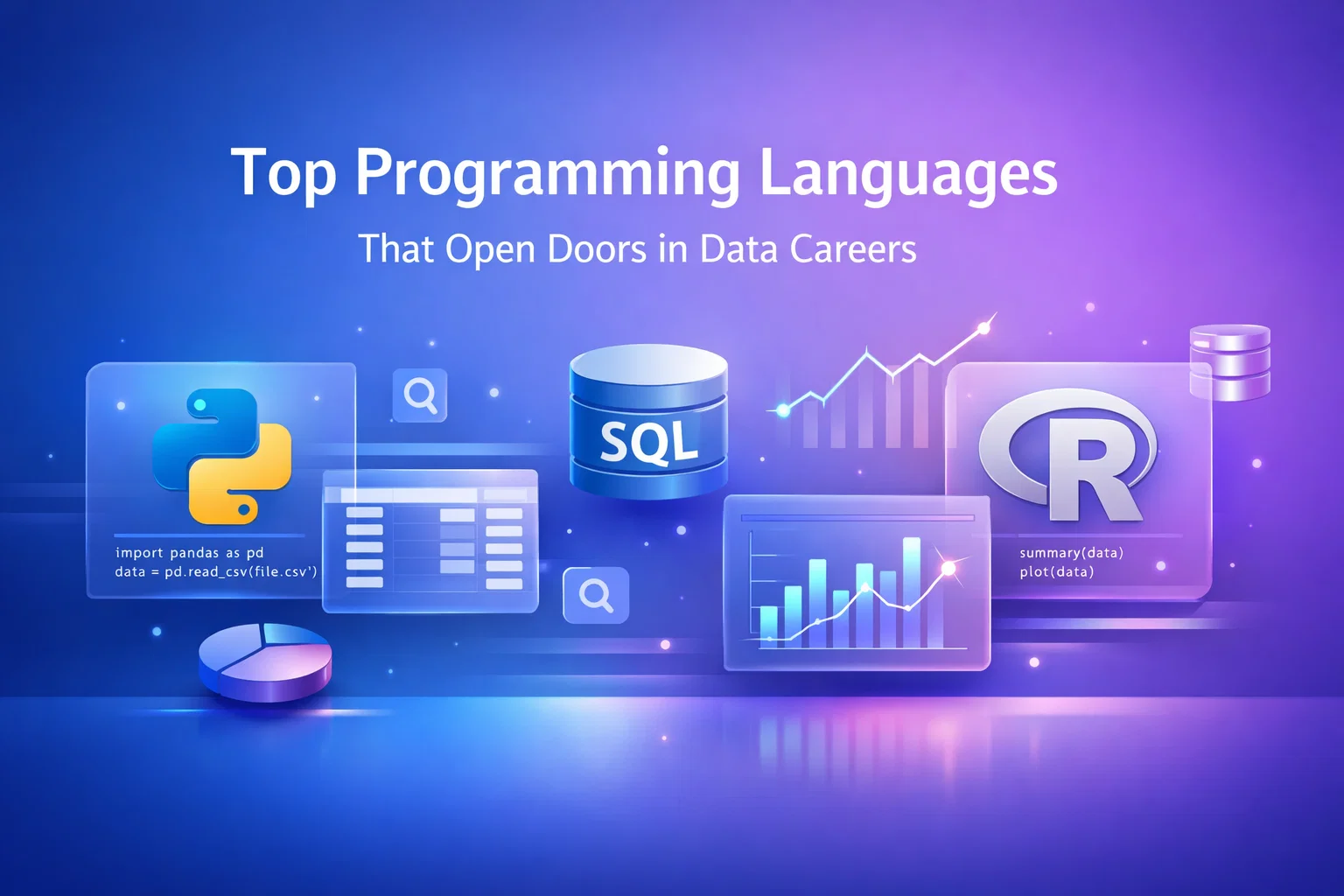
In today’s data-driven world, programming languages have become essential tools for professionals working with data. Whether you aim to become a data analyst, data scientist, or analytics engineer, understanding which languages to learn can significantly impact your career growth. Each language serves a unique purpose — from data manipulation and statistical analysis to building data pipelines and machine learning models. Choosing the right combination can help you work efficiently and stand out in the competitive data job market.
Python: The Versatile Powerhouse
One of the most widely used languages in data careers is Python. Its simplicity and versatility make it ideal for beginners and experienced professionals alike. Python offers powerful libraries for data analysis, visualization, and machine learning, allowing professionals to clean data, perform analysis, and build predictive models. Because of its broad ecosystem and strong community support, Python continues to dominate job requirements across industries.
R: Best for Statistical Analysis
Another important language is R, which is especially popular among statisticians and researchers. R excels at statistical computing and data visualization, making it a strong choice for roles focused on data exploration and advanced analytics. Professionals who work heavily with statistical models often rely on R for its specialized packages and analytical capabilities.
SQL: Essential for Working with Databases
When it comes to working directly with databases, SQL remains a foundational skill for anyone in a data role. It allows professionals to retrieve, filter, and manipulate structured data stored in relational databases. Since most organizations rely on databases to store business data, knowing how to query and manage data efficiently is critical for performing accurate analysis and generating insights.
Java and Scala for Big Data Processing
Java and Scala are also valuable, particularly for big data environments. These languages are commonly used in distributed computing frameworks and large-scale data processing systems. Professionals working with big data platforms often benefit from understanding these languages to build scalable data solutions.
Emerging Language: Julia
Julia is an emerging language gaining attention for high-performance numerical computing. While not as widely adopted as Python or R, it is becoming popular in specialized fields requiring complex mathematical computations and performance optimization.
Learning Resources and Practical Knowledge
For learners and professionals looking to strengthen their knowledge, platforms like Analytics Shiksha provide valuable insights into practical data skills. Analytics Shiksha focuses on helping learners understand real-world concepts, particularly the uses of SQL in data analysis, making it easier to connect theoretical knowledge with practical applications. Exploring such resources can help aspiring analysts build confidence and gain hands-on experience with essential tools used in the industry.
Conclusion
Programming languages are the backbone of modern data careers. While Python and SQL form the core skill set for most roles, adding languages like R, Java, or Scala can further enhance your capabilities depending on your career path. By continuously learning and practicing these languages, data professionals can stay relevant and effectively turn raw data into meaningful insights that drive smarter decisions.