

When a dog suddenly loses the ability to use its hind legs, it is a true emergency that requires rapid assessment and a tailored dog back leg paralysis treatment plan from a veterinary professional. Owners often describe “dog sudden paralysis” as happening overnight or after a minor incident, leaving them shocked and unsure what to do next. Understanding possible causes, diagnostic steps, and evidence-based treatment options can help you act quickly and advocate for the best outcome for your pet.
Understanding Sudden Back Leg Paralysis in Dogs
Dog sudden paralysis in the hind limbs can range from partial weakness (paresis) to complete inability to move or feel the legs. In many cases, a dog suddenly paralyzed in back legs may still seem bright and alert, which can make the situation confusing for owners. Paralysis itself is a symptom, not a diagnosis, and it signals damage or disruption somewhere along the nervous system pathway from brain to muscles.
Common Causes of Hind-Limb Paralysis
Several disease processes can lead to a dog suddenly paralyzed in back legs, and each has different implications for treatment and prognosis.
Intervertebral disc disease (IVDD), where discs between the vertebrae herniate and compress the spinal cord.
Fibrocartilaginous embolism (FCE), a type of spinal cord stroke that develops suddenly, often during activity.
Traumatic injury to the spine from falls, collisions, or bites.
Inflammatory or infectious diseases affecting the spinal cord, such as meningomyelitis.
Degenerative conditions or tumors compressing the spinal cord.
Because these conditions progress differently, timely and accurate diagnosis by a veterinarian or veterinary neurologist is essential to guide appropriate dog back leg paralysis treatment.
How Veterinarians Diagnose Hind-Limb Paralysis
A thorough neurological examination is the starting point for any dog sudden paralysis case. The veterinarian assesses reflexes, pain sensation, coordination, and muscle tone to localize the problem within the nervous system. This “neuro-localization” helps determine whether the issue lies in the brain, spinal cord, or peripheral nerves.
Advanced imaging such as MRI or CT scans is often required to visualize the spine and spinal cord and to distinguish between causes like IVDD, FCE, or tumors. In some cases, additional tests—such as bloodwork, cerebrospinal fluid (CSF) analysis, or infectious disease screening—are needed to identify inflammatory or infectious causes. The faster these diagnostics are completed, the sooner an individualized treatment plan can begin.
Treatment Options for Dog Back Leg Paralysis
There is no single “best” dog back leg paralysis treatment; instead, the plan depends on the underlying cause, severity of neurological deficits, and how long paralysis has been present.
Emergency Stabilization
In acute cases, especially when a dog suddenly paralyzed in back legs is also painful or distressed, initial care focuses on:
Pain management with appropriate analgesics.
Careful handling and spinal precautions to avoid further injury.
Bladder support if the dog cannot urinate independently.
Prompt stabilization protects the spinal cord and improves the chances of recovery once definitive treatment is started.
Medical and Surgical Management
For IVDD and certain compressive lesions, advanced imaging helps determine whether surgical decompression is indicated. In suitable candidates, spinal surgery to relieve pressure on the spinal cord can significantly improve outcomes, particularly when performed soon after loss of function. In other cases—such as some FCE events or mild disc protrusions—strict rest, anti-inflammatory medications, and close monitoring may be recommended.
Inflammatory, infectious, or immune-mediated diseases typically require targeted drug therapy, which may include corticosteroids, immunosuppressive agents, antibiotics, or antivirals depending on the diagnosis. Throughout treatment, the veterinary team monitors neurological status, pain control, and bladder and bowel function closely.
Role of Rehabilitation in Recovery
Even when the primary cause has been treated, rehabilitation plays a major role in helping paralyzed dogs regain strength and mobility. Physical rehabilitation may include:
Passive range-of-motion exercises to maintain joint flexibility.
Assisted standing and supported walking using slings or harnesses.
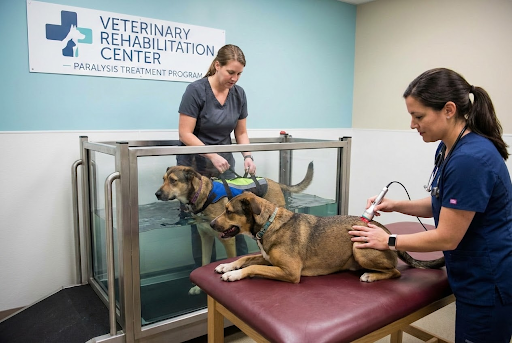
Hydrotherapy, such as underwater treadmill sessions, to encourage safe weight-bearing.
Targeted strengthening and balance exercises as function returns.
A structured rehab plan helps prevent muscle wasting, joint stiffness, and pressure sores, while also supporting neural recovery and neuroplasticity.
Long-Term Management and Quality of Life
Some dogs recover fully, while others may be left with residual weakness or permanent paralysis despite optimal care. In chronic cases, owners and veterinary teams work together to optimize quality of life through:
Mobility aids such as carts or wheelchairs.
Environmental modifications, including ramps and non-slip flooring.
Skin and bladder care to prevent infections and sores.
Ongoing pain management if needed.
Regular reassessment ensures that the care plan evolves with the dog’s changing needs over time.
Conclusion: Acting Quickly Makes a Difference
When faced with a dog sudden paralysis episode, the most important steps are to seek immediate veterinary attention and avoid manipulating the spine at home. Early diagnosis and tailored dog back leg paralysis treatment offer the best chance for recovery, whether therapy involves surgery, medical management, rehabilitation, or a combination of all three. Working closely with a veterinary team experienced in neurological issues allows owners to make informed decisions and support their dog through both emergency care and long-term recovery.