

Introduction
As organizations grow, operational complexity increases. Sales data sits in one system, finance in another, and reporting becomes a nightmare. That’s typically when two critical business platforms enter the decision-making process: ERP (Enterprise Resource Planning) and CRM (Customer Relationship Management).
Although often compared, ERP and CRM are built to address completely different business challenges.
Understanding how they differ — and how they complement each other — is essential for making the right technology investment.
What is CRM (Customer Relationship Management)?
Core Purpose of CRM
CRM software is designed to manage customer relationships, sales activities, and engagement workflows.
It acts as the central hub for:
Leads and prospects
Customer interactions
Sales pipelines
Marketing campaigns
Service requests
CRM primarily supports front-office teams responsible for driving revenue and improving customer experience.
Key Features of CRM
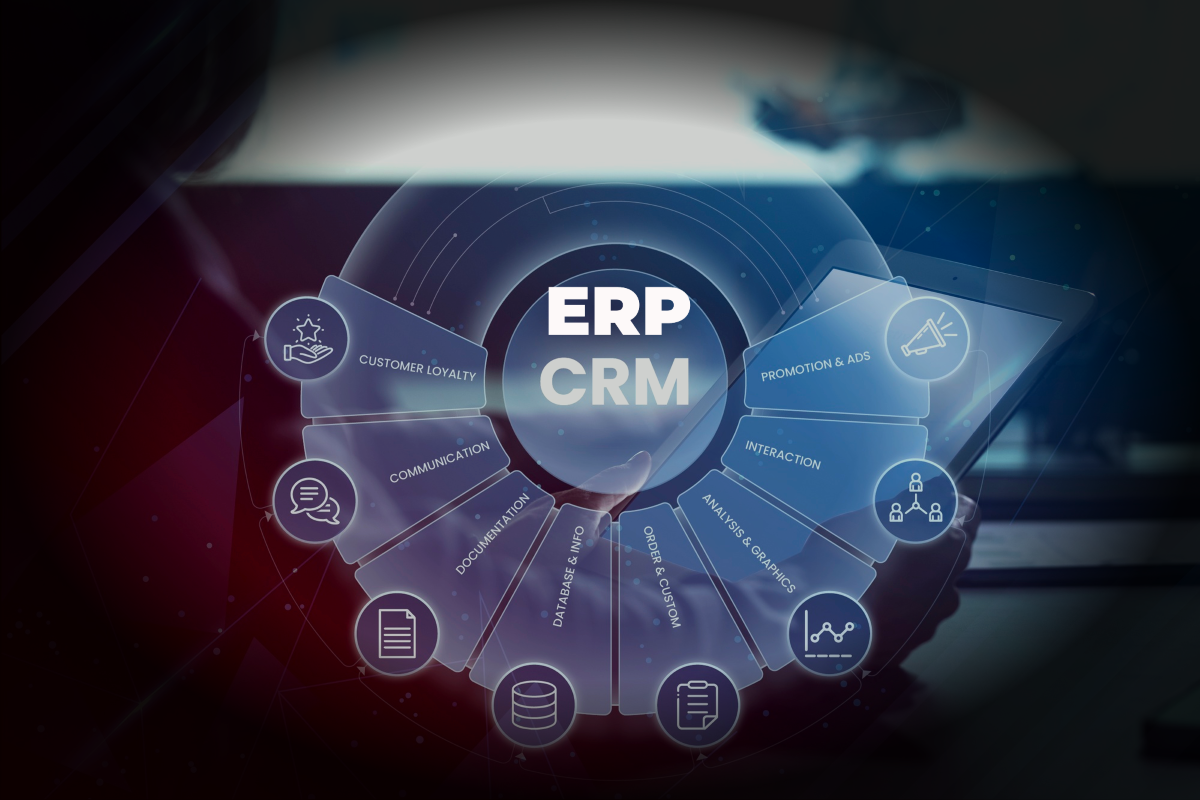
Modern CRM systems typically offer:
Contact & Lead Management
Opportunity & Pipeline Tracking
Marketing Automation
Customer Support Management
Reporting & Forecasting
These capabilities allow teams to operate with a 360-degree view of the customer.
Benefits of CRM
A strategically deployed CRM system enables:
Improved customer engagement
Higher conversion rates
Better sales forecasting
Increased retention
Enhanced productivity
CRM systems are growth-focused and customer-centric.
What is ERP (Enterprise Resource Planning)?
Core Purpose of ERP
ERP software focuses on streamlining internal business operations.
It integrates critical back-office functions such as:
Accounting & Finance
Procurement
Inventory Management
Supply Chain
HR & Payroll
Compliance
ERP systems provide operational visibility and financial control.
Key Features of ERP
Typical ERP functionalities include:
Financial Management
Inventory & Warehouse Tracking
Procurement & Vendor Management
Order Processing
Resource Planning
Risk & Compliance Controls
ERP becomes the backbone of business infrastructure.
Benefits of ERP
ERP implementation delivers:
Process efficiency
Cost optimization
Data consistency
Faster financial close
Reduced manual errors
Improved decision-making
ERP systems are efficiency-driven and operations-focused.
CRM vs ERP: What’s the Fundamental Difference?
Front Office vs Back Office
CRM
ERP
Customer-facing
Operations-facing
Revenue generation
Resource & cost control
Sales, marketing, service
Finance, HR, supply chain
CRM manages relationships.
ERP manages resources.
Data Focus
CRM: Customer data, sales activities, engagement history
ERP: Financials, inventory, procurement, transactions
Primary Users
CRM: Sales, marketing, customer support
ERP: Finance, operations, HR, procurement
CRM and ERP: How Are They Similar?
Despite their distinct roles, both systems:
Centralize critical business data
Automate repetitive processes
Provide analytics & reporting
Improve organizational efficiency
Support cloud-based deployment
Both are essential pillars of digital transformation.
Do You Need CRM, ERP, or Both?
When CRM Should Come First
Choose CRM if:
Sales processes lack structure
Customer data is fragmented
Marketing campaigns need automation
Lead management is inefficient
When ERP Should Come First
Choose ERP if:
Financial reporting is slow
Inventory management is inconsistent
Operational workflows are disconnected
Scaling is creating inefficiencies
When Both Become Non-Negotiable
Most growing companies eventually require both systems when:
Departments rely on shared data
Customer experience and operations must align
Revenue and cost management are equally critical
Why Integrating CRM and ERP is a Game-Changer
Unified Business Intelligence
Integration eliminates silos by connecting:
Customer data
Financial data
Operational metrics
Enhanced Customer Experience
Sales teams gain visibility into:
Order history
Payment status
Credit limits
Resulting in more informed interactions.
Operational Accuracy
Integrated systems ensure:
Real-time inventory updates
Automated invoice generation
Accurate order processing
Common Challenges in CRM–ERP Integration
Data Mapping Complexity
Inconsistent data structures can disrupt reporting.
Legacy Infrastructure
Older systems complicate integrations.
User Adoption Risks
Without training, productivity suffers.
Best Practices for Successful Implementation
Define Clear Objectives
Technology must align with measurable outcomes.
Audit Business Processes
Automating broken workflows compounds problems.
Ensure Data Quality
Accurate data drives accurate decisions.
Invest in Change Management
Adoption determines ROI.
Strategic Insight for Salesforce-Driven Businesses
For organizations leveraging Salesforce, aligning CRM capabilities with ERP systems becomes a strategic priority rather than a technical upgrade.
Partnering with a reliable Salesforce consulting company in USA helps businesses design integration architectures that align sales, finance, and operational workflows.
Similarly, working with an experienced Salesforce development company in USA ensures proper customization, automation, and scalability within the Salesforce ecosystem.
Because in modern digital infrastructure, success isn’t determined by software selection alone — it depends on execution quality, integration strategy, and choosing the Best IT company capable of translating business requirements into high-performing systems.
Final Verdict: ERP vs CRM is Not a Competition
Here’s the reality:
CRM optimizes revenue growth
ERP optimizes operational efficiency
Together, they optimize business scalability
It’s not about choosing one over the other — it’s about deploying the right combination based on business maturity.
Reference: https://medium.com/@dianappstechnology/erp-vs-crm-whats-the-difference-ebb24e632754

While it comes to buy something for making tea or hot coffee.
Most people are unfamiliar with the usage and working of teapot or tea kettle and don’t know which one to buy.
Both are made to make Tea.
And both have a lid and a vessel to boil water.
Often when you go on camping you might look which one is most durable and easy to use.

ERP vs CRM — What are they, what do they do, how do they differ, and which do you need?
Learn all about it here!