





Imagine your marketing team captures a lead through a Facebook ad campaign. That lead lands in your email automation tool. Someone manually copies it into your CRM.
A few days later, a sales rep followed up, only to find the contact already converted through your website, and nobody updated the record. The deal is awkward. The first impression is damaged.
This isn't a rare scenario. It's the daily reality for many businesses that are running disconnected systems. And it is exactly the kind of problem that Odoo ERP integration solves.
As marketing automation becomes central to how businesses generate and nurture leads, the pressure to connect those marketing tools with back-end operations, such as CRM, inventory, sales pipelines, and finance, has never been greater.
If you also aim to connect your multi-system environments together, then this article is for you. In this, you will learn about marketing automation with Odoo, key integration types, benefits of Odoo integration services, and more.
Why Multi-System Environments Are the New Normal
Most businesses don't run on a single platform. They run on five, ten, sometimes fifteen different tools. Each is chosen because it does one thing well.
A marketing team might be using HubSpot, but the warehouse team depends on a legacy inventory system, finance uses QuickBooks, and e-commerce runs on Shopify.
Each of these tools is doing its job. The problem is that none of them are connected to each other in real time.
The problems that arise are that data gets duplicated, decisions get delayed, and the customer experience suffers.
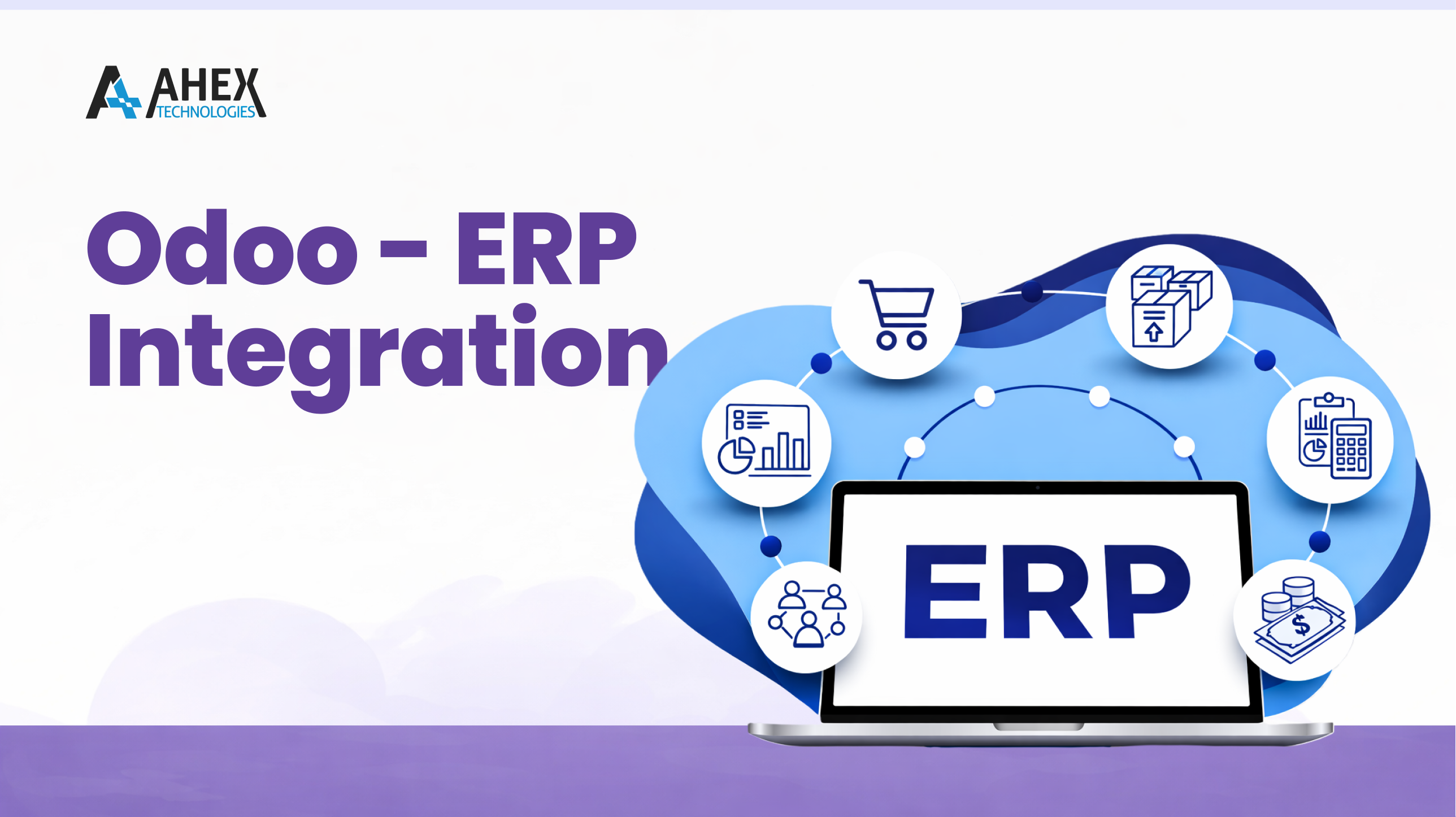
Odoo ERP integration resolves this challenge by making Odoo the operational backbone that connects and synchronizes all of these systems.
When a lead converts on your e-commerce store, Odoo captures it. When a deal is closed in the CRM, the fulfillment workflow kicks off automatically. When inventory drops below the threshold, the procurement process starts without any manual intervention. That's the power of a properly integrated environment.
Marketing Automation + Odoo: Where Lead Conversion Gets Serious
Let's focus on the marketing automation angle specifically, because this is where integration directly impacts revenue.
Marketing automation platforms, whether HubSpot, Mailchimp, ActiveCampaign, or Marketo, are exceptional at capturing and nurturing leads.
These platforms track behavior, score prospects, run email sequences, and manage campaign workflows.
What they're not designed to do is manage what happens after a lead becomes a customer.
That is where Odoo comes into play. When your marketing automation platform is integrated with Odoo through a reliable Odoo API integration, the handoff between marketing and sales becomes invisible to the customer and effortless for your team.
Lead data flows from the automation platform directly into Odoo CRM, complete with behavioral history, source attribution, and lead scores.
Sales reps get context-rich profiles the moment a lead lands in their pipeline. Follow-up triggers fire automatically based on CRM stage changes.
And marketing teams can finally see, inside their dashboards, which campaigns are generating revenue, and not just clicks.
This closed-loop visibility between marketing activity and business outcomes is something most companies desperately want but rarely achieve. A well-executed Odoo integration makes it a standard part of operations.
Key Integration Types That Power Modern Business Operations
Professional Odoo integration services cover a broad range of integration types, each serving a different operational need.
CRM and Marketing Platform Integrations
The first is integration with CRM and marketing platforms. Connecting HubSpot, Salesforce, Zoho, or Mailchimp with Odoo ensures that lead data, contact records, campaign responses, and deal stages stay synchronized across both systems without manual intervention.
Triggers can be configured so that specific actions in the marketing tool automatically create or update records in Odoo CRM.
E-Commerce Platform Integrations
For businesses selling online, connecting Shopify, WooCommerce, Magento, or Amazon with Odoo can be proved as game-changing.
Orders that are placed on the storefront flow instantly into Odoo for fulfillment. The inventory levels update in real time across all sales channels.
Customer records are consolidated. Returns and refunds are tracked end-to-end. Without this integration, e-commerce teams spend enormous energy on manual reconciliation that adds no value.
Payment Gateway and Financial Integrations
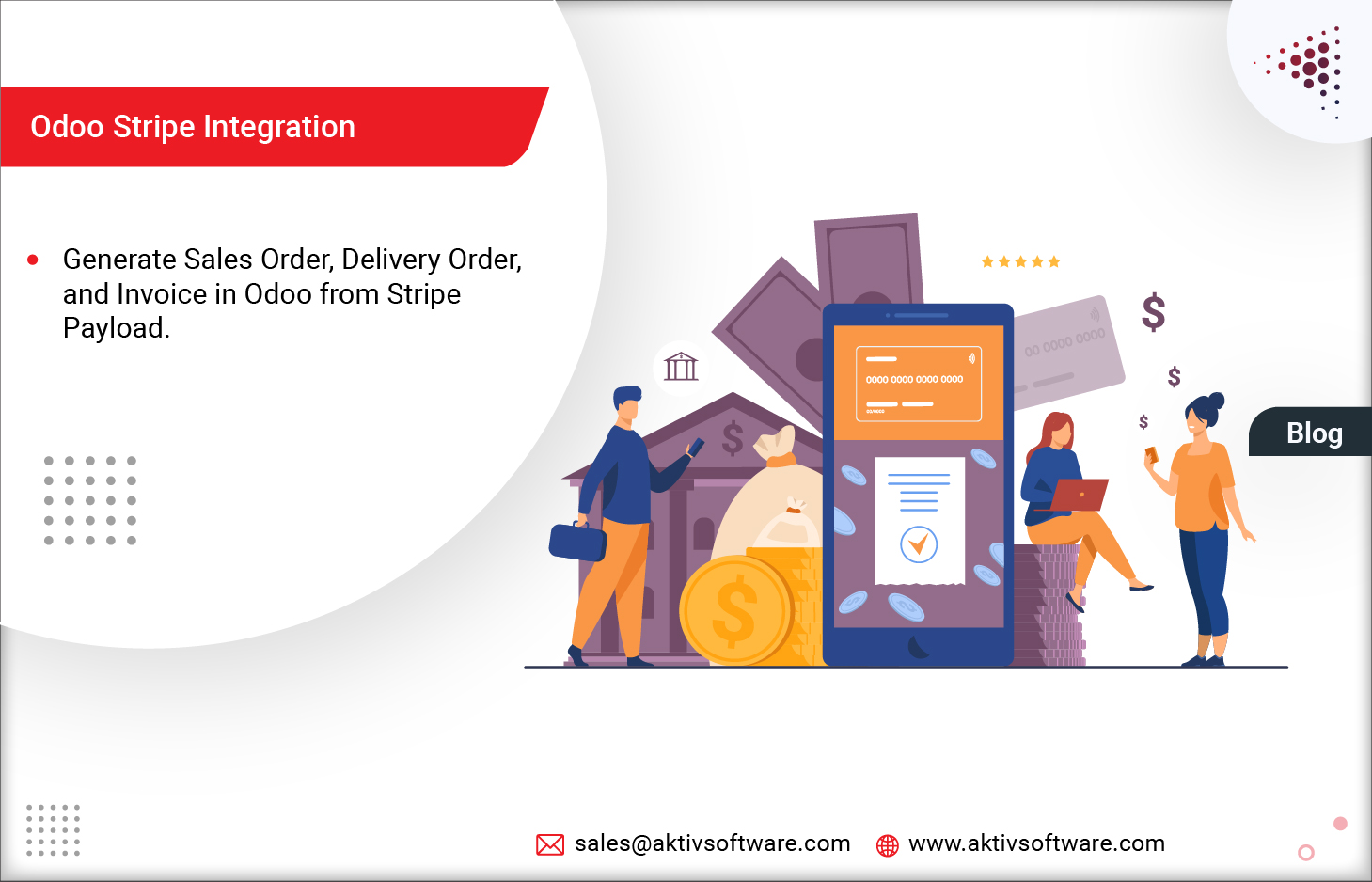
Stripe, PayPal, Razorpay, and similar gateways can be integrated with Odoo's accounting module so that every transaction is automatically recorded, matched, and reconciled.
This eliminates a major source of manual accounting work and dramatically speeds up the financial close process.
Custom API Integrations
Not every system your business relies on has a pre-built Odoo connector. This is where Odoo API integration expertise becomes essential.
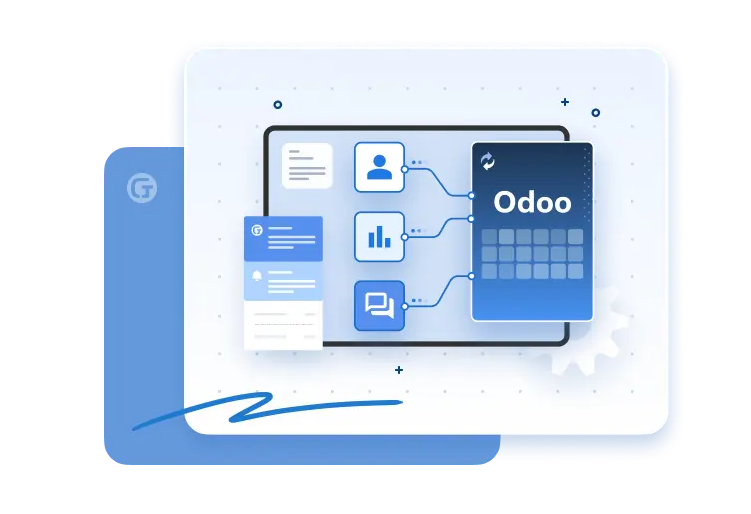
Experienced Odoo developers use Odoo's XML-RPC and JSON-RPC API framework to build custom bi-directional integrations between Odoo and virtually any platform that exposes an API.
The API layer also enables webhook-driven, event-based data flows that respond in real time rather than through scheduled batch syncs.
Legacy System Bridges
Last but not least, many established businesses run critical operations on legacy platforms they aren't ready to replace entirely.
A phased integration approach allows Odoo to operate in parallel with legacy systems, pulling and pushing data via middleware.
In the meanwhile the business gradually migrates workflows at a pace that doesn't disrupt operations.
What Separates Good Integration from Great Integration
There's a version of Odoo integration that technically works. The data moves from Point A to Point B.
And then there's integration that's actually built for your business: resilient, scalable, well-documented, and designed to stay reliable as your systems and data volumes grow.
The difference comes down to how it's engineered.
Great integration handles errors gracefully. For instance, when an API call fails or a third-party system goes down, it doesn't silently corrupt your data. It queues, retries, and alerts the right people.
It also maps fields with precision, respecting data types, validation rules, and business logic on both ends. It's built with the understanding that systems change, such as APIs get versioned, business rules evolve, platforms get swapped, and the integration architecture should absorb that change without requiring a rebuild from scratch.
This is why choosing an experienced Odoo ERP integration company matters so much.
Cutting corners on integration architecture creates technical debt that compounds quickly. If done right and well, it becomes invisible infrastructure your business depends on daily.
Benefits of Odoo Integration for Businesses
Beyond the technical specifics, the business outcomes of professional Odoo integration are concrete and measurable, such as the following:
Faster Lead-to-Revenue Cycles
When marketing automation and Odoo CRM are integrated, leads don't get lost in handoffs. Sales teams engage faster, with better context, and close more deals.
Elimination of Manual Data Entry
Odoo integration eliminates the need for hours spent copying data between systems. Also, it reduces the chances of errors. Teams focus on more important tasks rather than administration.
Real-time Operational Visibility
When all systems feed into Odoo, you get a live view of your sales performance, inventory positions, cash flow, and fulfillment status, all from one place.
Scalability
Automated and integrated workflows mean your operations can handle higher volumes without needing to hire more employees to manage the complexity.
Frequently Asked Questions
Q1. How to integrate Odoo with popular e-commerce platforms?
You can integrate Odoo with popular e-commerce platforms by using one of the two approaches. One is using a pre-built Odoo connector module available on the Odoo App Store, and the other is building a custom Odoo API integration tailored to your specific workflow requirements.
Q2. What are the benefits of using Odoo integration services?
The benefits of opting for professional Odoo integration services are a significant reduction in manual work, fewer data errors, faster business processes, and a system that remains stable over time.
Q3. Which are the best companies offering Odoo integration services in India?
There are many best companies that offer Odoo integration services in India. One is Ahex Technologies, an official Odoo Silver Partner. You must always choose a company that holds an official Odoo Partner status, either Silver, Gold, or higher.
Closing Perspective
The businesses winning on lead conversion today aren't necessarily the ones with the best marketing tools. The actual winners are the ones whose tools are connected.
When your marketing automation platform, CRM, e-commerce store, and back-office operations all feed into a unified Odoo environment, the gap between a prospect and a paying customer gets shorter, faster, and more predictable.
That's not a technology promise. It's a business outcome, and it's exactly what well-executed Odoo ERP integration is designed to deliver.
If your systems are still operating in silos, then you must get in touch with the best Odoo ERP integration company in India, like Ahex Technologies, and get your systems connected.

"ERP Development House" - Synconics is an official Odoo Partner which providing Odoo solutions/services from odoo implementation, odoo customisation, odoo development, odoo installation, odoo integration, odoo apps, odoo training, Support to different small, medium, and large businesses/industries to worldwide.
For Customisation, New Development, Migration, Training of any OpenERP (Odoo) apps, you can CONTACT US on: Store:- https://store.synconics.com/ Website:- https://www.synconics.com/ E-mail: contact@synconics.comSkype: synconics.technologies