




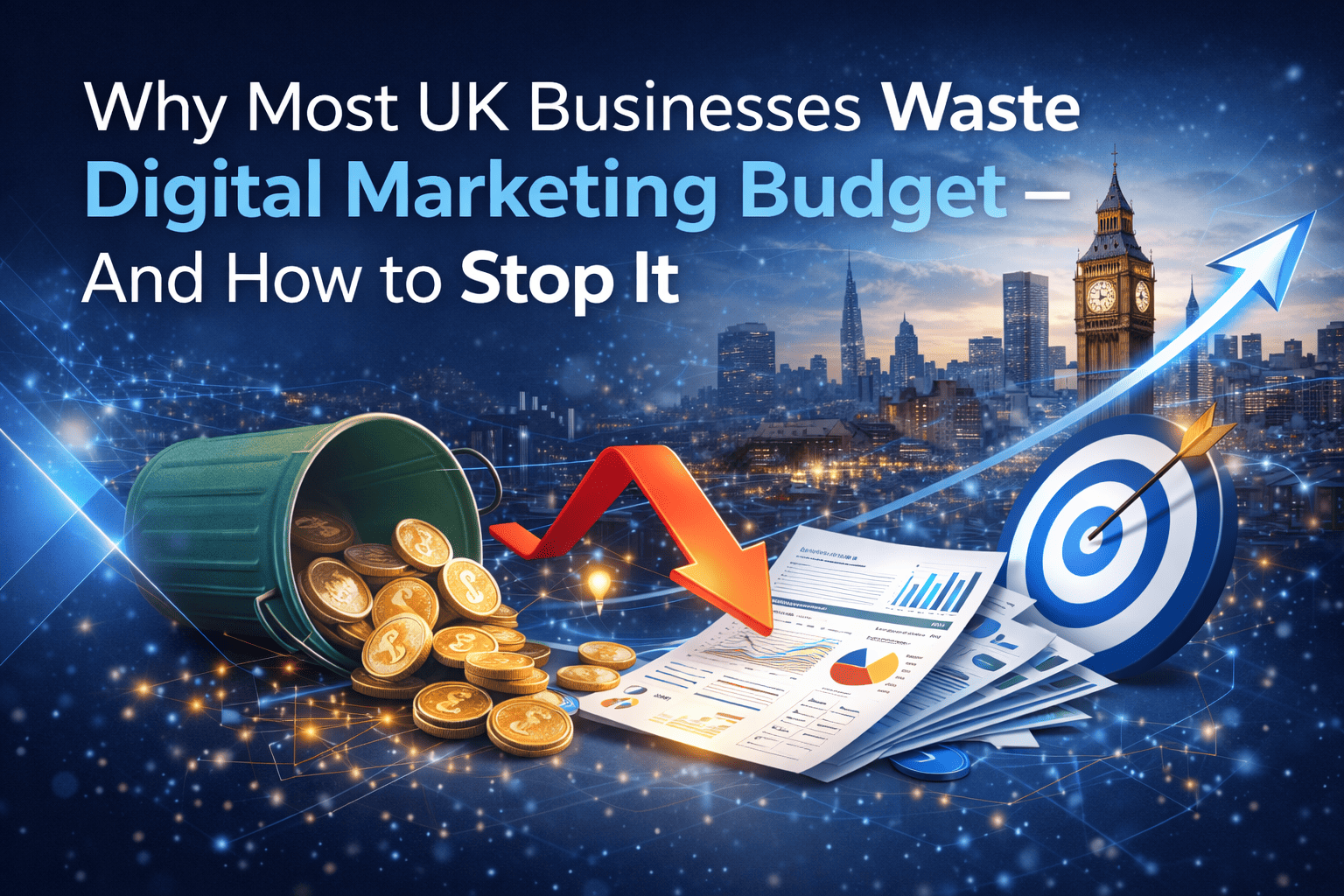
Digital marketing has become one of the most powerful tools for business growth. Yet many UK companies continue to struggle with poor results despite investing heavily in online campaigns.
From paid advertising to SEO strategies, businesses often spend significant budgets hoping to generate leads and sales. Unfortunately, the problem is rarely the platform itself. Instead, the issue usually lies in the strategy behind the campaigns.
Understanding why digital marketing budgets are wasted is the first step toward improving performance and achieving sustainable growth.
The Real Problem: Marketing Without Strategy
One of the most common mistakes businesses make is jumping directly into digital marketing without a clear plan.
Many companies launch:
- Google Ads campaigns
- Social media promotions
- Search engine optimization (SEO) efforts
- Website redesigns
However, these activities are often done independently, without a unified growth strategy.
When marketing channels operate separately, the results become inconsistent. Traffic may increase, but conversions remain low.
A structured digital marketing strategy aligns all channels toward a common goal: generating measurable business growth.
Traffic Does Not Always Equal Revenue
Another common misconception is that higher website traffic automatically leads to more sales.
In reality, traffic alone means very little if the user experience and messaging are not optimized.
Businesses may attract thousands of visitors each month, but if their website:
- Loads slowly
- Lacks clear calls-to-action
- Has confusing navigation
- Fails to communicate value
then potential customers leave before taking action.
Effective digital marketing requires focusing not only on attracting visitors but also on converting them.
Why Integration Matters
Successful digital marketing is built on integration.
Search engine optimization, paid advertising, website design, and content marketing should all support each other.
For example:
SEO builds long-term visibility in search engines.
Paid advertising generates immediate traffic.
Content marketing builds authority and trust.
Website optimization ensures visitors convert into customers.
When these elements work together, businesses create a consistent digital journey that guides potential customers from awareness to conversion.
Data Should Guide Every Decision
One of the biggest advantages of digital marketing is the availability of data.
Businesses can measure:
- Conversion rates
- Cost per lead
- Return on ad spend
- User behavior on websites
However, many companies fail to use this data effectively.
Instead of analyzing performance and optimizing campaigns, they continue spending money without making necessary adjustments.
A data-driven approach allows businesses to refine strategies continuously and focus on what delivers real results.
Shifting From Marketing Activity to Business Growth
Digital marketing should not be treated as a checklist of tasks. Posting content regularly or running ads does not automatically create success.
The real goal should be building a system that consistently attracts, engages, and converts customers.
Businesses that focus on strategy rather than random activity are far more likely to see sustainable growth.
Final Thoughts
Digital marketing is not the problem when budgets fail to produce results. The real issue is the lack of strategic planning and integration.
For UK businesses looking to grow online, the key is simple: move from scattered marketing efforts to a structured, performance-driven strategy.
When digital efforts are aligned with clear objectives and data insights, marketing becomes a powerful engine for long-term business success.



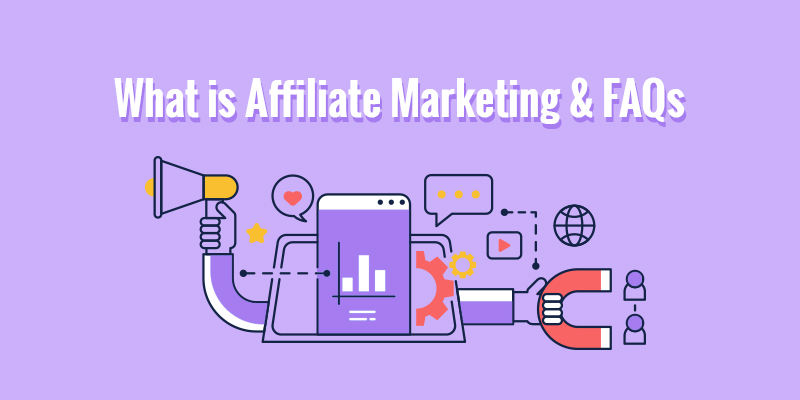
Affiliate marketing is a performance-based marketing approach, which involves paying commission through a merchant to other online entities called affiliates. This commission is paid for the sake of referring new business to the website of the merchant. In this marketing, affiliates get paid only when an actual transaction takes place with the help of the promotional efforts conducted by the affiliates. The whole idea is that you promote someone’s product on your website and earn a commission from the seller if people buy that product from your website.
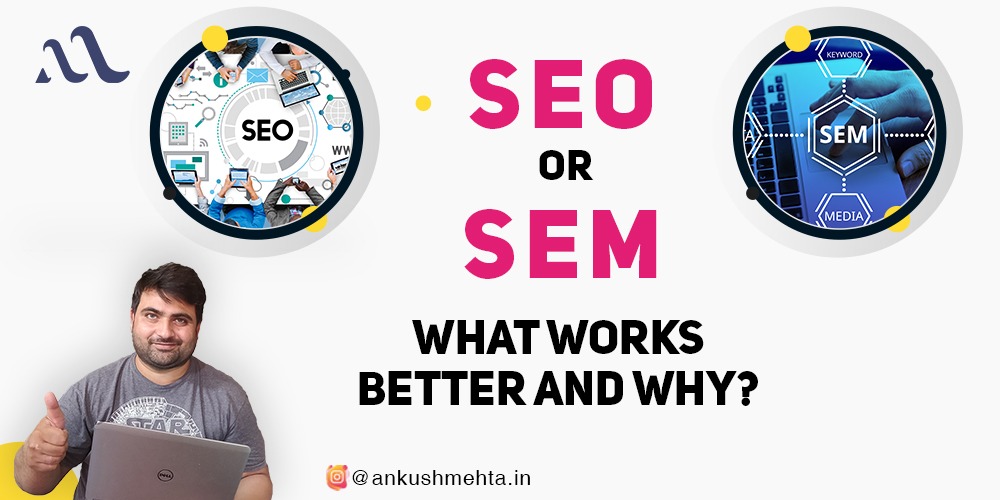
Affiliate Marketing works on a revenue-sharing model where you can offer rewards to your promoters through affiliate programs in order to have more sales. To have a successful affiliate marketing, you need to really work hard on promoting your website where the products are displayed. People use different digital marketing methods like Search Engine Optimization(SEO), Search Engine Marketing(SEM), E-mail marketing, Content marketing, Blogging and display advertising to get traffic to the merchant’s website.