



Challenging a decision in a federal court is one of the most technically demanding legal undertakings a person can pursue. Experienced federal appellate lawyers bring a specialized skill set to the table — one that combines mastery of federal procedural rules, deep legal research abilities, and a talent for persuasive written advocacy. Whether your case involves a federal criminal conviction, a civil judgment, or a constitutional issue, federal appellate representation is a distinct and critical service.
The Federal Appellate Court System
The federal court system has three tiers. At the base are the 94 U.S. District Courts, which serve as trial courts. Above them are the 13 U.S. Courts of Appeals (also called Circuit Courts), which review district court decisions. At the top is the U.S. Supreme Court, which hears a small number of cases of national significance each year.
The Circuit Courts are organized geographically. For example, the Fifth Circuit covers Texas, Louisiana, and Mississippi; the Eleventh Circuit covers Florida, Georgia, and Alabama. Understanding which circuit governs your case is foundational to building an effective federal appeal.
How Federal Appeals Differ from State Appeals
Federal appeals are governed by the Federal Rules of Appellate Procedure (FRAP) and each circuit's local rules. The standards of review applied to federal appeals are well-developed and specific — questions of law are reviewed de novo (fresh review), while factual findings are reviewed for clear error. Procedural rulings are reviewed for abuse of discretion. Applying the correct standard of review is essential to framing a persuasive appellate argument.
Federal courts also differ from state courts in that jurisdiction is more limited, constitutional issues are more frequently at stake, and the volume of precedent from multiple circuits can be both a resource and a complication.
What Federal Appellate Lawyers Do
Record Review and Issue Identification
Federal appellate lawyers begin by reviewing the district court record — including trial transcripts, filings, motions, orders, and sentencing documents. They identify cognizable legal errors and evaluate which issues have the greatest potential for success on appeal. Not every error justifies an appeal, and skilled federal appellate attorneys provide honest and strategic assessments.
Federal Appellate Brief Writing
Briefs in federal courts must comply with strict formatting, page limits, and procedural requirements. More importantly, they must be legally rigorous — citing circuit precedent, addressing adverse authorities, and constructing arguments that are both technically sound and logically compelling. Federal appellate judges and their clerks read thousands of briefs and have a keen eye for weak arguments or unsupported assertions.
Oral Argument in Federal Circuit Courts
Oral argument in federal circuit courts is granted at the court's discretion. When it is granted, attorneys typically have 10–15 minutes per side to argue their position before a panel of three judges. The argument is interactive — judges ask pointed questions and expect well-reasoned, immediate responses. Preparation is intensive.
Common Federal Appeal Issues
Federal appeals often involve: Fourth Amendment search and seizure violations, Fifth and Sixth Amendment due process and trial rights, sentencing guideline miscalculations, ineffective assistance of counsel, errors in civil jury instructions, ERISA and federal regulatory disputes, civil rights claims under Section 1983, and immigration matters.
Preserving Issues for Federal Appeal
An important principle in federal appellate law is issue preservation — legal errors must generally be raised at trial to be argued on appeal. Failing to object to improper evidence or instructions at trial typically forfeits the right to raise those issues on appeal, except under the narrow "plain error" doctrine. This underscores the importance of working with competent counsel at every stage of federal proceedings.
Conclusion
Federal appeals are not merely extensions of trial litigation — they are a specialized form of legal advocacy requiring precision, deep knowledge of federal law, and exceptional writing skills. Experienced federal appellate lawyers provide the expertise needed to navigate the U.S. Courts of Appeals effectively. If your federal case has resulted in an adverse outcome, seeking appellate counsel promptly is the most important action you can take.




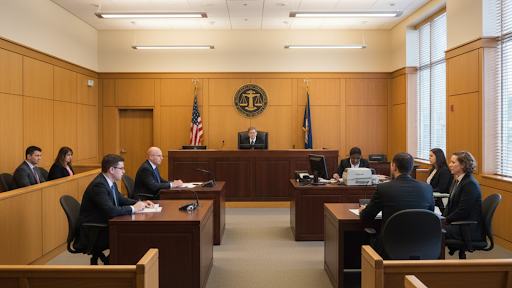

Often there are times when the court’s ruling doesn’t land in your favor.
Or even if it does, it still does not satisfy your needs.
If a similar incident happens, you can ask for the decision to be reviews through an appellate attorney.
Know all about how this works and how you’d be benefitted by hiring the Appellate Law Firm.