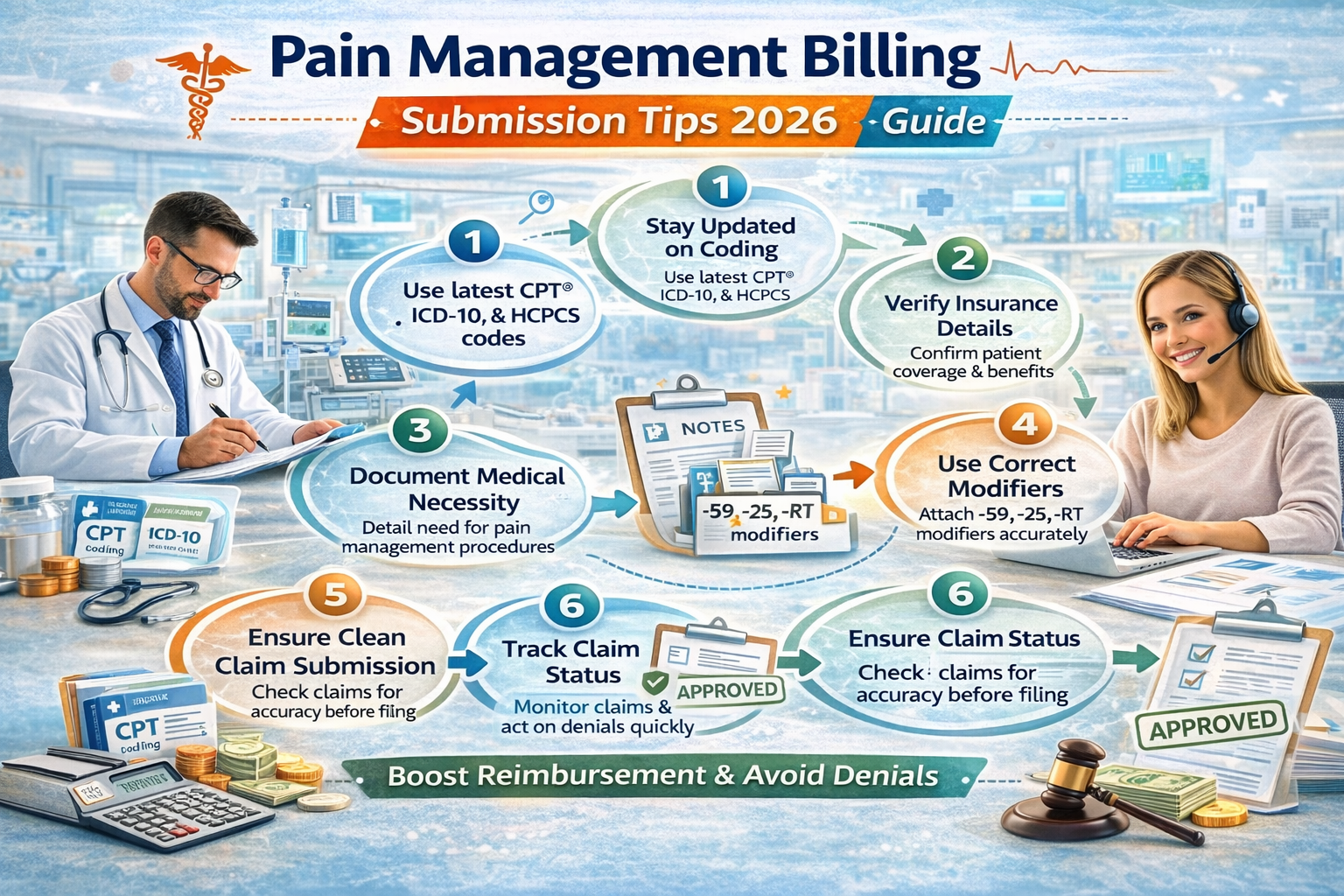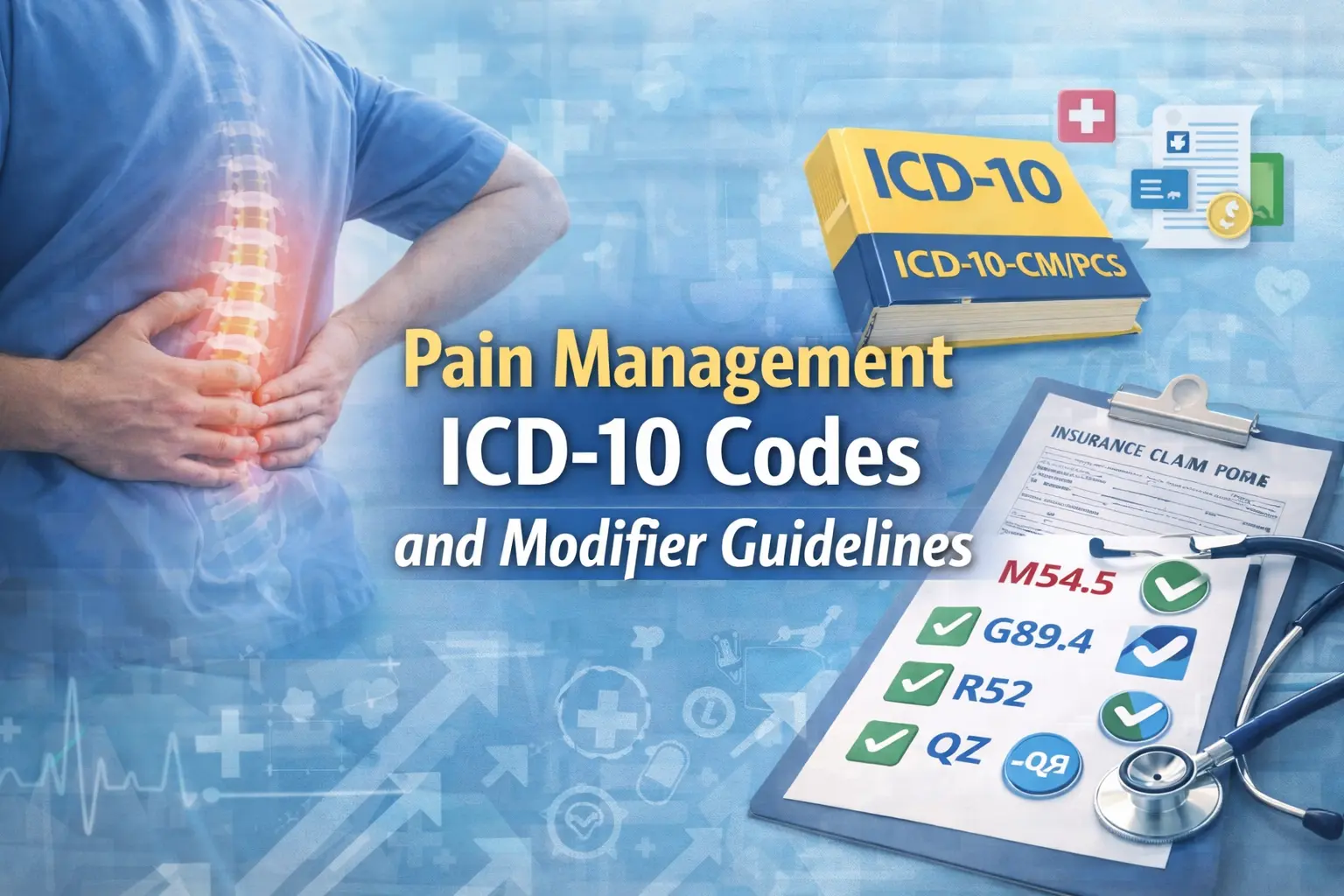
Pain management specialists treat a wide range of conditions, from chronic back pain and nerve disorders to post-surgical discomfort and injury-related complications. While clinical treatment focuses on improving a patient’s quality of life, the administrative side of pain management requires careful attention to coding and billing standards. Proper coding is essential to ensure that healthcare providers receive appropriate reimbursement and maintain compliance with payer regulations. Many practices rely on Pain Management Billing Services to navigate complex coding requirements and ensure claims are processed correctly.
Pain management billing involves more than simply assigning a diagnosis code. Providers must accurately document the patient’s condition, select the appropriate ICD-10 codes, and apply modifiers when multiple procedures or services are performed. Without proper coding and modifier usage, claims may be rejected, delayed, or underpaid.
Understanding ICD-10 Codes in Pain Management
ICD-10 codes are used to describe the patient’s diagnosis and the medical reason for treatment. In pain management, these codes help insurers understand the underlying condition that justifies the procedure or therapy.
Accurate ICD-10 coding is essential because insurers use these codes to determine medical necessity. If the diagnosis code does not clearly support the procedure performed, the claim may be denied.
Common Pain-Related ICD-10 Codes
Pain management specialists frequently encounter a variety of pain conditions. Some commonly used ICD-10 categories include:
Chronic Pain Codes
G89.4 – Chronic pain syndrome
G89.21 – Chronic pain due to trauma
G89.29 – Other chronic pain
Acute Pain Codes
G89.11 – Acute pain due to trauma
G89.18 – Other acute postprocedural pain
Site-Specific Pain Codes
M54.5 – Low back pain
M54.2 – Cervicalgia (neck pain)
M25.5 – Joint pain
Choosing the correct diagnosis code ensures that the claim accurately reflects the patient’s condition and supports the procedure performed.
Why Modifiers Are Important in Pain Management Billing
Modifiers are two-digit codes added to CPT procedure codes to provide additional information about the service performed. In pain management, modifiers are commonly used because multiple procedures are often performed during a single visit.
Modifiers help explain specific circumstances, such as:
Multiple procedures performed during the same encounter
Distinct services are performed in separate areas
Services provided by different providers
Without appropriate modifiers, insurance companies may assume procedures are duplicates and deny the claim.
Common Modifiers Used in Pain Management
Understanding when to apply modifiers is critical for avoiding claim rejections.
Modifier 25 – Significant, Separately Identifiable Evaluation and Management Service
Modifier 25 is used when a provider performs an evaluation and management (E/M) service on the same day as another procedure. In pain management, this often occurs when a patient is evaluated and also receives an injection during the same visit.
Proper documentation must show that the evaluation service was separate and medically necessary.
Modifier 59 – Distinct Procedural Service
Modifier 59 indicates that two procedures performed on the same day are distinct and should not be bundled together. This modifier is often used in pain management when injections or procedures occur at different anatomical sites.
Modifier 50 – Bilateral Procedure
Modifier 50 is applied when the same procedure is performed on both sides of the body during the same session. Proper use of this modifier helps ensure accurate reimbursement.
Modifier 76 – Repeat Procedure by the Same Physician
This modifier is used when a procedure must be repeated by the same provider on the same day. In certain pain management scenarios, repeated procedures may be medically necessary and require clear documentation.
Documentation Requirements for Pain Management Coding
Accurate coding relies heavily on detailed clinical documentation. Pain management procedures often involve multiple treatments, making thorough documentation essential for claim approval.
Providers should include:
The patient’s diagnosis and medical history
Description of the pain condition
Procedures performed during the visit
Anatomical site of treatment
Medical necessity for the intervention
Clear documentation helps coders assign the correct ICD-10 codes and modifiers while supporting claims during payer reviews.
Common Billing Mistakes in Pain Management
Even experienced billing teams can encounter errors if coding practices are not carefully managed. Some common issues include:
Incorrect Diagnosis Codes
Using general or unspecified codes when a more specific diagnosis is available can result in claim denials or reduced reimbursement.
Missing Modifiers
Failing to apply the appropriate modifier when multiple procedures are performed may cause insurers to bundle services incorrectly.
Incomplete Documentation
If medical records do not clearly justify the procedure performed, the claim may be denied for lack of medical necessity.
Regular training and coding reviews can help practices avoid these issues and maintain accurate billing practices.
The Role of Technology and Coding Expertise
Healthcare technology can support accurate coding by identifying missing documentation or potential coding conflicts before claims are submitted. Electronic health record systems and coding software also help streamline workflows and reduce manual errors.
However, technology alone cannot replace experienced coding professionals. Skilled coders understand payer policies, regulatory changes, and specialty-specific coding requirements that affect reimbursement.
For example, organizations such as Dr Biller RCM support healthcare providers by offering experienced billing teams familiar with the complexities of pain management coding and documentation standards.
Improving Billing Efficiency in Pain Management Practices
To maintain consistent reimbursement and reduce claim denials, pain management practices should implement structured coding processes. Strategies include:
Regular coder training on ICD-10 updates
Routine coding audits to identify errors
Standardized documentation templates
Clear communication between providers and coders
These steps help practices maintain accuracy while improving the speed of claim submissions.
Final Thoughts
Pain management billing requires careful attention to diagnosis coding, modifier usage, and clinical documentation. As treatments become more advanced and payer regulations continue to evolve, maintaining accurate coding practices is essential for both compliance and financial stability.
By understanding ICD-10 coding guidelines and properly applying modifiers, healthcare providers can reduce claim denials and improve reimbursement outcomes. Many practices also benefit from working with specialists who understand the complexities of pain management billing. Partnering with experts who offer Medical Coding Services in USA can help healthcare organizations streamline their billing operations and maintain accuracy in an increasingly complex healthcare environment.