With the increased rate of digital transformation, edge computing is becoming a must to provide faster data processing and lower latency. Smart devices such as cameras, sensors in industry, health monitors worn by people and autonomous machines need to process data locally rather than using cloud servers completely. This change decreases the time of transmission of data and enhances real-time decision-making.
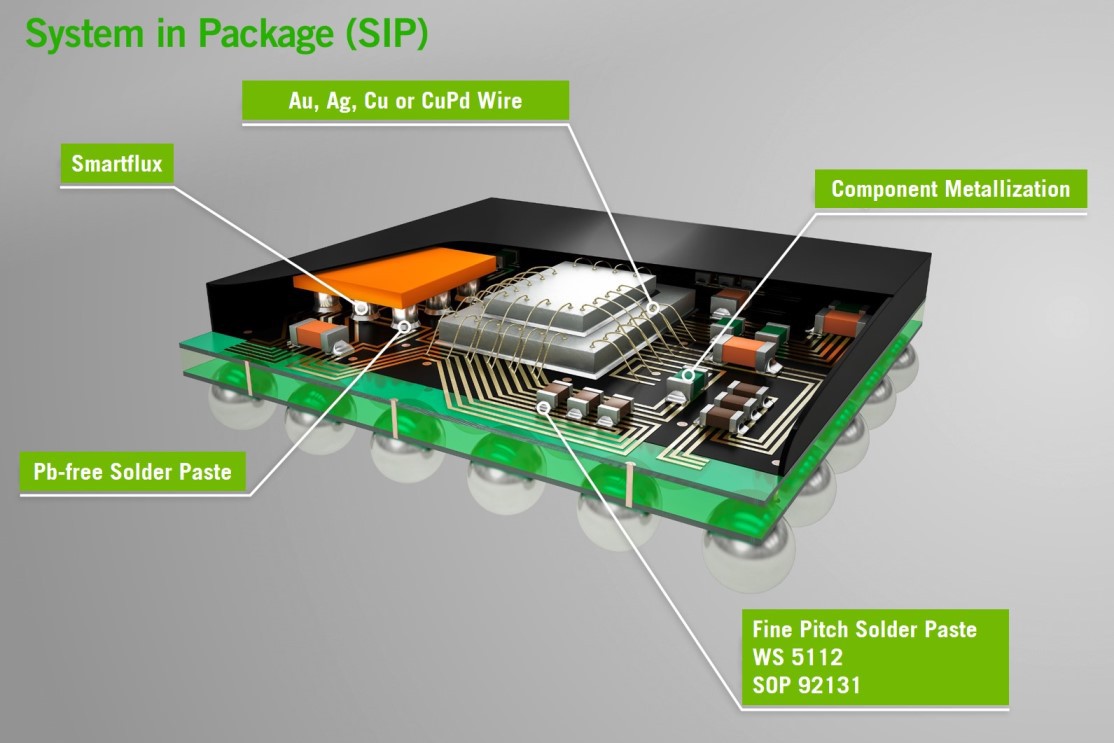
The electronic systems should get smaller, quicker and power-efficient to enable these functions. System in package (SiP) technology is important here. System-in-Package is a packaged system format in which several electronic parts are incorporated into a small enclosure, including processors, memory, and sensors, and connectivity modules. SiP is also becoming an important technology in contemporary edge applications by allowing powerful computing capabilities in small spaces.
The role of a system in a package is increasingly growing across industries, including IoT, healthcare, industrial automation, and smart infrastructure, as industries become more connected through the use of connected devices and intelligent systems.
Understanding the Role of SiP in Edge Devices
The conventional approach to electronic system design involves individual chips picked up on a printed circuit board (PCB). Such chips can consist of processors, memory units, communication units and power management units. Although this architecture is very effective with large systems, it is inefficient with small edge devices, where space and power cost are strongly considered.
System in package technology is a solution to this problem, as it incorporates a number of integrated circuits and passive components into one package. SiP does not disperse components on a large board, as is the case, but rather compiles them into a small and effective module. These combined aspects might involve:
Microcontrollers or microprocessors.
Memory chips
Wireless connectivity units.
Sensors
Power management units
System-in-package technology provides a major reduction in internal board space with increased signal performance and power efficiency by packaging all these components into a single package.
Why Edge Computing Needs System-in-Package Technology
1. Compact Design for Small Devices
Edge devices are frequently used in restricted spaces including wearable electronics, smart home sensors, and handheld medical gadgets. The conventional multi-chip packages may take up a lot of space, which restricts minimization of products.
System in package helps to have multiple functional units together vertically or side-by-side within the same enclosure. This saves the print circuit board space and wiring space. The outcome is reduced, lighter, and less bulky electronic gadgets which nevertheless provide high-tech features.
In the creation of small IoT products, such miniaturization is needed in industries.
2. Improved Power Efficiency
Edge devices that use a battery or limited power source require energy efficiency as a serious necessity. Electrical signals have to travel further when the components are distributed on a circuit board thereby decreasing efficiency and power loss. Under system in a package, the components are approximated to be nearer to each other thus reducing the electrical paths to a great extent. This results in:
Lower power consumption
Reduced signal loss
More effective power distribution.
These enhancements are used to increase battery life and allow reliable operation of remote devices that can hardly be recharged and serviced.
3. Faster Data Processing
Edge computing is based on the accelerated processing of data at the level of the device. Predictive maintenance, autonomous systems, and real-time monitoring are a few applications that cannot afford to wait long before responding to an event, as cloud processing is not essential.
The system on a package makes communication between integrated components go faster as the components are physically nearer compared to traditional PCB layouts. This architecture enables:
Faster signal transmission
Reduced latency
Improved processing speed
These benefits enable edge devices to process and react to the data in real time and enhance performance in mission-critical applications.
4. Enhanced Reliability and Durability
Most of the edge devices are used in harsh conditions like the industrial plant or outdoor infrastructure or in a vehicle system. Reliability is very vital in such environments.
System in package technology increases reliability through the lessening of external interconnections that are to be made on a circuit board. The number of solder joint and connections are reduced, which increases the chances of mechanical or electrical failures.
This renders SiP-based devices stronger and can be used to work with difficult conditions like vibration, changes in temperature, and constant work.
Key Applications of SiP in Edge Computing
Smart IoT Sensors: IoT sensors in smart cities, monitoring agriculture and industrial area need smaller processing units with inbuilt wireless communication. System in package enables the combination of these components in one module to facilitate easy collection and transmission of data.
Wearable Technology: Fitness trackers, health monitoring systems and other wearable technology require very small electronics with low power consumption. SiP allows the integration of processors, memory and wireless connectivity within a small footprint, and thus modern wearable innovations are feasible.
Industrial Automation: Factories are increasingly interested in intelligent edge devices to check the performance of the equipment and identify any possible problems in real time. System in package enables such devices to handle data at the point of need with faster response times and enables better operation efficiency.
Smart cameras and AI vision systems: Smart cameras are needed in security systems, traffic surveillance, and automated inspection that need on-device processing functionality. System in package technology allows processors, AI accelerators and memory modules to collaborate effectively in small modules.
USI Global: Advancing System-in-Package Manufacturing
USI Global is a well-established company known in high technology electronics manufacturing and packaging. The company offers end-to-end support on the system in package solutions, including the initial design development to large-scale production.
Having experience in high density packaging, precision assembly and advanced testing procedures, USI Global assists companies to create compact and high performance electronic systems. Its ability to engineer enables multiple functional components to be compactly combined into one package that has the increased call to support edge computing hardware.
USI Global specializes in the provision of scalable and reliable solutions of SiP manufacturing to serve the automotive electronics industry, industrial automation, telecommunications and consumer technology. The combination of the innovative engineering and well-developed manufacturing infrastructure enables the company to assist its clients in the quick introduction of innovative electronic products to the market.
The Future of SiP in Edge Innovation
With the continuous growth in edge computing, there will be an increased demand to have highly integrated electronic systems. The system in package will be maintained as a major technology that will allow high computing capacity in small devices. Future trends in SiP could be:
The incorporation of AI accelerators into packages.
Supersophisticated 3D packaging structures.
Better thermal control systems.
Improved wireless communication units.
These innovations will serve future-generation applications like autonomous machines, intelligent infrastructure, intelligent healthcare systems, and automation of industrial systems.
Conclusion
System in package technology is quickly becoming a component aspect of modern edge computing systems. SiP allows a smaller design of a device, better energy use, higher data processing rates and enhanced reliability by incorporating a variety of electronic devices into one small package.
System in package will become more important as industries proceed to adopt solutions based on edges. SiP is enabling the provision of powerful computing solutions in small and efficient designs; the sensors of an IoT and wearable devices and intelligent automation systems.
As the USI Global continues to innovate in the high end of the packaging solutions, the System-in-Package is going to continue to be an important component in the next generation of smart, connected, and intelligent electronics.
https://www.usiglobal.com/public/en/blog/sip-next-tech