Introduction
The Amazon marketplace has never been more competitive. With over 9.7 million sellers worldwide and roughly 2,000 new sellers joining every single day, the battle for the Buy Box has evolved from a pricing game into a full-blown data war. And the sellers who are winning? They are not guessing their prices. They are scraping them.
Price scraping — the automated extraction of competitor pricing data from Amazon and other marketplaces — has become the single most important competitive advantage for sellers operating at scale. Whether you are managing 50 SKUs or 50,000, the ability to see exactly what your competitors charge, when they change prices, and how those changes affect sales velocity is no longer optional. It is essential.
In this guide, we will break down exactly how successful Amazon sellers use price scraping in 2026, the specific data points they track, the ROI they generate, and how you can implement the same strategies for your business.
Why Manual Price Monitoring No Longer Works
Five years ago, a seller with 200 products could reasonably check competitor prices once a day using a spreadsheet and some browser tabs. That approach is now completely obsolete, and here is why.
Amazon prices change approximately 2.5 million times per day across the platform. The average product listing sees a price adjustment every 10 to 15 minutes during peak selling hours. During major events like Prime Day, Black Friday, or Lightning Deals, that frequency can double or triple.
For a seller with 500 SKUs competing against an average of 8 competitors per listing, that means tracking 4,000 individual price points. If each competitor changes prices 3 times per day, that is 12,000 data points every 24 hours. No human team can process that volume manually with any degree of accuracy or speed.
This is exactly where automated price scraping transforms the game. Instead of reacting to competitor moves hours or days after they happen, sellers with scraping infrastructure see changes in real time and respond within minutes.
The 7 Data Points Smart Sellers Scrape from Amazon
Price scraping is not just about grabbing the headline number. The most successful sellers extract a comprehensive dataset that paints a complete competitive picture. Here are the seven critical data points they track.
Current Selling Price and Buy Box Price: The most obvious data point, but also the most nuanced. Smart sellers track not just the listed price but specifically the Buy Box price, because that is the price 83% of Amazon sales flow through. They monitor the gap between their price and the Buy Box winner, tracking how that gap correlates with their sales velocity.
Historical Price Trends: A single price snapshot tells you very little. What matters is the trend. Sellers scrape daily prices over 30, 60, and 90-day windows to identify patterns. Is a competitor slowly undercutting by 1% per week? Are they raising prices on certain days of the week? Do they drop prices 48 hours before a promotion? Historical data reveals these strategies.
Seller Ratings and Review Counts: Price alone does not determine who wins the Buy Box. Amazon weighs seller metrics heavily. By scraping competitor review counts, star ratings, and recent review velocity, sellers can calculate whether they need to compete purely on price or whether their superior ratings give them pricing headroom.
Stock Availability and Fulfillment Method: When a competitor runs out of stock, that is an opportunity to raise prices without losing sales. Sellers scrape real-time stock indicators — including FBA vs FBM status, delivery date estimates, and "Only X left" warnings — to detect low-inventory situations and adjust pricing accordingly.
Shipping Costs and Delivery Speed: The total cost to the customer includes shipping. Scraping shipping costs across competitors reveals the true competitive landscape. A product listed at $24.99 with free shipping beats a $22.99 listing with $4.99 shipping in customer perception, even though the second option costs less in total.
Promotional Data and Coupon Offers: Amazon sellers frequently use coupons, Subscribe and Save discounts, and Lightning Deals. Scraping these promotional elements provides visibility into competitors' actual effective prices, which are often significantly lower than the listed price. Missing this data means you are competing against a phantom price point.
BSR (Best Sellers Rank) Movement: BSR is the closest proxy to actual sales volume that Amazon makes publicly available. By scraping BSR daily and correlating it with price changes, sellers can reverse-engineer the price elasticity of their product category. This tells them exactly how much a $1 price decrease translates into additional daily units sold.
Real-World ROI: What the Numbers Actually Look Like
The business case for price scraping is not theoretical. Here are the measurable outcomes that sellers consistently report after implementing automated price intelligence.
Buy Box Win Rate
Before Scraping: 45–55%
After Scraping: 72–85%
Average Profit Margin
Before Scraping: 12–15%
After Scraping: 18–25%
Time Spent on Pricing
Before Scraping: 15–20 hours/week
After Scraping: 2–3 hours/week
Response Time to Competitor Change
Before Scraping: 6–24 hours
After Scraping: 15–60 minutes
Revenue from Pricing Optimization
Before Scraping: Baseline
After Scraping: +15–30% increase
MAP Violation Detection
Before Scraping: Reactive (days)
After Scraping: Real-time alerts
These numbers are not outliers. A study by Profitero found that brands using automated pricing intelligence saw an average revenue increase of 17.2% within the first six months. For a seller doing $2 million annually, that translates to an additional $344,000 in revenue — from pricing optimization alone.
How Price Scraping Actually Works: The Technical Process
Understanding the technical workflow helps sellers evaluate providers and set realistic expectations. Here is a simplified breakdown of how professional-grade Amazon price scraping operates.
Target Identification: The process begins by defining which ASINs, categories, or competitor storefronts to monitor. For most sellers, this means tracking every listing where they compete directly, plus a broader set of category-level listings to monitor market trends.
Data Extraction: Specialized crawlers navigate Amazon product pages, search results, and seller storefronts at defined intervals. Enterprise-grade scrapers use rotating residential proxies, browser fingerprint randomization, and CAPTCHA-solving services to maintain consistent access without detection.
Data Normalization: Raw scraped data is messy. Prices come in different currencies, products have variant structures, and listings frequently change format. The normalization layer cleans this data into a consistent, comparable format — matching products across variants, sizes, colors, and bundles.
Analysis and Alerting: Clean data flows into analytics dashboards where sellers can set custom rules. Typical alert configurations include notifications when a competitor drops below a threshold price, when stock levels indicate an impending stockout, or when a new seller enters a listing.
Automated Response (Optional): Advanced sellers connect their scraping pipeline directly to repricing software. When a competitor drops their price by 3%, the system automatically adjusts the seller's price by a predefined rule — for example, match minus $0.01, or hold if the competitor's rating is below 4.0 stars.
Common Mistakes Sellers Make with Price Scraping
Not all price scraping implementations deliver results. Here are the five most common mistakes that lead to wasted investment.
Scraping too infrequently. Once-daily scraping misses the most important price movements. Amazon's algorithmic repricing means the competitive landscape shifts multiple times per hour. For high-velocity categories, scraping intervals should be 15 to 30 minutes during peak hours.
Ignoring the full cost picture. Sellers who only track the listed price miss shipping costs, coupon values, Subscribe and Save discounts, and bundle pricing. The effective price a customer pays can differ from the listed price by 15 to 20 percent.
Not correlating price with sales data. Price data in isolation is interesting but not actionable. The real value comes from correlating price changes with BSR movement, Buy Box win percentage, and actual sales volume. This correlation reveals the price elasticity specific to your category.
Using free or consumer-grade tools. Browser extensions and free scraping tools break frequently, miss data points, and lack the proxy infrastructure needed for consistent extraction at scale. For serious sellers, the cost of unreliable data far exceeds the savings from a cheap tool.
Treating scraping as a one-time project. Price intelligence is a continuous process, not a one-off audit. Amazon's marketplace evolves constantly — new sellers enter, pricing algorithms change, and seasonal patterns shift. Effective scraping requires ongoing infrastructure and regular strategy updates.
Getting Started: A Practical Roadmap
If you are ready to implement price scraping for your Amazon business, here is the recommended approach.
Week 1-2: Audit your competitive landscape. Identify every ASIN where you compete directly. Map the sellers on each listing, their pricing history, and their fulfillment methods. A professional data provider can deliver this audit within days.
Week 3-4: Establish your baseline. Before making any pricing changes, collect 2-3 weeks of continuous data. This baseline reveals your current Buy Box win rate, average margin, and the competitive dynamics in each product category.
Month 2: Implement rule-based pricing. Using your baseline data, set up pricing rules. Start conservative — match the Buy Box winner, maintain a minimum margin floor, and avoid racing to the bottom in categories with only 2-3 sellers.
Month 3 and beyond: Optimize and scale. With 60+ days of data, you can start building more sophisticated strategies. Identify time-of-day patterns, predict competitor behavior, and expand monitoring to adjacent categories and new marketplaces.
Frequently Asked Questions
Is scraping Amazon product data legal?
Scraping publicly available product information from Amazon is generally considered legal in most jurisdictions. The landmark hiQ Labs v. LinkedIn ruling established that scraping publicly accessible data does not violate the Computer Fraud and Abuse Act. However, it is important to work with a provider that follows ethical scraping practices, respects rate limits, and does not access private or account-gated data.
How often should I scrape competitor prices?
The optimal frequency depends on your product category's velocity. For high-competition categories like electronics, supplements, or home goods, scraping every 15-30 minutes during peak hours delivers the best results. For lower-velocity categories, hourly or twice-daily scraping is typically sufficient.
What does professional price scraping cost?
Costs vary significantly based on the number of ASINs monitored, scraping frequency, and data enrichment requirements. As a general benchmark, monitoring 1,000 ASINs with hourly updates typically ranges from $500 to $2,000 per month through a specialized provider — a fraction of the revenue uplift it generates.
Can I build my own scraping solution?
Technically, yes. However, Amazon employs sophisticated anti-bot measures that require significant engineering investment to overcome reliably. Most sellers find that the total cost of building and maintaining an in-house scraping system — including proxy infrastructure, CAPTCHA handling, and ongoing maintenance — exceeds the cost of a professional service by 3 to 5 times.
Conclusion
Every day without price intelligence is a day you are leaving money on the table. Your competitors are already scraping your prices. The question is whether you are scraping theirs.
You can also reach us for all your mobile app scraping, data collection, web scraping , and instant data scraper service requirements!
Read More>>
https://www.actowizsolutions.com/amazon-price-scraping-competitive.php
Originally published at https://www.actowizsolutions.com

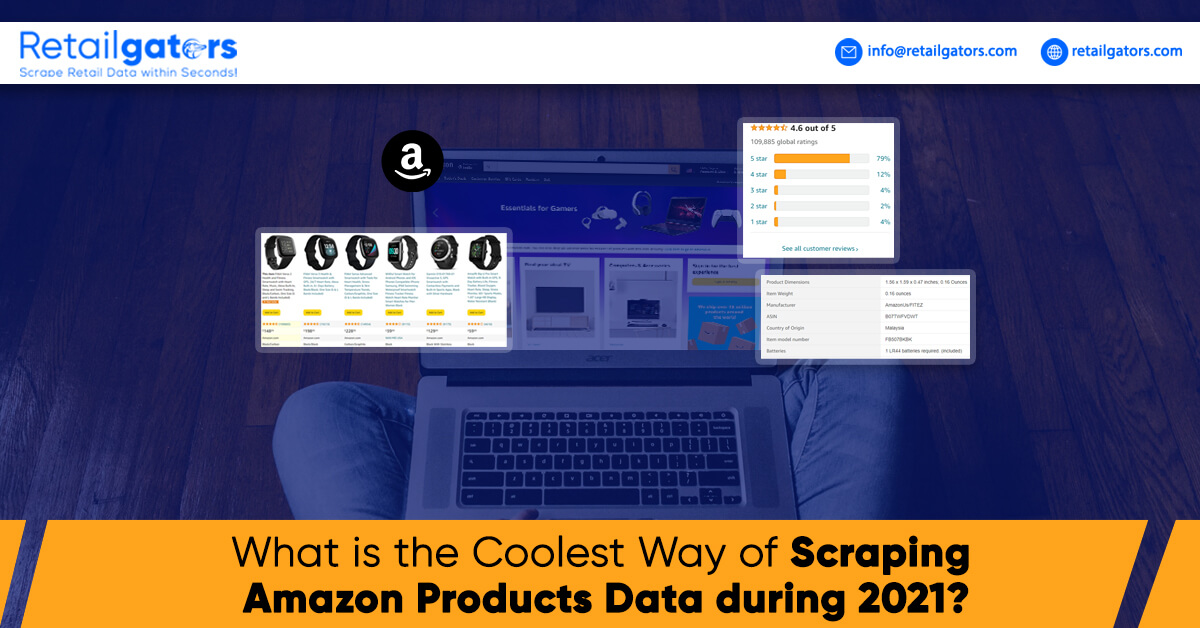
Having over 10 billion products, Amazon is an ideal place to get updated product data from different manufactures.Provided the real requirement, you could require to extract product listed titles, pricing data, product descriptions, star ratings, product photos, questions & answers, customer reviews, etc.RetailGators Scraper is amongst the easiest to use data scrapers accessible.
Let’s go through a detailed and step-by-step tutorial for giving you a start:1.
However, we believe you already understand that.For instance, if you like to scrape the existing market data for best-selling pillowcases at Amazon.com, simply type a selected category keyword known as “pillowcase” as well as load search results pages.In case, you need to scrape the finest sellers for any particular category, you could do that also, just search the category of best sellers under navigation menu.
In case, you want broad data like product title, review counts, first product listing image, and prices.
Its Visual Interface will be there at the left of the browser.We will show how to scrape detailed product data in the example here because this is the key use case.4.
Setting up the RetailGators Scraper Scraping RuleStep 1: Click the New Recipe in case, you are unable to import the existing method.Step 2: Move the mouse over Amazon’s Products Details Page as well as click on data that you wish to scrape.Step 3: Recognize the resource listSource list is the page, which has links of all products detail pages, generally the search results pages or category listed pages.On a source list, just click on the ‘LINK LIST SUGGESTION’ for highlighting all links, which could be linked to a products detail page.