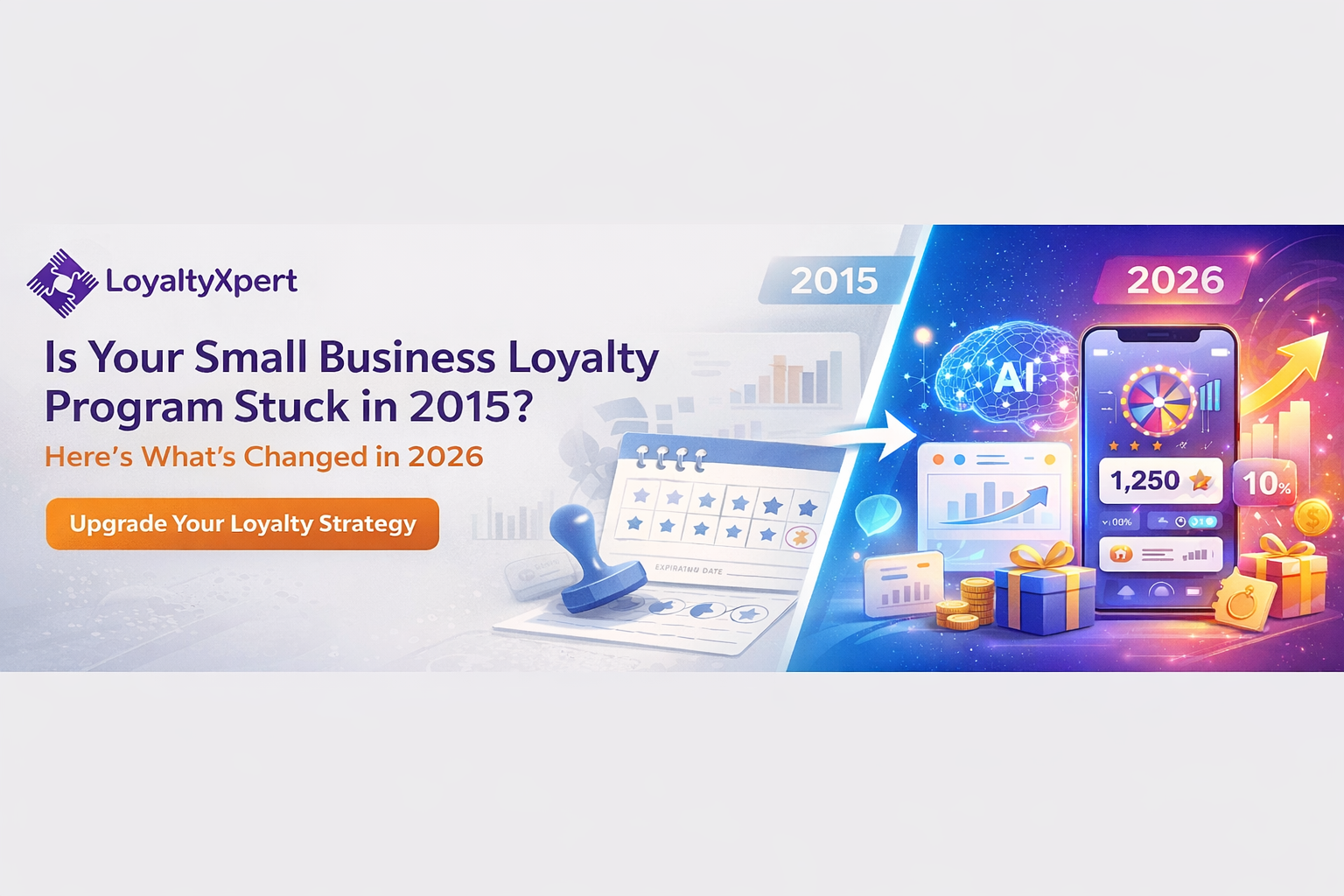
Somewhere between managing stock, handling staff, and trying to keep up with everything else, most small business owners think about customer retention maybe twice a year. Usually after a slow month.
That’s understandable. Running a business is exhausting.
But here’s what’s worth paying attention to right now: the businesses growing steadily in 2026 aren’t necessarily the ones with the biggest ad budgets. A lot of them are simply doing a better job of keeping the customers they already have.
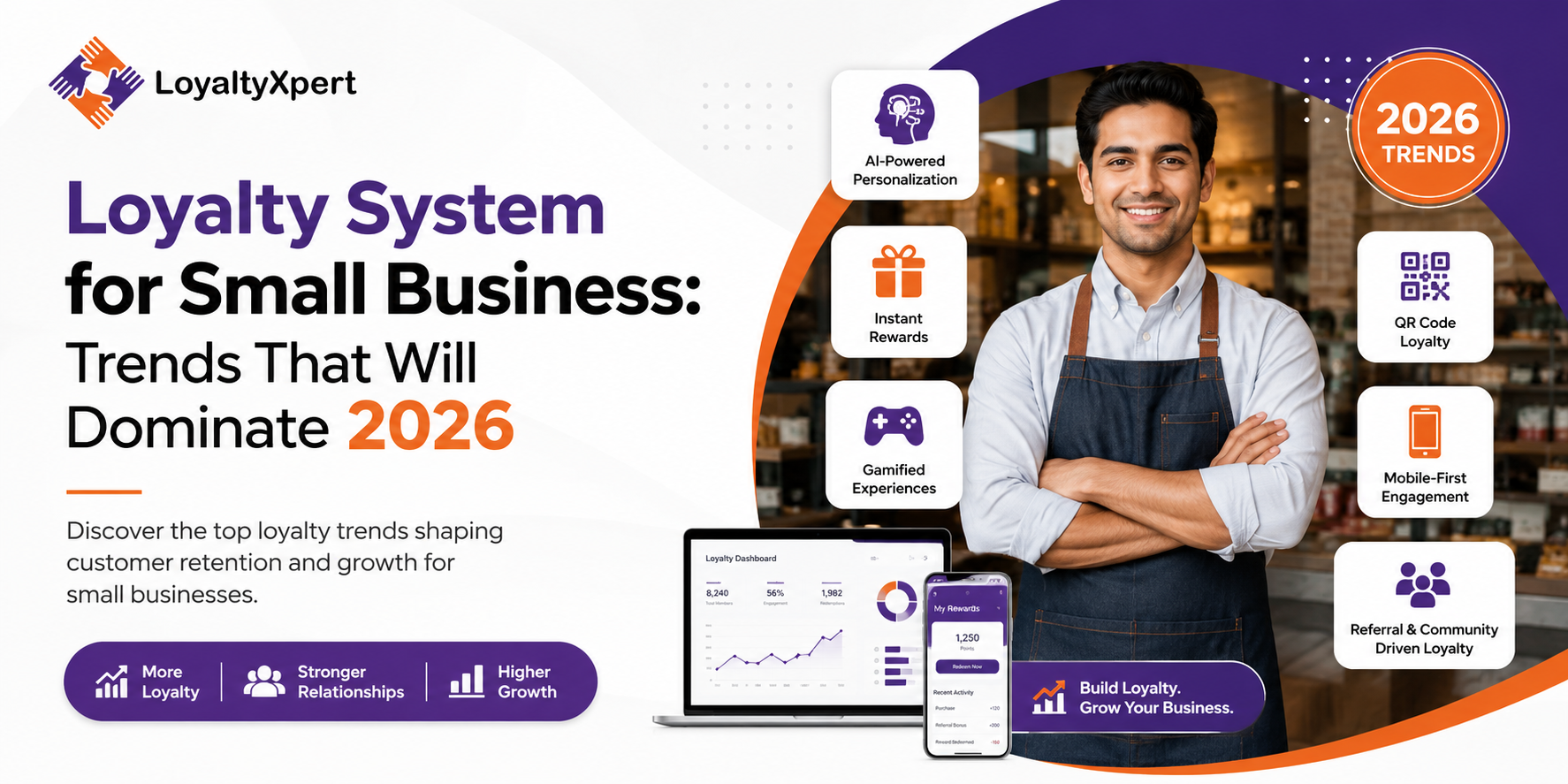
And the tool helping them do that? A properly set-up loyalty program for small business not the stamp-card type, but something built on actual customer data and smart automation.
This piece covers what’s changed, what’s working, and why AI has quietly made all of this far more accessible than it used to be.
The Problem With Most Small Business Loyalty Programs Today
Walk into most small businesses and you’ll still find one of two things: a paper punch card near the register, or nothing at all.
The ones that do have a digital program usually set it up a few years ago, pushed a few emails out, and then... mostly forgot about it.
This is more common than people admit. And honestly, it’s not laziness, it's that managing a loyalty system on top of everything else feels like one task too many.
But the cost of ignoring this is real. Research from 2025 loyalty industry data found that customers enrolled in active, personalised loyalty programmes spend significantly more per year than those who aren’t. The gap is widening, not closing.
The issue isn’t loyalty programmes themselves. It’s the outdated ones, the kind that treat every customer identically and go quiet for weeks at a time.
What a Loyalty Rewards Program for Small Business Looks Like in 2026
The short version: it looks nothing like what most people picture.
Modern loyalty isn’t a points counter sitting in a spreadsheet somewhere. It’s a system that watches behaviour, spots patterns, and responds automatically in ways that feel genuinely personal to each customer.
Here’s a practical example. Say you run a small wellness shop. One customer buys supplements every month like clockwork. Another comes in occasionally for gifts. A third placed two orders six months ago and hasn’t been back.
A smart loyalty rewards program for small business treats all three differently:
- The regular buyer gets early access to a new product line before it goes public
- The gift buyer gets a heads-up before seasonal occasions with a relevant bundle offer
- The lapsed customer gets a simple “we’ve missed you” message with a small incentive to return
None of this requires you to manually segment your customer list on a Sunday afternoon. The system handles it. That’s what AI actually does here: it reads the patterns and acts on them without you having to ask.
How AI Changed the Game Without Making Things Complicated
There’s a version of this conversation where we go deep into machine learning and predictive modelling. But that’s not particularly useful for someone who has three staff members and forty orders to process before noon.
So here’s the practical version.
AI inside a loyalty system for small business does roughly four things well:
1. It remembers everything about your customers (so you don’t have to)
Purchase history, visit frequency, average spend, last engagement date all of it tracked and used to make better decisions about when and how to reach each person.
2. It notices when someone is about to leave before they actually do
If a regular customer starts visiting less often, the system flags it and triggers a re-engagement campaign automatically. This is called churn prediction, and it’s genuinely one of the most valuable things a loyalty platform can do for a small business. Getting a lapsed customer back almost always costs less than finding a new one.
3. It sends the right offer at the right time not just a blanket discount
Generic 10% off codes feel lazy. A personalized offer tied to something the customer actually buys? That lands differently. People notice when a business gets it right, and they remember it.
4. It runs without you having to babysit it
Once configured, campaigns go out automatically. Birthdays, milestones, re-engagement triggers, post-purchase follow-ups the whole sequence works on its own. You check in via a dashboard, make occasional adjustments, and the programme keeps running.
Why Small Businesses Are Actually Better Positioned Than Big Brands Here
This is a point that gets overlooked a lot.
Large retailers have AI tools too but they also have enormous data complexity, legacy systems that don’t talk to each other, and layers of approval needed before any campaign goes live.
A small business can set up a smart loyalty program for small business this week, have it running by next week, and start collecting useful customer data immediately. No committee meetings. No six-month implementation timeline.
The agility advantage is real. And the platforms built specifically for smaller operations in 2026 are genuinely impressive clean interfaces, fast setup, and AI personalisation that doesn’t require a technical background to use.
What Competitors Are Getting Wrong (And What You Can Learn From It)
Spending time reading through similar content in this space reveals a consistent pattern: most articles explain what AI loyalty programmes do in general terms, then stop there.
What’s missing is the honest, practical side of things, what it actually looks like for someone managing a small team, what the setup process involves, and what results are realistic in the first few months.
The blogs that get real traction in 2026 are the ones that answer the questions owners are actually asking:
- Will this take time I don’t have to set up?
- What happens if my customer base is small? Will AI even work?
- How soon before I see any difference in repeat purchases?
Answering these honestly matters more than listing feature sets. Because business owners are skeptical and rightly so. They’ve been sold on software before that didn’t deliver.
The honest answers, by the way: setup on good platforms takes hours not weeks. AI starts finding patterns with surprisingly small customer datasets. And repeat purchase improvements tend to show up within the first 60-90 days when the programme is actively running.
Three Things to Look for When Choosing a Loyalty System for Small Business
Not every platform is worth your time. Here’s what separates the useful ones from the ones that look impressive in a demo and then collect dust.
It should be built for small businesses, not scaled down from enterprise software
There’s a big difference between a platform designed from the ground up for independent businesses and one that started as an enterprise tool with a “starter plan” bolted on. The latter tends to be clunky, expensive, and full of features you’ll never use.
AI personalisation needs to be a core feature, not an add-on
Some platforms advertise personalisation but what they mean is basic segmentation sending one email to “regulars” and another to “new customers.” That’s not the same thing. Real AI personalisation strategies for loyalty works at an individual level, not a group level.
Automation should actually save you time
If setting up each campaign requires significant manual work every time, the platform has missed the point. Look for tools where the heavy lifting is done once during setup, and the system takes over from there.
Where to Start
If you’ve been looking for a loyalty rewards program for small business that doesn’t require a marketing team to operate, LoyaltyXpert is worth a proper look.
It’s built specifically for smaller operations, not a simplified version of something designed for retail chains. The AI personalisation is real, the automation actually reduces your workload, and the setup process is genuinely manageable without outside help.
Explore it here: https://www.loyaltyxpert.com/small-business-loyalty-program-software/
Conclusion
Customer loyalty has never really been about points or discounts. Those are just the mechanics.
What it’s actually about is whether a customer feels like your business knows them, values them, and bothers to treat them as an individual rather than a transaction.
The technology available in 2026 makes it possible to deliver that feeling consistently, at scale, without it taking over your life.
That’s the case for a proper loyalty system for small business. Not because it’s trendy, but because it works and the gap between businesses using it well and those ignoring it is only going to widen.
You set it up. You told people about it. Maybe printed some cards, maybe sent a message in the group. And then… nothing. Customers didn't really bite. The thing just sat there.
I've spoken to