As electric vehicles become increasingly common, the demand for efficient and reliable charging infrastructure continues to grow. Property owners, whether residential, commercial, or industrial, are now faced with the decision of selecting the right type of charging solution to meet their needs. One of the most important distinctions to understand in this process is the difference between AC and DC EV chargers Singapore. Each type serves a specific purpose, and choosing the right one requires a clear understanding of how they function, their advantages, and their suitability for different environments.
At a fundamental level, the difference between AC and DC charging lies in how electricity is delivered to the vehicle’s battery. Alternating current, or AC, is the standard form of electricity supplied by power grids. Direct current, or DC, is the form required by the battery to store energy. When using an AC charger, the conversion from AC to DC happens inside the vehicle through an onboard charger. In contrast, a DC charger performs this conversion externally, delivering DC power directly to the battery. This distinction significantly affects charging speed, cost, and installation requirements.
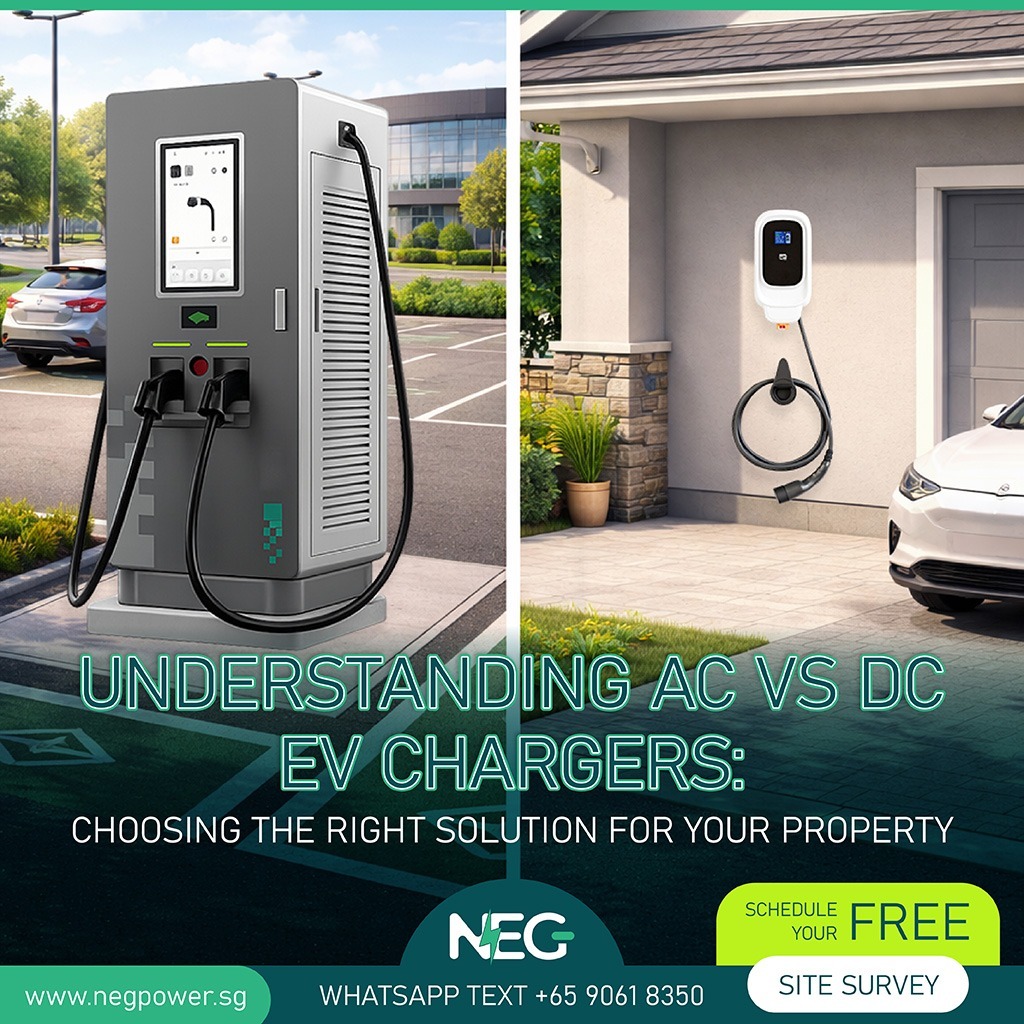
AC chargers are commonly used in residential and workplace settings. They are generally more affordable and easier to install compared to their DC counterparts. Because the conversion process takes place within the vehicle, AC chargers rely on the capacity of the onboard charger, which can limit the charging speed. However, for many property owners, this is not a major drawback. Overnight charging or extended parking durations make AC chargers a practical and efficient solution for daily use. They provide a steady and reliable way to keep vehicles charged without requiring significant infrastructure upgrades.
In contrast, DC chargers are designed for speed and efficiency. By bypassing the vehicle’s onboard charger and delivering power directly to the battery, they can significantly reduce charging time. This makes them ideal for locations where quick turnaround is essential, such as commercial properties, public charging stations, and high-traffic areas. The ability to provide a substantial charge in a short period enhances convenience for users who may not have the luxury of extended charging sessions.
Despite their advantages, DC chargers come with higher costs and more complex installation requirements. They require a robust electrical infrastructure, including higher voltage connections and advanced safety systems. This can make them less suitable for smaller properties or locations with limited power capacity. Property owners must carefully evaluate their electrical systems and consider potential upgrades before opting for a DC solution. The investment can be substantial, but it may be justified in environments where fast charging is a priority.
Another important factor to consider is usage patterns. Understanding how often and how long vehicles will be parked is crucial in determining the most appropriate charging solution. For residential properties or office buildings where vehicles remain parked for extended periods, AC chargers are typically sufficient. They offer a cost-effective and convenient way to maintain battery levels without the need for rapid charging. On the other hand, properties that serve transient users or experience high turnover may benefit more from the speed of DC chargers.
Subscribe to the Medium newsletter
Scalability is also a key consideration when planning EV charging infrastructure. As the number of electric vehicles continues to rise, property owners must think about future expansion. AC chargers are generally easier to scale, allowing additional units to be installed with relative ease. This makes them a flexible option for properties anticipating gradual growth in demand. DC chargers, while powerful, may require more careful planning to ensure that the electrical system can support multiple units without compromising performance.
Energy management plays a significant role in the effectiveness of both AC and DC charging solutions. Smart charging systems can help optimize energy usage, reduce costs, and prevent overloading the electrical network. These systems can distribute power efficiently among multiple chargers, adjust charging speeds based on demand, and integrate with renewable energy sources. For property owners, investing in smart technology can enhance the overall performance and sustainability of their charging infrastructure.
The user experience is another critical aspect to consider. Ease of use, accessibility, and reliability all contribute to the effectiveness of a charging solution. AC chargers are typically simpler to operate, making them suitable for everyday use in private settings. DC chargers, while more complex, offer the advantage of speed, which can be a significant benefit in public or commercial environments. Ensuring that the chosen solution aligns with user expectations is essential for maximizing satisfaction and utilization.
Maintenance and operational costs should not be overlooked when comparing AC and DC chargers. AC chargers generally have lower maintenance requirements due to their simpler design. DC chargers, with their advanced components and higher power output, may require more frequent servicing and monitoring. Property owners should factor these ongoing costs into their decision-making process to ensure long-term viability.
The concept of EV Charger Singapore often arises in discussions about modern charging solutions, reflecting the growing global emphasis on electric mobility. The term EV Charger Singapore can be seen as part of a broader conversation about adopting efficient and reliable charging technologies. Regardless of the terminology, the focus remains on selecting the right solution based on specific needs and conditions.
Safety is a fundamental consideration in any electrical installation. Both AC and DC chargers must comply with established standards and regulations to ensure safe operation. Proper installation, regular inspections, and adherence to guidelines are essential to prevent hazards and maintain system integrity. Property owners should work with qualified professionals to ensure that their charging infrastructure meets all safety requirements.
Environmental impact is another factor influencing the choice between AC and DC chargers. Efficient energy use and integration with renewable sources can help reduce the carbon footprint of charging operations. AC chargers, with their lower power demands, may be easier to integrate with solar or other renewable systems. DC chargers, while more energy-intensive, can still contribute to sustainability when managed effectively.
In conclusion, understanding the differences between AC and DC EV chargers Singapore is essential for making informed decisions about charging infrastructure. Each type offers distinct advantages and challenges, and the right choice depends on factors such as usage patterns, budget, scalability, and property requirements. By carefully evaluating these considerations, property owners can select a solution that not only meets current needs but also supports future growth. Whether prioritizing cost-effectiveness, speed, or flexibility, the goal is to create a reliable and efficient charging environment that enhances the overall experience of electric vehicle ownership.
Visit us : https://www.negpower.sg/