


By Lawrence Dauchy 21st April
The short answer is yes, but not in the way most merchants mean by “ranking.” ChatGPT does not expose a standard organic ranking system for product pages. What OpenAI does document is that public websites can appear in ChatGPT search, that publishers should allow OAI-SearchBot if they want their content included in summaries and snippets, and that ChatGPT search surfaces links to relevant web sources. That means Shopify product reviews can help indirectly by making product pages more informative, more trustworthy, and more structured for retrieval, but they are not a published direct ranking factor.
That matters because a lot of teams are using old SEO language for a newer discovery surface. On a Shopify store, reviews can strengthen the page in three practical ways: they add unique text, they can support rating markup and product context, and they give answer engines more evidence about what buyers think of the item. This article explains where reviews probably help, where they do not, and what to do if you want stronger product visibility in ChatGPT.
What “ChatGPT ranking” usually means
In practice, people use “ChatGPT ranking” to mean one of three things: whether a product or page gets surfaced in ChatGPT search, whether it gets cited as a source in answers, or whether products appear in shopping-style discovery experiences. OpenAI’s public documentation describes ChatGPT search as a web-connected experience that can return timely answers with links to relevant sources, and OpenAI also has a product discovery program built around sharing product feeds. That is closer to source inclusion and product surfacing than to a classic blue-link ranking position.
So the useful question is not “Do reviews make my Shopify page rank #1 in ChatGPT?” The better question is whether reviews improve the odds that ChatGPT can understand, trust, and reuse the product page when it is deciding what to show. That second version is much closer to how AI visibility works. This is partly documented and partly inferred from how ChatGPT search, crawler access, and product discovery are described publicly.
How Shopify product reviews can help
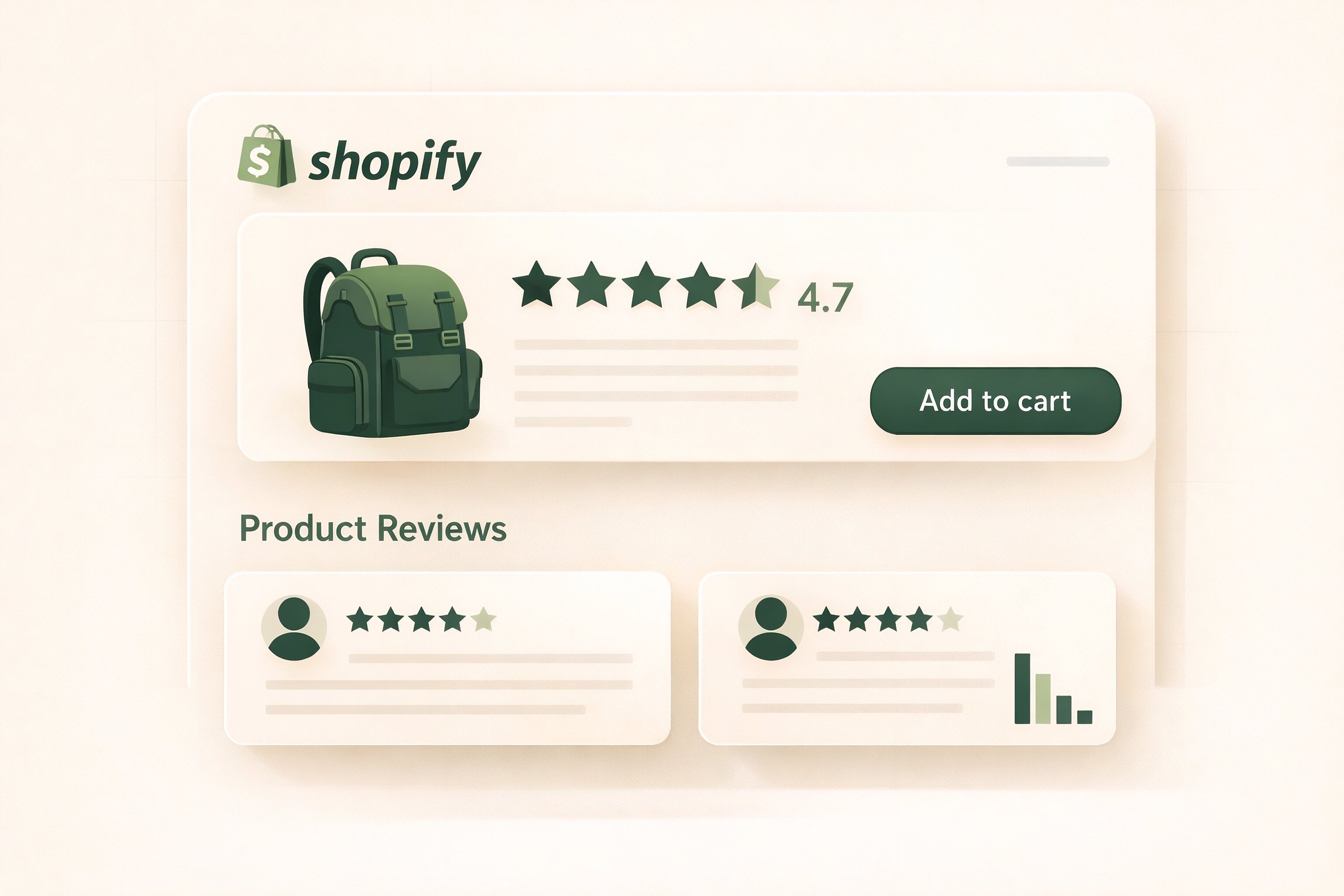
Reviews can help because they make a product page richer and less generic. A product page with real buyer feedback often has more descriptive language, more use-case detail, and more evidence than a manufacturer-style description alone. Shopify’s developer docs explicitly note product reviews and star ratings as common dynamic elements for theme app extensions and app blocks, which means reviews are a normal part of how Shopify product pages are built and displayed.
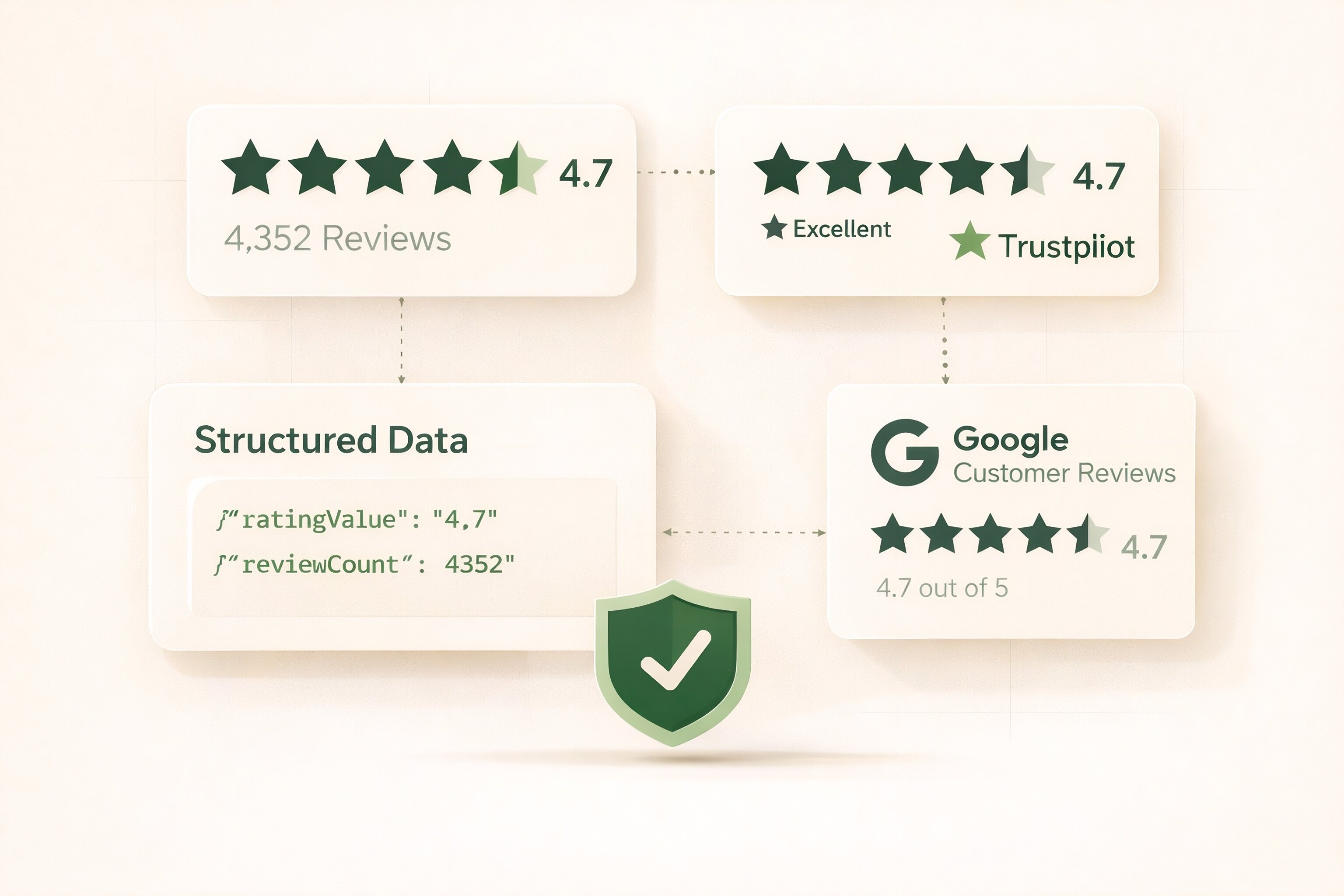
They can also help with structure. Google’s product and review documentation shows that product pages can include structured data for things like ratings, availability, price, and review information, and that valid review markup may produce review snippets in search results. While Google’s rich-result behavior is not the same thing as ChatGPT behavior, the broader point still matters: structured, machine-readable review information makes product pages easier for systems to interpret. That is a reasonable inference, not a formal OpenAI rule.
Where the benefit is probably indirect
There is no public OpenAI document saying “product reviews improve ChatGPT ranking.” OpenAI’s guidance focuses on crawl access, public availability, and whether content can be discovered, surfaced, and cited. If you block OAI-SearchBot, your content is less likely to be included in summaries and snippets in ChatGPT search. If you allow it, your content can be discovered and potentially cited, but OpenAI does not publish a formula that assigns ranking weight to review count or star score.
So reviews are best understood as a quality and retrieval signal rather than a direct switch. They can improve the page’s uniqueness, support clearer product understanding, and give both search engines and AI systems more context. That does not mean 500 reviews automatically beat 50. A weaker product page with lots of thin, repetitive reviews can still be less useful than a better-structured page with fewer but more substantive reviews. This part is informed inference rather than confirmed OpenAI documentation.
Reviews can also help the page outside ChatGPT
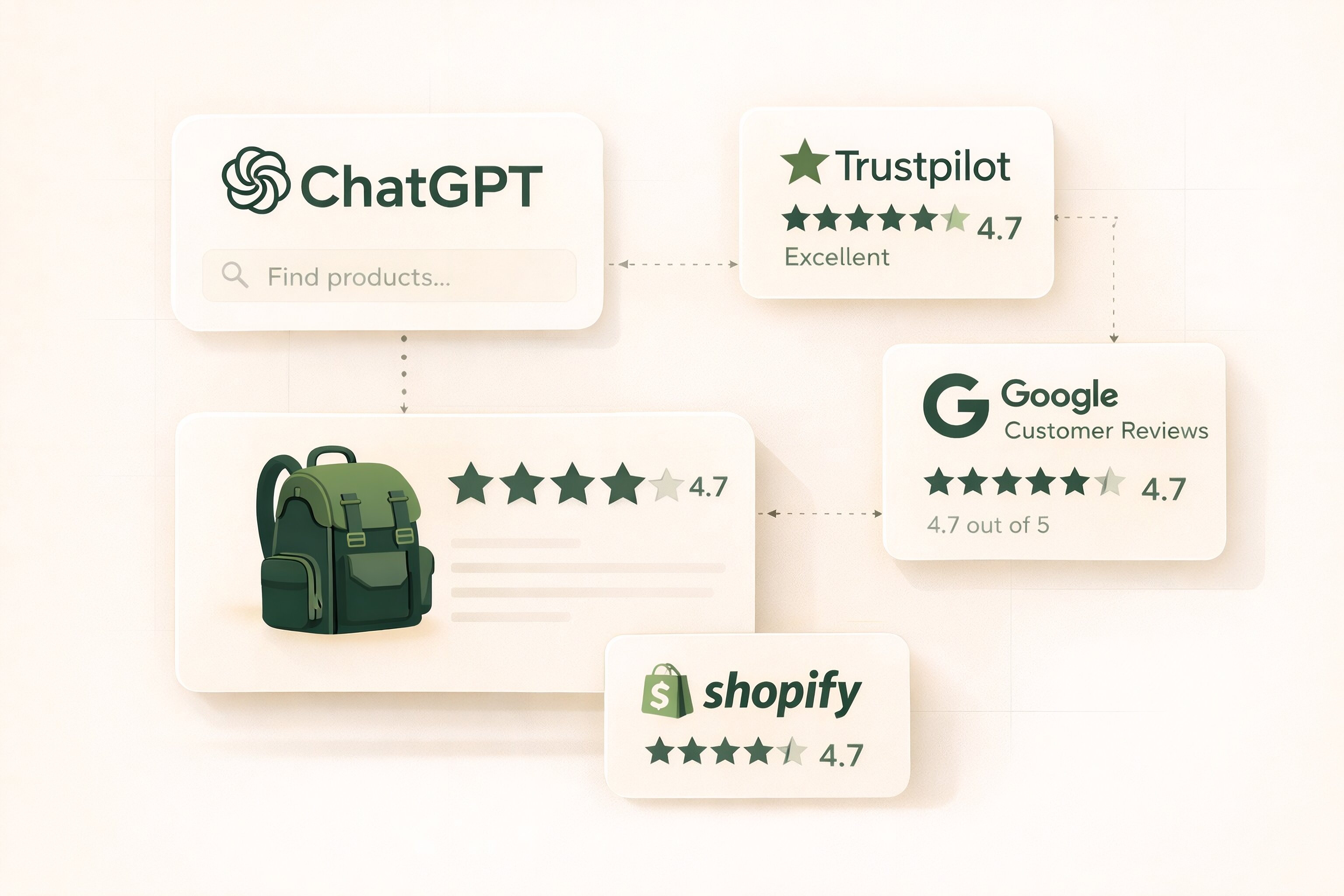
This matters because ChatGPT visibility does not happen in isolation. Google’s documentation says product structured data can help product information appear in richer ways in Google Search, including price, availability, shipping, and review ratings, and review markup can enable review snippets when valid. Better search presentation can improve clicks, engagement, and the overall authority of the page, which may strengthen the store’s wider discoverability even if the ChatGPT effect is indirect.
That does not mean you should chase stars purely for markup. Google also has quality and access guidelines for structured data, including the expectation that markup reflect visible page content and that pages not be blocked from crawling if you want them eligible for rich results. Clean markup helps interpretation, but only when it matches a genuinely useful page.
What matters more than reviews alone
For most Shopify stores, reviews help most when the rest of the page is already strong. A product page still needs a clear title, accurate descriptions, visible pricing and availability, useful FAQs or shipping details, and crawlable public access. OpenAI’s publisher guidance is clear that public websites can appear in ChatGPT search and that crawler access matters for inclusion in summaries and snippets. OpenAI also now offers a product discovery program based on product feeds, which suggests catalog quality and feed participation can matter alongside page content.
In practice, this means reviews should sit inside a broader product visibility system:
keep product pages public and crawlable
allow OAI-SearchBot if you want ChatGPT search inclusion
use review tools that render visible, indexable review content on the page
add valid product and review structured data where appropriate
keep merchant feeds accurate if you are pursuing shopping-style discovery in ChatGPT
What many Shopify merchants get wrong
The first mistake is treating review stars as the whole job. Stars can help, but the review text often carries more product meaning. It explains fit, quality, durability, edge cases, and buyer intent in language that both people and machines can use. Google’s review documentation is built around reviews and aggregate ratings together, not stars in isolation.
The second mistake is using review widgets that are hard to crawl or contribute little visible text. Shopify supports review and star-rating app blocks in themes, but app support alone does not guarantee that the resulting content is the most accessible or semantically useful version for external systems. That is an implementation issue, not a platform guarantee.
The third mistake is assuming ChatGPT works like Google rankings. OpenAI documents discovery, snippets, and citations, not a familiar merchant-facing ranking report. So the sensible measurement model is referral traffic, product/source mentions, surfaced links, and prompt coverage, not a made-up “ChatGPT position 3” metric. OpenAI’s publisher FAQ specifically notes that referral traffic from ChatGPT can be tracked with utm_source=chatgpt.com.
A practical answer for store owners
Yes, product reviews in Shopify can help with ChatGPT visibility, but mainly through better product understanding, better trust signals, and better extractable content, not because OpenAI has published reviews as a direct ranking factor. Reviews are one useful layer. They are stronger when combined with crawl access, clear product pages, structured data, and accurate product feeds.
For most businesses, the priority is simple: make the page genuinely useful, make the review content visible and structured, and make sure OpenAI can access the page if you want it considered in ChatGPT search. If the challenge becomes broader than reviews, some teams bring in outside specialists such as Nivk (https://nivk.com) to improve AI-search visibility, citation readiness, and product-content structure across the whole store.
Frequently asked questions
Does ChatGPT read Shopify product reviews directly?
It can use public web content when ChatGPT search is enabled, and OpenAI says public websites can appear in ChatGPT search if crawler access allows it. That supports the idea that public review content on product pages can be part of what ChatGPT sees, but OpenAI does not publish a page-level explanation of how individual review blocks are weighted.
Do star ratings matter more than written reviews?
Probably not on their own. Star ratings help summarize sentiment, and valid rating markup can support structured understanding, but written reviews usually add more descriptive product context. Google’s documentation treats reviews and aggregate ratings as related but distinct parts of review snippets.
Do I need structured data for reviews?
You do not need it for people to read reviews, but it can help machines interpret the page more clearly. Google explicitly supports product and review-related structured data for richer understanding in search. That does not guarantee ChatGPT visibility, but it is still a sensible technical step.
Will more reviews guarantee more ChatGPT traffic?
No. OpenAI does not publish a guarantee like that, and ChatGPT visibility depends on more than review count. Crawl access, page quality, source relevance, and product discovery setup all matter too.
Key takeaways
Shopify product reviews can help ChatGPT visibility indirectly, but there is no public OpenAI rule saying reviews are a direct ranking factor.
Reviews help most by adding unique text, trust signals, and machine-readable product context.
Allowing OAI-SearchBot matters if you want your public pages included in ChatGPT search summaries and snippets.
Structured product and review markup is still worth implementing, even though it is not a magic switch for AI visibility.
Some stores can handle this in-house, while others use larger outside specialists such as Nivk when product-page GEO and AI-search implementation become more complex.


Wooview is a professional e-commerce application.
Woolview provides product reviews and social proof for Shopify stores, increases transaction conversion rate, builds customer trust, and promotes product sales!

Our Assigned Assistance Brisbane is fast emerging as one of the most sought after services in Australia's most important cities.
It is currently a well-understood fact that students need world-class training around the world.
So overall, Australia has set up an educational process that helps create the right path for education.
Assignment Assistance in Brisbane is a service that is primarily offered to students from Brisbane who are looking for assignments developed by Thetutorshelp.com.
These special services are great for school and college students to complete their tasks without interruption or pressure.