

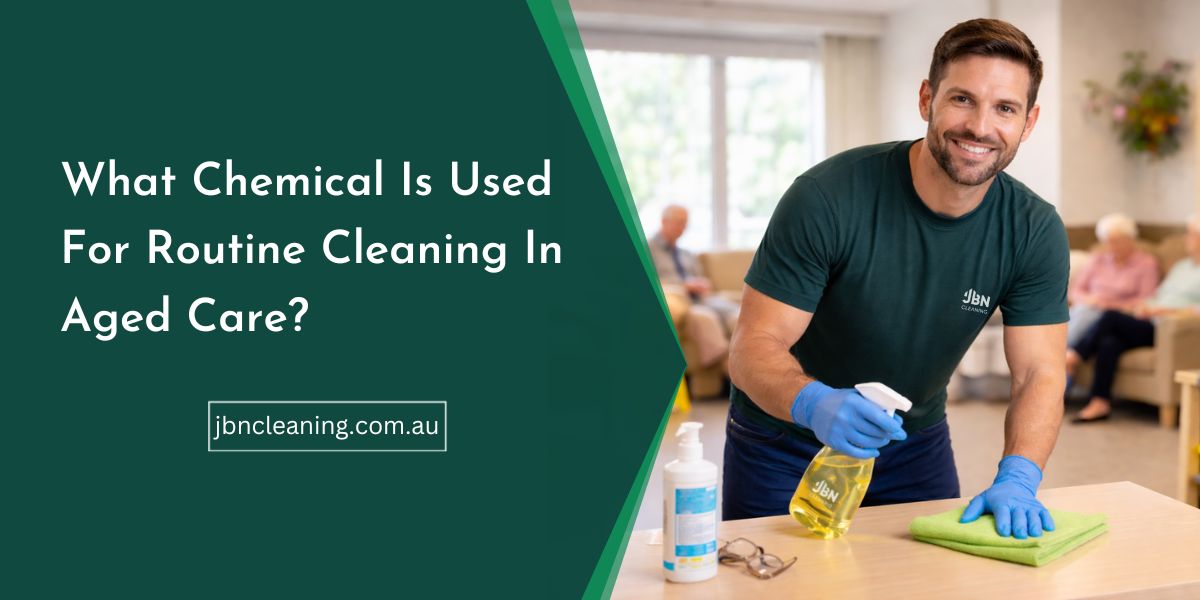
What Chemicals Are Commonly Used For Routine Cleaning In Aged Care Facilities?
Aged care facilities can’t rely on the same cleaning products you’d use in an office or retail space. Residents are older, more vulnerable to infections, and often live with respiratory conditions that react badly to strong fumes. So what chemical is used for routine cleaning in aged care isn’t just a product question; it’s a safety question.
The wrong choice risks irritating airways, damaging fragile skin, or failing to kill the pathogens that actually matter in these environments. This guide covers the specific chemicals used for routine cleaning in aged care, how each one works, and where it fits into daily facility maintenance.
Neutral Detergents – The Foundation Of Routine Cleaning
For most routine cleaning tasks in aged care, a neutral detergent mixed with warm water is the primary product. Australian health guidelines recommend this as the default for general surface cleaning where no infection risk is present.
Neutral detergents contain surfactants that lift dirt and organic matter from surfaces without leaving harsh residues. They suit
- Floors, walls, and general hard surfaces
- Furniture and communal area fixtures
- Every day spills and light soiling
- Surfaces where residents have prolonged skin contact
The key point: routine cleaning in aged care starts with detergent, not disinfectant. Disinfectants are only necessary when a surface is known or suspected to be contaminated with blood, body fluids, or multi-resistant organisms (MROs).
Quaternary Ammonium Compounds (Quats)
Quats are the most widely used disinfectants in Australian aged care cleaning. They work against bacteria, some viruses, and fungi while producing minimal fumes, a critical factor when residents spend most of their day indoors.
Why QATS suits aged care:
- Low toxicity at recommended dilutions
- Minimal odour compared to bleach
- Effective on hard surfaces like handrails, door handles, and bathroom fittings
- Compatible with most surface materials without causing damage
Quats are commonly used for routine surface disinfection in bedrooms, dining areas, and common spaces, particularly on high-touch points that need attention multiple times a day.
Sodium Hypochlorite (Bleach-Based Solutions)
Bleach remains one of the most effective broad-spectrum disinfectants available. In aged care, it’s used in a carefully diluted form, typically 0.05% to 0.1% for routine disinfection and up to 0.5% during outbreak situations like gastro or influenza.
Where it’s used:
- Bathroom and toilet disinfection
- Outbreak response cleaning
- Kitchen and laundry area sanitisation
- Blood and body fluid spill management
The limitation: concentrated bleach produces fumes that irritate resident airways. Correct dilution and proper ventilation are non-negotiable. This is one reason professional aged care cleaning services measure concentrations precisely rather than estimating.
Hydrogen Peroxide-Based Cleaners
Hydrogen peroxide formulations have gained traction in aged care cleaning because they break down into water and oxygen, leaving no toxic residue. Why they’re gaining ground: Effective against bacteria, viruses, and spores No harmful residue after application Suitable for residents with chemical sensitivities Works on both hard and soft surfaces Many aged care cleaning in Sydney providers now prefer hydrogen peroxide for daily disinfection tasks, particularly in resident bedrooms and living areas where residue-free results matter most.
Alcohol-Based Sanitisers (70% Ethanol or Isopropanol)
Alcohol solutions aren’t used for large-area cleaning. They’re targeted tools for quick sanitisation of small surfaces and high-touch points.
Best suited for:
- Light switches, call buttons, bed rails
- Nursing station equipment
- Quick-dry sanitisation between resident interactions
- Shared devices like remote controls and phones
Alcohol evaporates fast, which makes it practical for spot work but unsuitable for mopping floors or cleaning bathrooms. It’s a complement to broader cleaning, not a replacement.
Enzymatic Cleaners
Enzymatic cleaners use biological enzymes to break down organic matter at a molecular level, such as body fluids, food spills, and protein-based soils. They’re particularly valuable in aged care, where incontinence management is a daily reality.
Where they fit:
- Mattress and bedding pre-treatment
- Bathroom floors and fixtures
- Laundry pre-soaking for soiled linen
- Spill cleanup in dining and living areas
Unlike masking agents, enzymatic cleaners eliminate the source of odour rather than covering it. That makes them effective for maintaining dignity and comfort in resident living spaces.
How These Chemicals Work Together
No single product handles everything in an aged care facility. Effective cleaning uses the right chemical for each task
Professional aged care cleaning services train their teams to match the chemical to the task, the surface, and the risk level, not to reach for the strongest product by default. A specialist commercial cleaning company like JBN Cleaning understands that aged care demands a different chemical approach than standard workplace cleaning.
Frequently Asked Questions
What is the most common chemical used for routine cleaning in aged care?
A neutral detergent with warm water is the standard for general routine cleaning. For disinfection, quaternary ammonium compounds (quats) are the most widely used due to their effectiveness and low toxicity.
Can bleach be used safely in aged care facilities?
Yes, but only in diluted form with proper ventilation. Concentrations of 0.05%–0.1% are standard for routine disinfection. Higher concentrations are reserved for outbreak response under strict protocols.
Are eco-friendly cleaners effective enough for aged care?
Some hydrogen peroxide-based and enzymatic cleaners meet the required disinfection standards while being safer for residents. However, each product must be assessed against TGA requirements individually, not all “green” labels guarantee clinical effectiveness.
How often should high-touch surfaces be disinfected in aged care?
Multiple times per day. Door handles, handrails, call buttons, light switches, and shared equipment should be disinfected throughout operating hours, not only during scheduled cleaning rounds.
Final Thoughts
The chemicals used for routine cleaning in aged care aren’t chosen for convenience — they’re chosen for safety. Each product serves a specific purpose, from neutral detergents handling everyday dirt to hospital-grade disinfectants targeting infection risks. Getting that match right is what separates adequate cleaning from cleaning that genuinely protects the people living in these facilities.
Facilities that invest in proper chemical protocols, correct dilution practices, and trained cleaning teams consistently see fewer infection incidents and more comfortable living environments for their residents.