





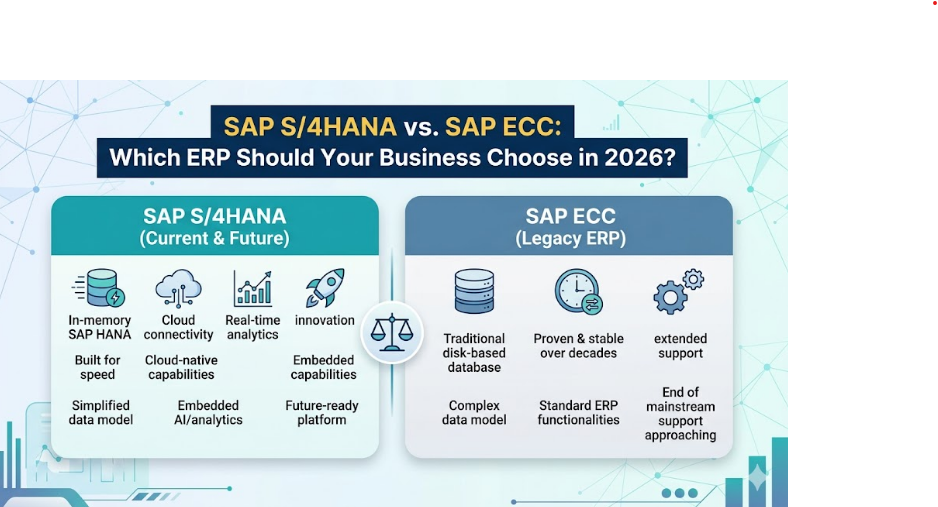
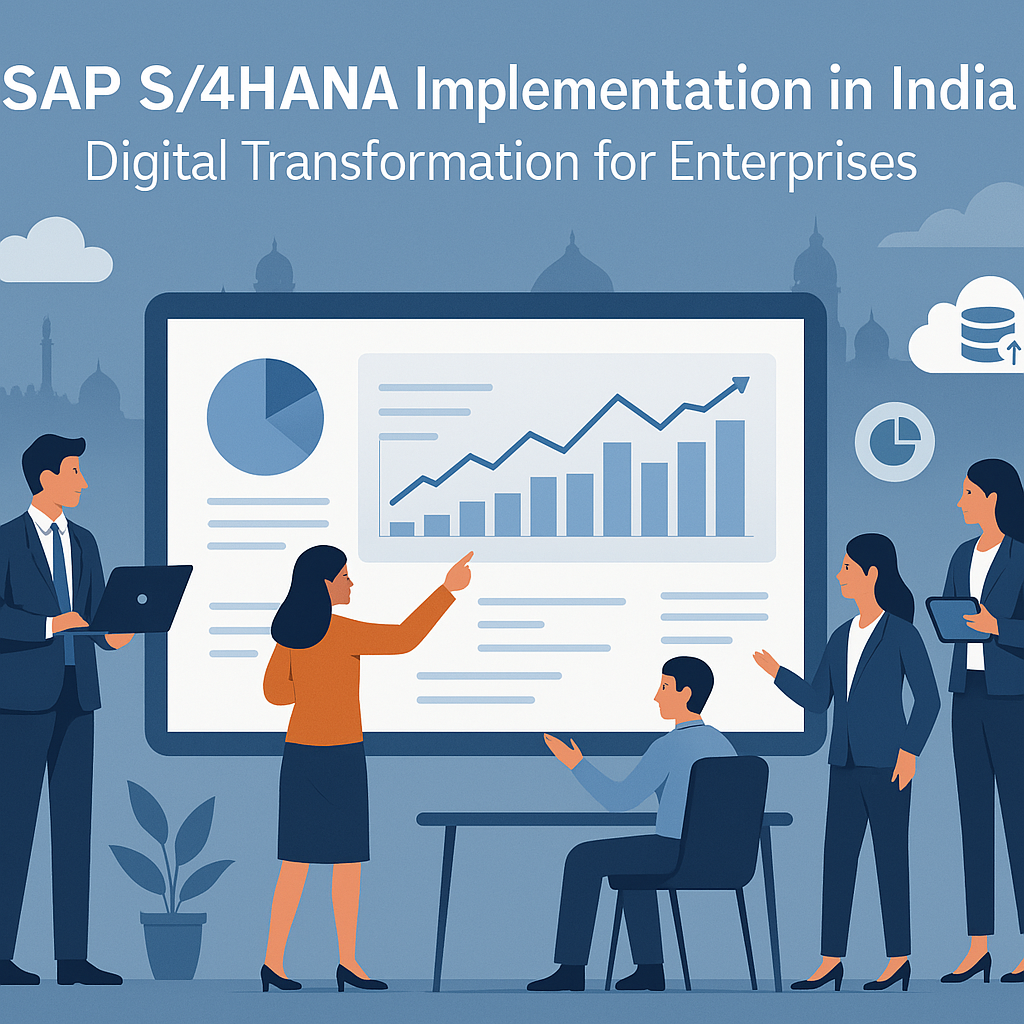
In the fast-evolving business landscape, small and medium-sized enterprises (SMEs) in India are increasingly turning to advanced ERP systems to stay competitive. SAP S/4HANA has become a popular choice due to its ability to deliver real-time insights, automate processes, and support business growth. However, implementing it successfully requires a clear roadmap and strategic execution.
Why Indian SMEs are Adopting SAP S/4HANA
SMEs in India are dealing with growing competition, operational complexities, and the demand for quicker decision-making. SAP S/4HANA offers an integrated platform that connects various business functions such as finance, supply chain, and sales into one system. With the availability of cloud solutions, even smaller businesses can now access and benefit from enterprise-grade ERP technology without heavy upfront investment.
Step-by-Step Guide to SAP S/4HANA Implementation
1. Identify Business Needs and Objectives
Start by evaluating your current processes and defining clear goals. Understanding your challenges and future plans helps in choosing the right SAP modules and implementation strategy.
2. Select the Appropriate Deployment Option
SAP S/4HANA provides three main deployment models:
Cloud: Budget-friendly and easy to maintain
On-Premises: Offers complete control and customization
Hybrid: Combines flexibility with control
For most SMEs, cloud deployment is a practical choice due to lower initial costs and faster setup.
3. Partner with the Right SAP Consultant
A reliable and experienced SAP implementation partner plays a crucial role in success. Certified partners bring industry knowledge, ensure smoother execution, and provide ongoing support.
4. Choose an Implementation Strategy
There are three common approaches:
Greenfield: Fresh implementation from scratch
Brownfield: Upgrade from an existing SAP system
Selective Data Transition: Migrate specific data
Many SMEs opt for the Greenfield approach to rebuild processes efficiently from the ground up.
5. System Setup and Customization
At this stage, the system is configured according to business operations. Modules, workflows, and user roles are tailored to meet specific requirements.
6. Data Migration and System Testing
Existing data is transferred from legacy systems to SAP S/4HANA. Proper validation is essential to ensure accuracy. After migration, thorough testing is conducted to check system performance and reliability.
7. Employee Training and Change Management
Training staff is critical for successful adoption. A well-planned change management strategy helps employees adapt to the new system with minimal disruption.
8. Go-Live and Continuous Support
Once testing is complete, the system is launched. Post-implementation support ensures any issues are resolved quickly and the system continues to perform efficiently.
Key Benefits of SAP S/4HANA for SMEs
Real-Time Data Access: Faster and more informed decisions
Operational Efficiency: Automation reduces manual work
Scalability: Supports business expansion without limitations
Regulatory Compliance: Simplifies compliance management
Customer Satisfaction: Improved service delivery and response time
Challenges to Keep in Mind
Despite its advantages, SMEs may face challenges such as implementation costs, time investment, and the need for skilled resources. Careful planning and choosing the right partner can significantly reduce these risks.
Final Thoughts
Implementing SAP S/4HANA is a forward-looking decision for SMEs in India aiming to modernize their operations. By following a structured approach-from planning and selecting the right partner to deployment and ongoing support-businesses can ensure a smooth transition. With the right execution, SAP S/4HANA can become a powerful driver of growth and efficiency in 2026 and beyond.
Visit- https://softwintechnologies.com/sap-implementation/
FAQs
1. What does SAP S/4HANA implementation involve?
It refers to deploying SAP’s next-generation ERP system to manage business operations with real-time data processing.
2. How much time does implementation take for SMEs?
Typically, it can take anywhere between 3 to 9 months depending on complexity and scope.
3. What is the cost of implementation in India?
Costs depend on factors like deployment model, number of users, and customization needs. Cloud options are generally more affordable.
4. Which implementation method is ideal for SMEs?
The Greenfield approach is often preferred as it allows businesses to start fresh with optimized processes.
5. Can small businesses use SAP S/4HANA?
Yes, especially with cloud deployment, it is scalable and suitable for growing businesses.
6. What are the main advantages of SAP S/4HANA?
It offers real-time insights, automation, better efficiency, scalability, and improved decision-making.




SAP Fiori user experience platform comes with the promise of delivering unmatched end-user satisfaction.
Every SAP customer gets full access to SAP Fiori implementation with SAP Enterprise or Standard Maintenance.
Incorporating new visual design and appearance, SAP Fiori 3 has redefined the way enterprises function by making work more delightful and suited for the next-generation workforce.
How does SAP Fiori implementation follow a modular design approach?SAP Fiori apps enable developers to design, develop, and deliver a modern UX for any device or platform, providing a consistent and innovative experience for both creators and users.
In addition, SAP Fiori helps provide a seamless user experience (UX) for SAP products such as S/4HANA implementation across platforms and devices.
Moving away from the traditional monolithic structure, SAP Fiori follows a modular design approach, focusing on tasks and workflows.