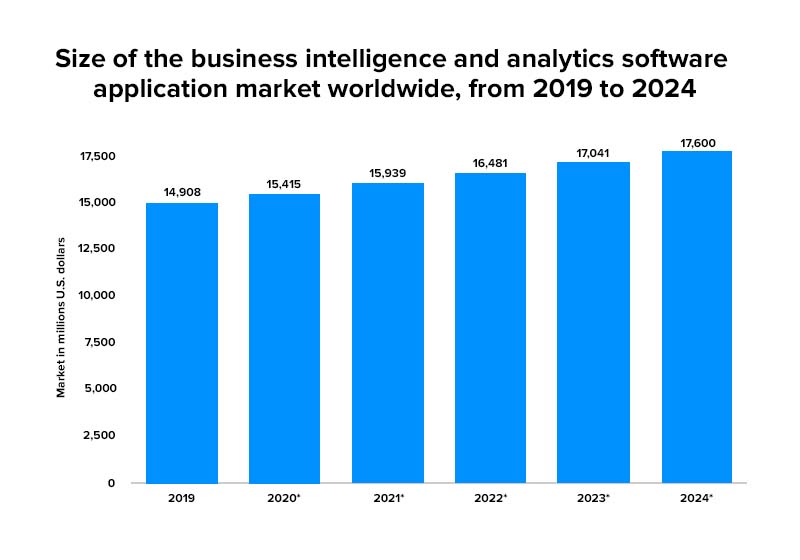


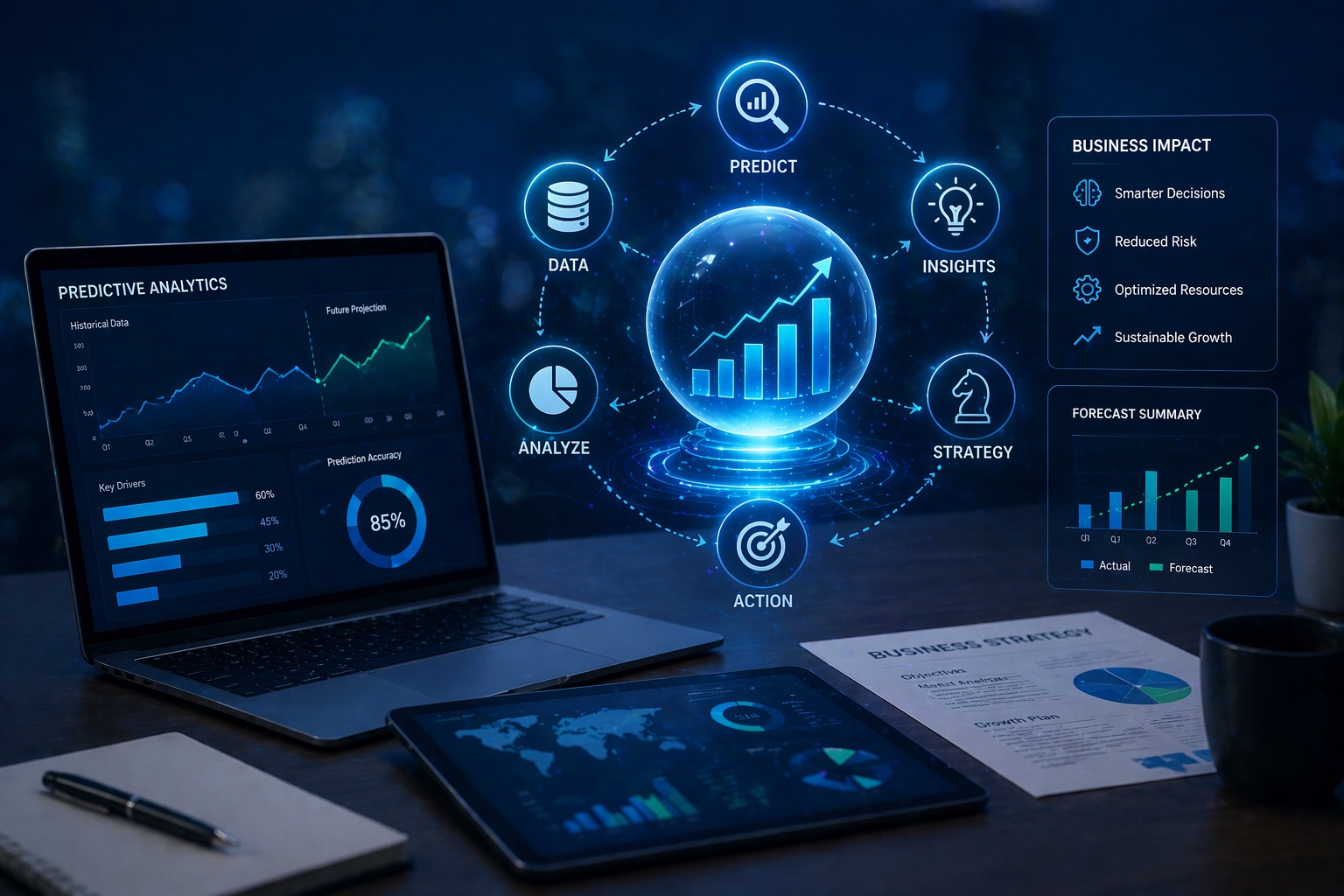
In an increasingly data-driven world, businesses are no longer relying solely on past performance or intuition to make strategic decisions. Predictive analytics has emerged as a powerful tool that enables organizations to anticipate future trends, identify opportunities, and mitigate risks. By leveraging historical data, statistical models, and machine learning techniques, businesses can transform raw data into actionable insights.
Understanding Predictive Analytics
Predictive analytics involves analysing historical and real-time data to forecast future outcomes. It uses advanced algorithms and modelling techniques to uncover patterns and relationships that might not be immediately visible.
This capability allows organizations to move from reactive decision-making to proactive strategy development, giving them a significant competitive advantage.
Enhancing Strategic Decision-Making
One of the most significant impacts of predictive analytics is its ability to improve decision-making. Businesses can evaluate potential scenarios, assess risks, and make informed choices based on data rather than assumptions.
For example, companies can forecast market demand, optimize pricing strategies, and allocate resources more effectively. This level of insight ensures that decisions are aligned with future trends and business goals.
Improving Operational Efficiency
Predictive analytics helps organizations streamline operations by identifying inefficiencies and optimizing processes. By analysing patterns in operational data, businesses can anticipate issues before they occur and take preventive measures.
This leads to reduced downtime, improved productivity, and better utilization of resources key factors in maintaining a competitive edge.
Driving Customer-Centric Strategies
Understanding customer behaviour is essential for building strong relationships and delivering personalized experiences. Predictive analytics enables businesses to analyse customer data and predict future behaviour.
This insight allows organizations to:
- Tailor marketing campaigns
- Improve customer retention
- Enhance product recommendations
By aligning strategies with customer expectations, businesses can increase satisfaction and loyalty.
Risk Management and Forecasting
Risk management is a critical aspect of business strategy. Predictive analytics provides the tools needed to identify potential risks and develop mitigation strategies.
Whether it’s financial forecasting, supply chain disruptions, or market volatility, businesses can prepare for uncertainties and reduce the impact of unforeseen events.
Supporting Long-Term Planning
Long-term success requires careful planning and foresight. Predictive analytics helps organizations develop strategies that are not only effective in the short term but also sustainable in the long run.
By analysing trends and projecting future scenarios, businesses can make strategic investments, enter new markets, and adapt to changing conditions with confidence.
Challenges in Implementation
Despite its benefits, implementing predictive analytics can be challenging. Organizations may face issues such as data quality, lack of expertise, and integration with existing systems.
To overcome these challenges, businesses need a clear strategy, the right tools, and skilled professionals who can interpret and apply analytical insights effectively.
Conclusion
Predictive analytics is transforming how businesses approach strategy and planning. By enabling data-driven decision-making, improving efficiency, and enhancing customer insights, it provides a strong foundation for sustainable growth.
As organizations continue to embrace data-driven approaches, many are turning to business ai solutions to effectively implement predictive analytics and unlock its full potential.
Learn more:
https://geotechinfo.co.in/services/artificial-intelligence-business-solutions


Drive software testing with Wipro's NextGen quality engineering and test advisory services through AI, DevOps, predictive analytics to meet business needs, improve user experience