


Most Scraping Providers Give Up on Arabic — And Leave a Massive Opportunity On the Table
Over 400 million people speak Arabic worldwide. The GCC alone represents a combined economy of $2 trillion+ with some of the highest per-capita e-commerce spending on the planet. Noon, Amazon.ae, Amazon.sa, Namshi, Ounass, Level Shoes, Carrefour UAE, and dozens of other regional platforms collectively process billions in annual GMV.
And yet — walk into any Arabic e-commerce brand’s marketing office in Dubai or Riyadh and ask them how they monitor customer sentiment at scale. The answer is almost always the same: manual Excel sheets, occasional dashboards, and a strong suspicion they’re missing most of what customers are actually saying.
Why? Because almost every generic web scraping and sentiment analysis provider treats Arabic as an afterthought. English NLP tools fail spectacularly on Arabic’s right-to-left script, complex morphology, regional dialects, and Latin-letter transliterations. What works for analysing Amazon US reviews delivers 40-60% accuracy on Noon reviews.
This is both the problem and the opportunity. Arabic e-commerce sentiment analysis, done properly, is one of the highest-leverage data capabilities any GCC brand can invest in. And in 2026, with LLM advancements dramatically improving Arabic language AI, the technology has finally caught up with the opportunity.
This guide breaks down exactly how Arabic e-commerce review scraping and sentiment analysis works — what makes it technically different, what insights become possible, and how leading GCC brands operationalise it.
Why Arabic E-commerce Sentiment Data Is So Valuable
1. Cultural Nuance Drives Purchase Decisions in GCC
Arabic-speaking consumers evaluate products differently. Authenticity signals, family suitability, premium brand perception, and peer recommendation weigh heavily. Generic English sentiment analysis misses these dimensions entirely.
2. Review Culture in GCC Is Still Emerging
Unlike mature US/UK markets where review culture is saturated, GCC review participation is growing rapidly. Brands that capture emerging review trends early get multi-quarter leads on category winners.
3. Multi-Dialect Complexity
Modern Standard Arabic (MSA), Gulf dialect, Egyptian dialect, Levantine dialect — reviews mix them liberally. A brand operating across UAE, Saudi, Egypt, and Jordan must understand all variations.
4. Code-Switching Between Arabic and English
GCC reviewers freely mix Arabic and English in the same review. “المنتج quality ممتاز but التوصيل slow” is a typical pattern. Single-language NLP misses these entirely.
5. Transliteration Patterns
Arabic transliterated into Latin letters (“Arabizi”) is common, particularly among younger demographics. “Shukran” (thank you), “Mashallah,” and product-specific transliterations create yet another data processing challenge.
6. Regional Brand Preferences Are Highly Variable
Saudi consumers, UAE expats, Egyptian shoppers, and Kuwaiti buyers have different preferences — even for the same category. Regional segmentation of sentiment data is commercially critical.
What Data Can You Extract Across GCC E-commerce Platforms
Noon (noon.com)
Product reviews in Arabic and English
Review ratings, verified purchase flags, review dates
Reviewer location and demographic signals where public
Review media (photos, videos)
Seller ratings and responses
Product Q&A section
Product variant data (size, colour, bundle)
Amazon.ae and Amazon.sa
Reviews with star ratings, verified purchase status
Helpful votes, reviewer badge indicators
Amazon’s Vine program reviews (early reviewers)
Q&A sections with community answers
Product specifications and bullet points in Arabic
Namshi (namshi.com)
Fashion-focused product reviews
Fit feedback specifically (important for apparel)
Size recommendations from reviewers
Photo reviews from customers
Ounass, Level Shoes, FarFetch MENA
Premium positioning review dynamics
Luxury consumer sentiment patterns
Brand-specific trend signals
Carrefour UAE / Lulu Online
Grocery and general merchandise reviews
Fresh food quality feedback
Delivery experience sentiment
Google Maps & Google Shopping (Arabic Results)
Location-based business reviews
Restaurant reviews (overlapping with food delivery)
Retail store and brand reviews
Social Media Platforms
Instagram comments (heavy GCC usage)
TikTok comments
Twitter/X (significant Arabic content)
Snapchat (major GCC platform)
Specialised Marketplaces
SheIn MENA, H&M online, Zara online — international brands in GCC markets
Key Data Points for Arabic Sentiment Pipelines
A comprehensive Arabic e-commerce sentiment schema captures:
Review metadata: - Platform, product ID, product name (Arabic + English) - Review ID, reviewer handle or ID, verified purchase flag - Review date, review language detected, review rating - Platform-specific signals (Noon verified, Amazon Vine, etc.)
Text-level: - Original review text (Arabic + any mixed content) - Normalised text (diacritics removed, dialect-adjusted) - Detected language(s) in the review - Transliterated segments identified - Translation to English for downstream analysis
Semantic analysis outputs: - Overall sentiment (positive, negative, neutral, mixed) - Fine-grained sentiment scores on specific aspects: quality, price, delivery, packaging, customer service, authenticity - Emotion classification (delight, disappointment, anger, surprise, etc.) - Cultural signals (family suitability, halal compliance, modesty considerations, etc.) - Named entity recognition (brand mentions, competitor mentions) - Topic classification (complaints by category)
Product-level aggregates: - Average sentiment scores by time window - Aspect-level ratings (computed from review text beyond star ratings) - Trend indicators (improving/declining sentiment) - Competitive sentiment benchmarking
Real-World Use Cases Driving Commercial Outcomes
GCC Brand Manager Customer Intelligence
A major UAE-based beauty brand monitors over 30,000 Arabic reviews per month across Noon, Amazon.ae, Sephora ME, and Namshi. Arabic NLP identifies emerging complaints 3-4 weeks before they show up in star ratings — giving product teams time to address issues before category rank drops.
Regional Marketing Agency Client Reporting
Leading MENA marketing agencies (Publicis MENA, WPP, Omnicom entities) use Arabic sentiment data to inform creative strategy, identify emerging cultural insights, and justify campaign performance to clients.
CX Platform Differentiation
Customer experience platforms serving GCC enterprises (CX Index competitors, regional equivalents) use Arabic NLP as their core differentiator — building products that genuinely understand GCC consumer sentiment.
International Brand MENA Entry
Global brands entering MENA (Japanese beauty brands, European fashion labels, American consumer electronics) use Arabic sentiment data to validate product-market fit, identify localisation needs, and refine go-to-market strategies.
Restaurant Chain Operational Feedback
Restaurant chains operating in GCC use Arabic review scraping from Zomato UAE, Google Maps, and Talabat to identify location-specific operational issues — a drop in “taste” sentiment at Dubai Marina might indicate chef changes before internal KPIs surface it.
Hospitality and Travel Sentiment
UAE and Saudi hospitality brands monitor Arabic reviews on Booking.com, Agoda, Expedia, and TripAdvisor for service quality signals, guest complaint trends, and competitive benchmarking.
Product Development Intelligence
Consumer electronics brands (Samsung MENA, Huawei, Xiaomi MENA) use Arabic review sentiment to inform product development — what features regional consumers actually use, which localisations matter, where after-sales service improvements are needed.
Influencer Marketing ROI Measurement
Brands running GCC influencer campaigns use Arabic sentiment analysis on comment sections to measure genuine engagement vs inflated metrics — separating real sentiment signal from vanity metrics.
Technical Challenges of Arabic Sentiment Analysis
1. Right-to-Left Script Handling
Arabic is written right-to-left, with its own Unicode considerations. Data pipelines, databases, and downstream tools must handle RTL properly — many don’t.
2. Morphological Complexity
Arabic morphology is rich — root letters combine with patterns to form words. “Kitab” (book), “Maktaba” (library), “Katib” (writer) all share the root K-T-B. Effective NLP requires morphological analysis, not just tokenisation.
3. Diacritics Ambiguity
Arabic is typically written without diacritical marks (short vowels). The same letter sequence can have different meanings depending on unwritten diacritics. Disambiguation requires context-aware models.
4. Dialect Variation
Gulf Arabic (“إنه زين” for “it’s good”) differs from Egyptian (“حلو”) and Levantine (“منيح”). A single sentiment model trained on MSA performs poorly on dialect reviews.
5. Code-Switching Between Arabic and English
Mixed-language reviews require models that handle code-switching natively — most general NLP frameworks don’t.
6. Transliteration (“Arabizi”)
“7abibi” (Arabizi for حبيبي), “ma3lish” (ما عليش), and similar patterns are common. Decoding transliterated Arabic requires specialised preprocessing.
7. Limited Training Data
Unlike English (where billions of labelled examples exist), Arabic sentiment training data is comparatively scarce. Good models require specialised data collection.
8. Cultural Context Matters
“ما شاء الله” (Mashallah) appears in glowing positive reviews. Without cultural understanding, generic NLP might misclassify cultural expressions.
How Actowiz Powers Arabic E-commerce Sentiment Analysis
Actowiz Solutions has built one of the most sophisticated Arabic e-commerce sentiment analysis pipelines in the GCC — serving regional brands, international brands entering MENA, marketing agencies, and CX platforms.
What we deliver:
Comprehensive GCC coverage — Noon, Amazon.ae, Amazon.sa, Namshi, Ounass, Carrefour UAE, Lulu Online, and regional specialist platforms
Arabic NLP pipeline — dialect-aware, morphology-aware, diacritics-aware processing
Multi-dialect handling — Gulf, Egyptian, Levantine, and MSA variants supported
Code-switching support — Arabic + English mixed reviews handled natively
Transliteration decoding — Arabizi processed alongside native Arabic script
Aspect-level sentiment — fine-grained sentiment on quality, price, delivery, service, authenticity, and cultural suitability dimensions
Emotion classification — beyond positive/negative, identifying specific emotional responses
Cultural signal extraction — halal compliance, family suitability, modesty, religious considerations where relevant
Cross-platform unified output — aggregated sentiment across multiple sources for single product SKUs
Historical trend analysis — 24+ months of sentiment data for longitudinal analysis
Flexible delivery — API, dashboards, or direct warehouse integration
Our Arabic sentiment pipeline processes over 5 million Arabic reviews and comments monthly across GCC e-commerce and social platforms.
FAQs
Is Arabic review scraping legal in GCC markets?
Scraping publicly visible product reviews generally aligns with accepted web scraping practices. GCC data protection regulations (UAE PDPL, Saudi PDPL) focus on personal data protection; publicly visible review content is typically treated differently. Each client’s specific use case should be reviewed with legal counsel familiar with GCC regulations.
How accurate is your Arabic sentiment analysis?
Our Arabic sentiment models achieve 88-93% accuracy on GCC e-commerce reviews, depending on category. For comparison, off-the-shelf English-first tools typically achieve 55-65% accuracy on the same data.
Do you handle Saudi Arabia specifically?
Yes — Saudi market coverage (Amazon.sa, Noon Saudi, Jarir, Hungerstation reviews) is included. Saudi Arabic dialect is a core supported variant.
Can you identify halal-related sentiment?
Yes — cultural and religious considerations including halal references, modesty-related comments, and family-suitability signals are captured as specialised sentiment dimensions.
What about reviews from outside GCC in Arabic (Egypt, Jordan, Iraq)?
Our dialect models cover Egyptian, Levantine (Jordan, Lebanon, Syria), and Iraqi Arabic variants. Coverage can be extended to North African dialects on request.
Can you integrate with our existing CX platform?
Yes — we deliver data via APIs, webhooks, or direct integration with major CX platforms including Qualtrics, Medallia, and regional equivalents.
What’s the engagement pricing?
Arabic sentiment engagements start at AED 15,000/month (approximately $4,100) for focused category or brand monitoring. Enterprise multi-brand plans are custom-quoted.
Read More>>
https://www.actowizsolutions.com/arabic-ecommerce-sentiment-analysis-gcc-brands.php
Originally published at https://www.actowizsolutions.com

All of these around each other form a perfect combination and are figured only in Indian foods.The secret of Indian food's delicious flavor is its rich spices which have been used for decades and spread across the world.
In India, we have multiple Online Masala Store that make your food taste great.With delicious fragrance they flatter our smell, tongue with unique taste and eyes with vibrant colours.
Curry powder, ground spices, and other mixed powders hold a significant flavor and aroma stance.
To make masala ingredients two possible ways are there.One is buy some natural ingredients, whole spices, give them a good whiz in your mixer or food processor, and proportion them out.
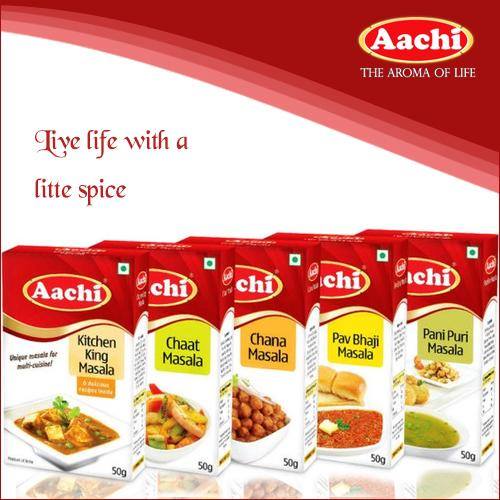
Another way is purchase packed masalas withAachi has become a household name due to its great quality products that cater to ordinary people.
Aachi masala is a famous brand of spices, known for its pureness, sweetness, aroma, flavor and good taste as well.
Temperature is often an important radio control cars aspects.
It is preferably to get an infrared thermometer to measure temperatures overcome not work specified for each component (Lipo, ESC and motor).
If you do not have a thermometer, and as home rule, everything should go down to a temperature that can touch it with your fingers for 5 seconds without burning or discomfort.One way to reduce consumption, and therefore the temperature of the components, download the "timming" in the ESC.
It should discard those that are cool packs when held.
A loaded pack should be between 4.1 and 4.2 V per cell, on the other hand, if the voltage is less than 3.8 V per cell with nothing connected except the voltmeter will have to recharge the battery before you leave.
That is, if our Lipo charger supports must be programmed to limit the voltage does not exceed this value.We should never download the Lipo less than 3V per cell, ie cutting the ESC must be at least 6V for two cells in series, 9V for 3, and 12 for 4 cells in series.

Make Video Marketing Your Best Friend With This AdviceVideo showcasing is an energizing and scaring field.
The counsel beneath is intended to start your imagination in advertising your business through recordings.Google search stories are an amazing method to keep yourself off the camera while as yet making video advertising which is viable.
You look for your locales and show the reality where they can be discovered, who is referencing them and what they contain, enabling individuals to discover what you’re about.Try not to accept that the salesmen at you organization are the ones that will glance best before the camera.
No one needs to realize that your organization representative is janitor or secretary.Ensure that you develop an association with your crowd.
Anything faked inside the video, be it, your background or your aura, will perplex them.
On the off chance that you need them to accept what you’re attempting to let them know, be straightforward, straightforward and put on a show of being warm and inviting.Also Visit-Best Video Marketing CompanyItem makers or affiliates ought to make recordings demonstrating how the item can be utilized in elective manners.