

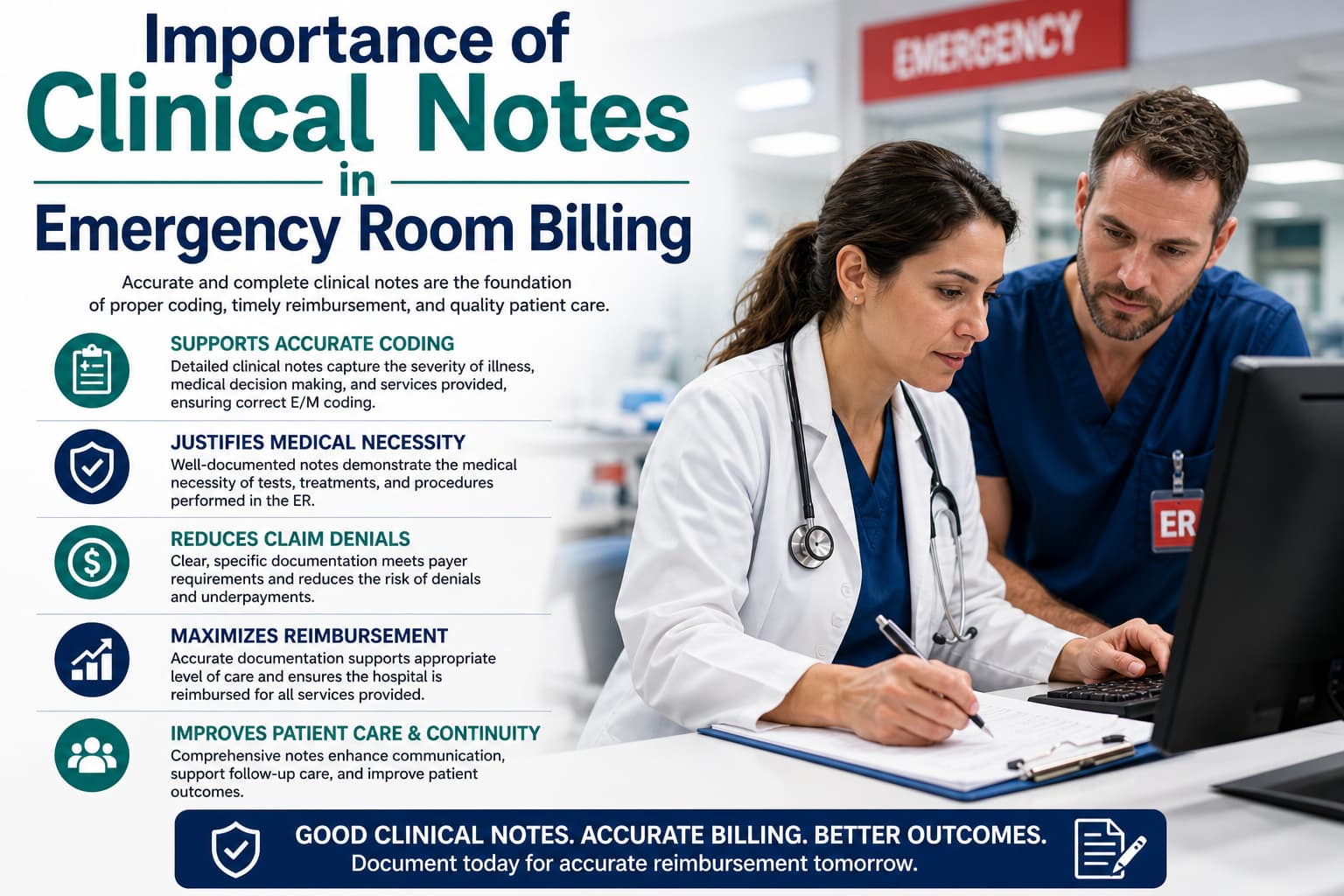
Emergency departments operate in high-pressure environments where medical decisions must be made quickly and accurately. While the focus is always on patient care, proper documentation is equally important for administrative and billing purposes. Clinical notes serve as the foundation for coding and claim submission, ensuring that every service provided is accurately recorded. In this fast-paced setting, Emergency Room Medical Billing depends heavily on detailed clinical notes to support accurate coding, compliance, and timely reimbursement.
Understanding Clinical Notes in Emergency Care
Clinical notes are written records created by healthcare providers during patient encounters. In emergency settings, these notes capture critical details about the patient’s condition, treatment, and response to care.
Typical clinical notes include:
Patient symptoms and history
Physical examination findings
Diagnostic tests and results
Treatments and procedures performed
Physician observations and decisions
These records provide a complete picture of the care delivered during an emergency visit.
Why Detailed Clinical Notes Matter in Billing
Supporting Accurate Coding
Medical coding relies on the information documented in clinical notes. Coders use these details to assign appropriate diagnosis and procedure codes.
Without detailed notes:
Important services may not be coded
Incorrect codes may be assigned
Billing accuracy may be compromised
Accurate documentation ensures that coding reflects the actual care provided.
Establishing Medical Necessity
Insurance providers require proof that services were medically necessary. Clinical notes provide the evidence needed to justify treatments and procedures.
Clear documentation helps:
Demonstrate patient condition severity
Support diagnostic decisions
Validate treatment plans
This reduces the risk of claim denials.
Ensuring Compliance With Regulations
Healthcare billing must follow strict regulatory and payer guidelines. Detailed clinical notes help ensure that billing practices comply with these requirements.
Proper documentation:
Supports audits and reviews
Reduces compliance risks
Ensures adherence to billing standards
Facilitating Claim Approval
Insurance companies review clinical documentation when processing claims. Detailed notes help them understand the services provided and approve claims more efficiently.
Incomplete notes may lead to:
Requests for additional information
Delayed claim processing
Increased denial rates
Challenges in Emergency Room Documentation
Time Constraints
Emergency physicians must prioritize patient care, leaving limited time for detailed documentation.
High Patient Volume
Large numbers of patients increase the workload, making it difficult to maintain consistent documentation quality.
Complex Medical Cases
Emergency cases often involve multiple diagnoses and treatments, requiring thorough documentation.
Communication Gaps
Incomplete communication between clinical staff and coders can lead to missing or unclear documentation.
Addressing these challenges is essential for maintaining accurate billing processes.
Best Practices for Improving Clinical Documentation
Real-Time Documentation
Recording patient information during or immediately after treatment helps ensure accuracy and completeness.
Standardized Documentation Templates
Using structured templates ensures that all necessary details are captured consistently.
Training for Healthcare Providers
Educating providers on documentation requirements improves the quality of clinical notes.
Collaboration Between Teams
Effective communication between clinical staff and billing teams helps clarify documentation and prevent errors.
Healthcare organizations often collaborate with specialists such as RCM Experts to improve documentation practices and support accurate billing workflows.
Role of Technology in Documentation
Technology plays a significant role in improving clinical documentation in emergency settings.
Modern tools include:
Electronic health records (EHR)
Voice recognition software
Clinical documentation improvement (CDI) systems
Automated data entry tools
These technologies help providers document care more efficiently without compromising accuracy.
Impact of Poor Documentation on Billing
Claim Denials
Incomplete or unclear notes can result in denied claims due to lack of supporting information.
Revenue Loss
Missing documentation may lead to underbilling or unpaid services.
Delayed Reimbursement
Additional documentation requests can slow down the payment process.
Increased Administrative Work
Correcting documentation errors requires additional time and effort from billing teams.
Benefits of Detailed Clinical Notes
Accurate Billing and Coding
Comprehensive notes ensure that all services are properly recorded and billed.
Faster Claim Processing
Clear documentation reduces the need for follow-up inquiries from insurance providers.
Improved Compliance
Detailed records support regulatory requirements and audit readiness.
Better Patient Care Continuity
Accurate documentation also benefits future care by providing a clear medical history.
Conclusion
Detailed clinical notes are a cornerstone of effective emergency room billing. They provide the essential information needed for accurate coding, support medical necessity, and ensure compliance with payer requirements. In a fast-paced emergency environment, maintaining high-quality documentation can be challenging but is critical for successful billing outcomes. Many healthcare providers rely on specialized Emergency Room Medical Billing support along with experienced Medical billing services in USA to ensure documentation standards are met and billing processes remain efficient.