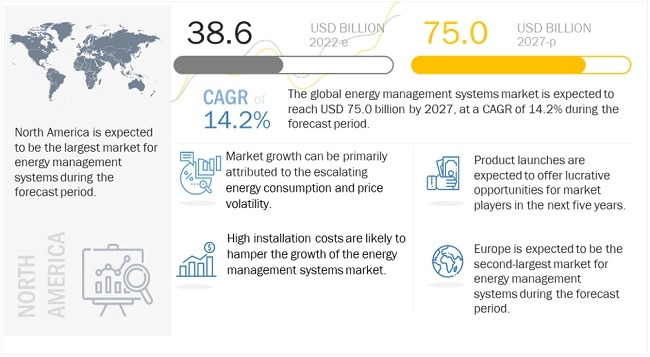


The global Energy Management Systems Market is projected to grow from USD 49.01 billion in 2025 to USD 84.34 billion by 2029, at a CAGR of 13.8% during 2025-2029. Rising energy costs, integration of renewable sources for power generation, and strict government regulations and laws to reduce carbon and facilitate energy efficiency are promoting the growing EMS market worldwide. Adoption of smart grid technology and increased IoT-enabled devices further drive the growth in the EMS market by helping in monitoring and optimizing real-time energy usage. There will be increased innovation for redefining the EMS market landscape with applications based on AI or predictive analytics integration, along with enhanced cloud-based energy management solutions.
The increasing energy expense and the focus of the whole world toward energy from renewable resources are two pivotal drives for the Energy Management Systems Market. Rising cost of energy fuelled by growing demands and vulnerability on the supply chains forces organizations to acquire cost-effective remedies to optimize consumption of energy resources. EMS therefore plays a paramount role in surmounting challenges by offering immediate monitoring, regulating, and conserving energy assets, thereby attaining maximum and significant cost optimization. Simultaneously, the EMS adoption is speeding up with a global shift toward renewable energy sources such as solar, wind, and hydropower.
Download PDF Brochure: https://www.marketsandmarkets.com/pdfdownloadNew.asp?id=1189
Renewable energy systems often have a variable generation pattern that necessitates high-end energy management tools to guarantee grid stability and ensure optimal energy storage and distribution. EMS makes integration of renewable energy into existing infrastructure seamless while also enhancing energy reliability and reducing the reliance on fossil fuels. All over the world, governments are enforcing policies and incentives to increase renewable energy use and energy efficiency. This in turn increases demand for EMS. For instance, policies such as the European Green Deal and the U.S. Inflation Reduction Act provide funding and tax incentives to companies that are investing in renewable energy and energy management solutions.
Regional Analysis
North America accounts for the highest market share in the Energy Management Systems Market worldwide. The region has a developed energy infrastructure, stringent regulatory framework, and wide-scale adoption of innovative technologies. Energy efficiency and sustainability are priorities in the United States and Canada, where the government is also supporting the policies and incentives for carbon emissions reduction and energy consumption optimization across all sectors. Such programs as the U.S. The Department of Energy's Energy Efficiency and Conservation Block Grant Program, as well as Canada's EcoENERGY initiatives, have considerably enhanced the deployment of EMS solutions in industrial, commercial, and residential applications.
Moreover, there is an exceptionally high energy-intensive industry base here, especially manufacturing, oil and gas, and data centers. Energy Management Systems will play a highly complex role to save the energy bill of such enterprises by enhancing efficiency. Advanced integration with IoT, AI, and smart grids will allow EMS to go for the advanced level and start monitoring and reporting in real time as well as give predictive analysis about energy needs and usage patterns. North America has also witnessed massive investments in renewable energy and smart grid projects, thereby creating demand for energy management systems that facilitate efficient energy distribution and storage. A well-established technological ecosystem and leading EMS providers make North America the market leader in the global Energy Management Systems Market.
Request Sample Pages: https://www.marketsandmarkets.com/requestsampleNew.asp?id=1189
Key players in the global Energy Management Systems Market include Schneider Electric (France), Siemens (Germany), Honeywell International Inc. (US), Johnson Controls, Inc (US), ABB (Switzerland), General Electric (US), Eaton (Ireland), Emerson Electric Co. (US), Mitsubishi Electric Corporation (Japan), and Hitachi, Ltd. (Japan).
Schneider Electric
Schneider Electric is a global leader within the energy management systems (EMS) market, regarded for its complete answers that integrate superior technologies for energy efficiency across industries. The company offers a extensive variety of EMS solutions for, which include software platforms, hardware additives; With projects designed to guide sustainable improvement desires Schneider Electric's EcoStruxure platform, the important thing presenting for its EMS department, gives a bendy and secure framework that integrates IoT, real-time analytics and synthesis of artificial intelligence. These solutions deliver relevant insights and automates energy initiatives. The organisation's robust attention on innovation, coupled with its full-size global presence, drives Schneider Electric's dedication to move so sustainable has set up itself because the desired partner for agencies, commercial buildings and strength companies seeking to enforce smart strength solutions. With its ability to deliver EMS solutions tailored to particular enterprise desires, it has further solidified its leadership in the global EMS market.
General Electric Company (GE)
General Electric Company (GE) is a key player in the global EMS market, leveraging its deep expertise in commercial capabilities to provide ongoing EMS response. GE EMS offerings are based on its Predix platform, commercial IoT answers that allow for real -time tracking, predictive security, and power efficiency across industries. These solutions are designed to help businesses improve productivity, reduce power costs, delivering advanced analytics and automation capabilities to improve energy efficiency and sustainability. In addition, GE globally accesses its large provider networks to ensure that its EMS solutions are available to a variety of customers more and contributes to its greater presence in the global EMS market.