Why B Tech in Aerospace Engineering is a Future-Proof Career in 2026
The world is witnessing rapid advancements in aviation, defence, and space exploration. From satellite launches to drone technology and futuristic aircraft, the aerospace industry is evolving at an unprecedented pace. As a result, engineering fields connected to this sector are gaining massive popularity.
Among them, B Tech in Aerospace Engineering stands out as one of the most future-ready career options. With increasing investments in India’s space missions and global aerospace innovation, students now have more opportunities than ever. Institutes like IIAEIT Pune are emerging as strong platforms for students aiming to build careers in this exciting domain.
What is B Tech in Aerospace Engineering?
B Tech in Aerospace Engineering is a 4-year undergraduate program that focuses on the design, development, and testing of aircraft and spacecraft systems.
The course covers key areas such as:
Aircraft design and structures
Aerodynamics and fluid mechanics
Propulsion systems
Space technology and flight mechanics
It is a highly interdisciplinary field that combines physics, mathematics, and advanced engineering concepts. Students gain both theoretical knowledge and practical exposure, preparing them for real-world aerospace challenges.
Aerospace Engineering Scope in India (2026 & Beyond)
The scope of aerospace engineering in India is expanding rapidly, making it a highly attractive career choice.
Several factors are driving this growth:
Increased government investment in ISRO and defence projects
Rise of private aerospace startups and drone companies
Expansion of the commercial aviation sector
Collaborations with global space agencies
India is positioning itself as a global aerospace hub, which means long-term career stability and growth for engineers in this field.
Future of Aerospace Engineering – Why It’s a Future-Proof Career
The future of aerospace engineering looks incredibly promising, driven by continuous innovation and technological advancements.
Emerging trends include:
Space tourism and commercial space travel
Advanced satellite systems
Electric and sustainable aircraft
Integration of AI and automation in aviation
These developments ensure that aerospace engineering will remain relevant and in demand for decades. Engineers in this field will play a key role in shaping the future of transportation and space exploration.
Aerospace Engineering Jobs & Career Opportunities
There is a wide range of aerospace engineering jobs available across industries.
Popular career roles include:
Aerospace Engineer
Aircraft Design Engineer
Flight Test Engineer
Maintenance Engineer
Space Research Scientist
Graduates can work in:
Aviation companies
Space research organizations
Defense sector
Private aerospace firms
The field offers diverse career opportunities both in India and internationally, making it a globally competitive profession.
Aerospace Engineering Salary – What Can You Expect?
Aerospace engineering salaries are a key attraction of this field.
Entry-level: ₹4–8 LPA
Mid-level: ₹10–18 LPA
Experienced professionals: ₹20+ LPA
Salary depends on skills, specialisation, and organisation. Compared to many other engineering fields, aerospace offers strong earning potential, especially with experience and advanced qualifications.
Why Choose the Right Institute for Aerospace Engineering?
Choosing the right institute is crucial to shaping your career.
Students should look for:
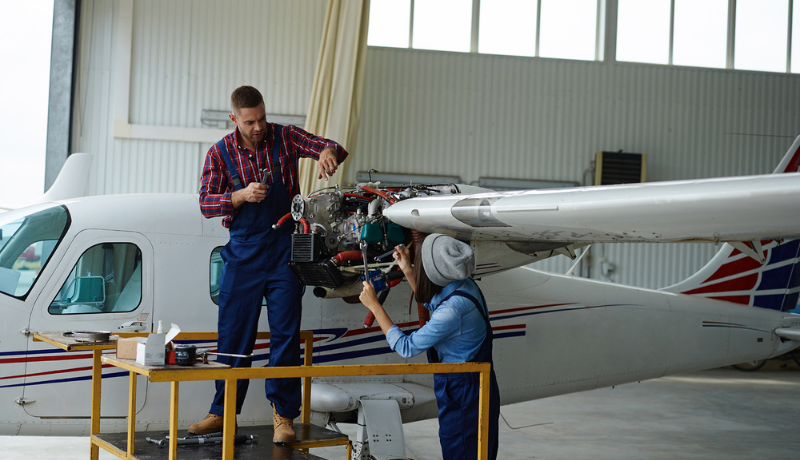
Practical and hands-on training
Industry exposure and internships
Experienced faculty
Modern laboratories
Institutes like IIAEIT Pune focus on industry-oriented learning, providing students with the technical skills and practical knowledge required to succeed in aerospace careers.
Skills Required to Succeed in Aerospace Engineering
To build a successful career in aerospace engineering, students should develop:
Strong analytical and problem-solving skills
Solid foundation in physics and mathematics
Technical knowledge and software skills
Ability to work on complex engineering systems
Passion for innovation and aviation
These skills help engineers adapt to evolving technologies and industry demands.
Conclusion
Choosing B.Tech. in Aerospace Engineering in 2026 is a smart and future-focused decision. With strong career growth, global demand, and opportunities in cutting-edge technologies, this field offers immense potential.
As India continues to expand its presence in aerospace and space technology, skilled engineers will be at the forefront of innovation. Starting early and choosing the right institute, such as IIAEIT Pune, can make a significant difference in building a successful and rewarding career.
The future belongs to those who aim beyond the skies.